

Birmingham is a city with that rare ability to look both old and stubbornly modern at the same time. It weathered the Middle Ages without undue pomp, flourished during the Victorian era with its love of stone, smoke, and ambition, and in the Edwardian period finally came to believe that it could become the centre of the world. And, oddly enough, for a time it actually succeeded—at least in an industrial sense.
It was here, amidst factories, banks, and the ceaseless hum of the Industrial Revolution, that an architectural character took shape which is now difficult to reduce to a single style. Birmingham did not opt for a ‘clean line’—it built layer upon layer. As a city that constantly rebuilt itself on top of its own history.
You can read all about these architectural refinements, contrasts, and details at birmingham-future.com—if, of course, you’re keen to find out how the city is learning to live with its past.
A prime example of this architectural diversity is Colmore Row—a street where Victorian Neo-Gothic coexists peacefully with Edwardian Baroque, whilst modern glass-and-steel buildings rise boldly nearby. Here, the banks look like miniature palaces, the offices resemble former temples of capitalism, and the new buildings seem to be trying to prove that they, too, have a right to history.
The Victorian quarter of Colmore Row
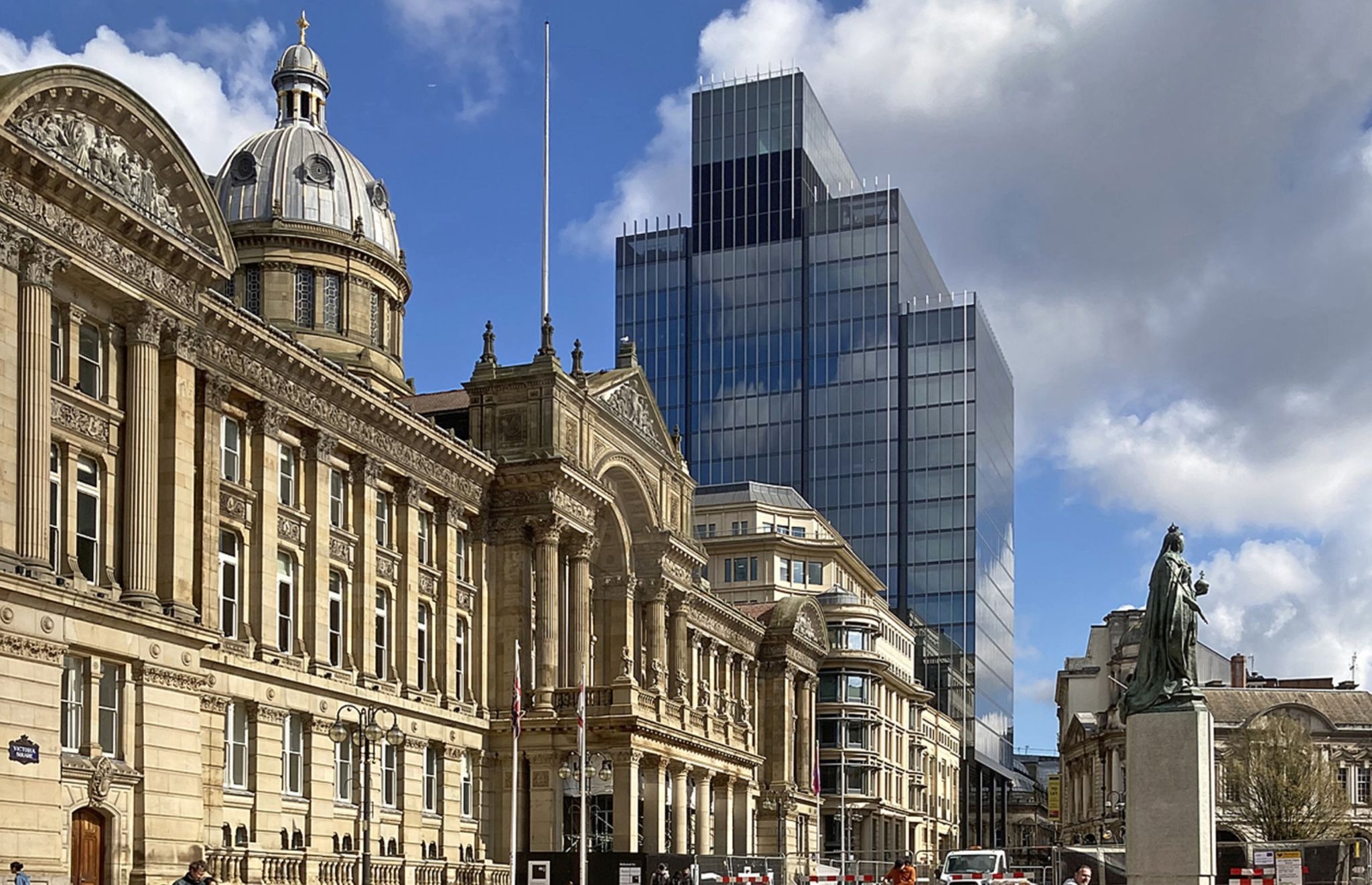
The Victorian architecture of Colmore Row is, in essence, the embodiment of the 19th-century conviction that industry, banks, and stone could symbolise stability better than any monarchy.
This style is characterised by neo-Gothic forms, massive hewn stone, arched windows, decorative gables, and a palpable love of verticality—as if the buildings themselves were striving to attain the status of a ‘serious institution.’ In Birmingham, this architectural language became particularly pronounced, as the city was rapidly growing wealthy at the time and sought to look every bit as impressive as London.
One of the most recognisable Victorian buildings on the street is the Council House—although, strictly speaking, it already belongs to the late Victorian-Edwardian period. Construction began in 1874 and was completed in 1879. The design was by architect Yeoville Thomason, and from the outset the building was conceived as a symbol of the city administration—that is, not merely an office, but a kind of ‘prestigious city hall.’
The imposing façade, sculptural elements, and turrets are a classic expression of the desire to demonstrate that power carries weight—literally, in stone.
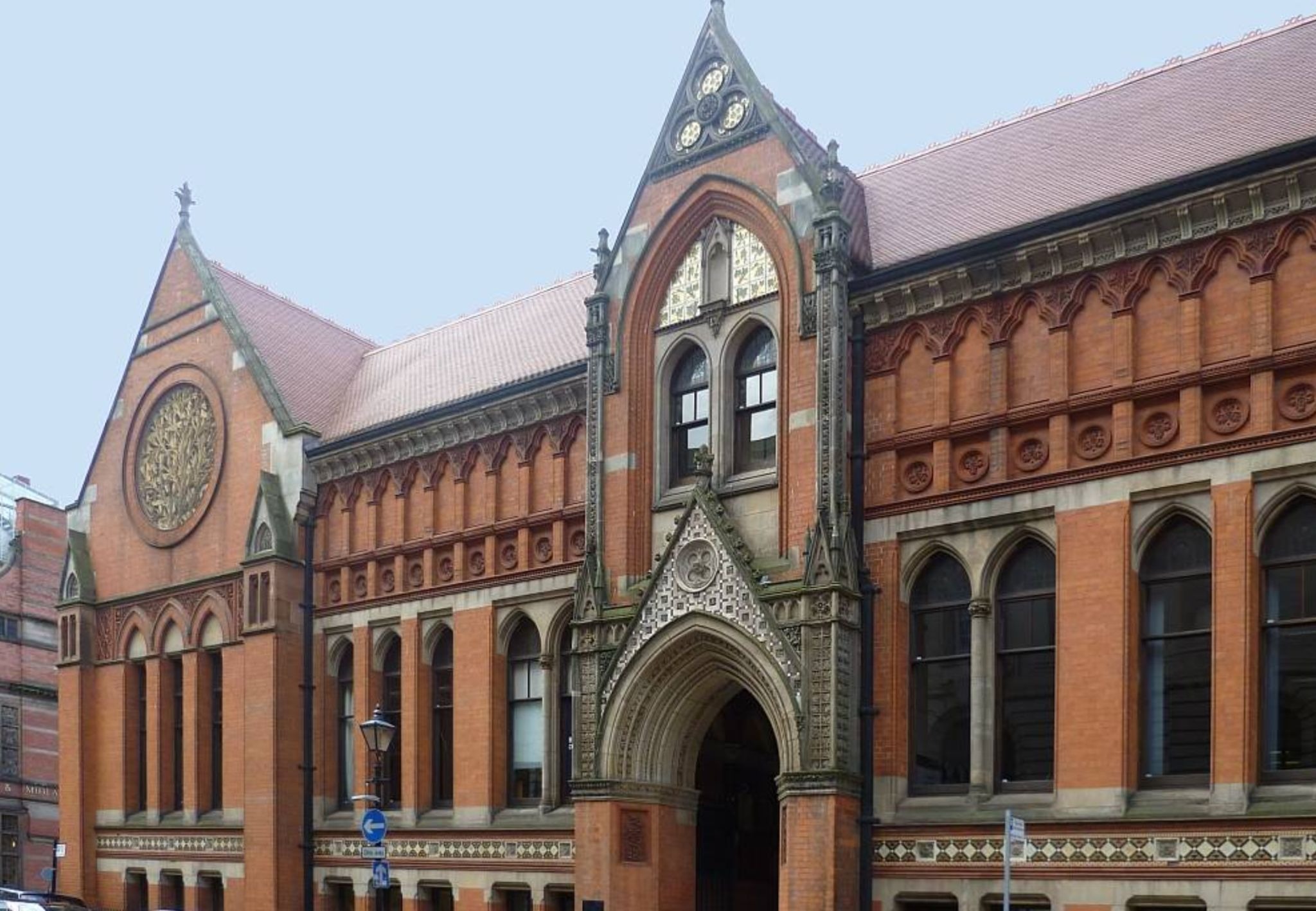
Another notable example is the Birmingham School of Art, designed by John Henry Chamberlain in collaboration with William Martin. This represents a more ‘enlightened’ Victorian style—one that is less about power and more about culture and craftsmanship.
The building displays a blend of brick, stone, and decorative restraint characteristic of the late period, which already hints at the forthcoming transition to Edwardian aesthetics. Interestingly, John Henry Chamberlain, who designed the School of Art, died shortly before the project was finally approved.
Within Colmore Row and the immediate surrounding streets, approximately 10–15 key Victorian buildings have survived, if one counts large public and commercial buildings that have retained their original façade or a significant part of it. Some of these have undergone renovation.
The Eduardian-era building on Colmore Row
The Edwardian architecture of Colmore Row is no longer a Victorian display of power but rather an attempt to make that power more ‘refined.’ The early 20th century brought a different mood: less Gothic drama, more symmetry, space, and decorative restraint.
In architectural terms, this is often referred to as “Edwardian Baroque”—a style in which banks and administrative buildings resemble palaces but without being overly overloaded with detail. The stone becomes lighter in color, the façades more rhythmic, and the composition confident and ‘stately.’
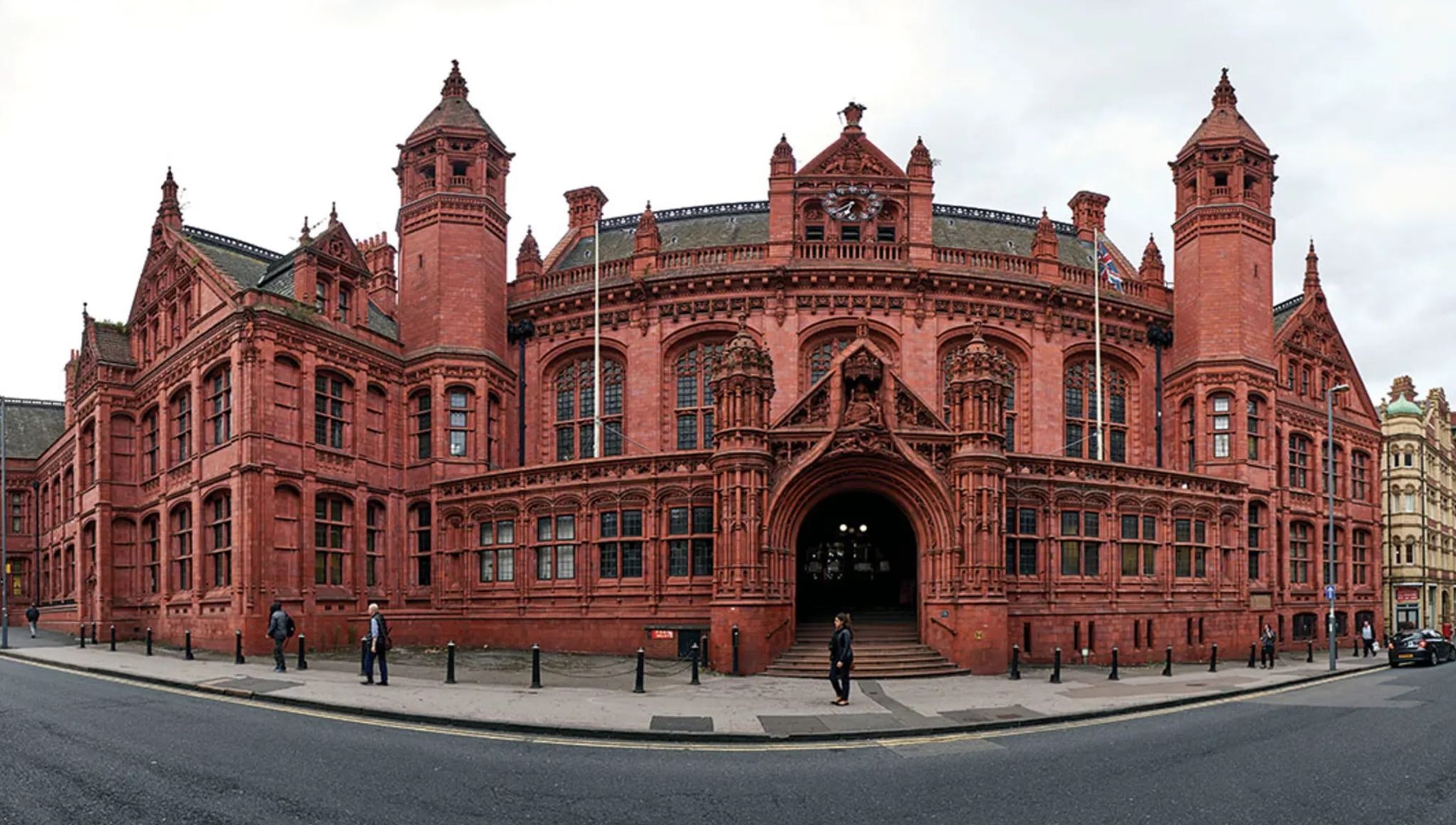
A striking example of this period is the Victoria Law Courts, situated near Colmore Row. Construction began in 1887 and was completed in 1891. The architects were Aston Webb and Ingress Bell, who worked in the Neo-Gothic style with an already discernible Edwardian sense of scale.
The building was conceived as the city’s main courthouse complex—that is, not merely a functional building, but a symbol of the legal system, which was intended to appear imposing. Towers, sculptures, an intricate façade—all of this contributes to an air of ‘state importance’ but without the excessive Victorian theatricality.
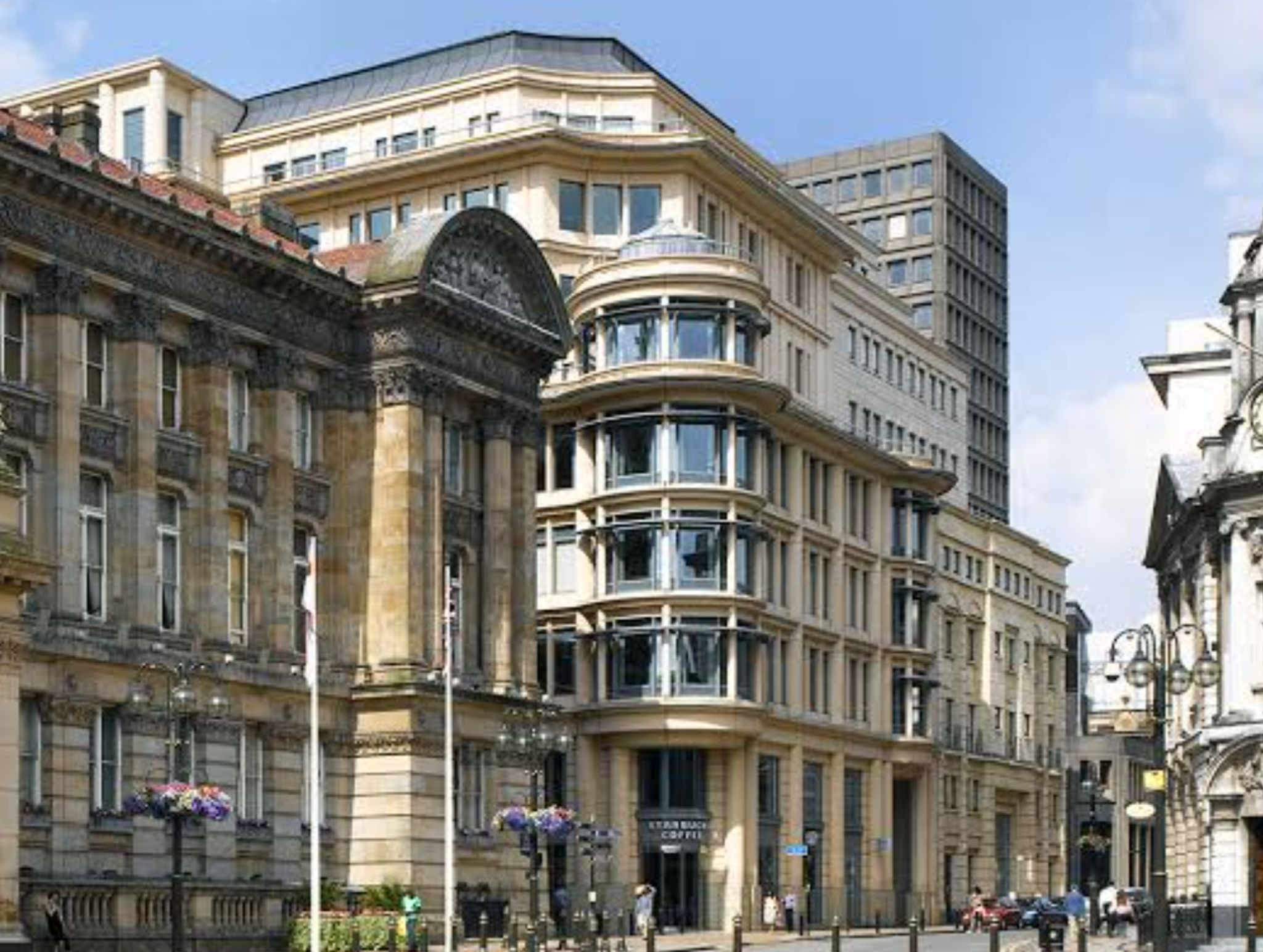
Another important building from the Edwardian era is the Lloyds Bank Building on Colmore Row. It was built in the 1900s for Lloyds Bank and reflects a new approach to financial architecture: less decorative flamboyance, more trust through understated solidity.
Such buildings were designed by teams of architects working for banking institutions, often without a single ‘star architect,’ which in itself speaks volumes about the changing times—a shift from individual architectural eccentricity to a corporate approach.
Overall, the Edwardian influence here is slightly less prevalent than the Victorian, but it carries considerable visual weight: roughly 6–10 key buildings within Colmore Row and the surrounding streets can be attributed to this period or its transitional phase. They create a sense of architectural maturity—when the city no longer has to prove its strength but simply makes use of it.
During this period, a significant part of the city’s financial hub took shape in the Colmore Row area, which is why many bank branches, insurance companies, and law firms sprang up here. Most buildings from this period were constructed as headquarters or regional branches of major financial institutions, underscoring Birmingham’s status as one of Britain’s key economic centres.
Glass, concrete, and a delicate touch
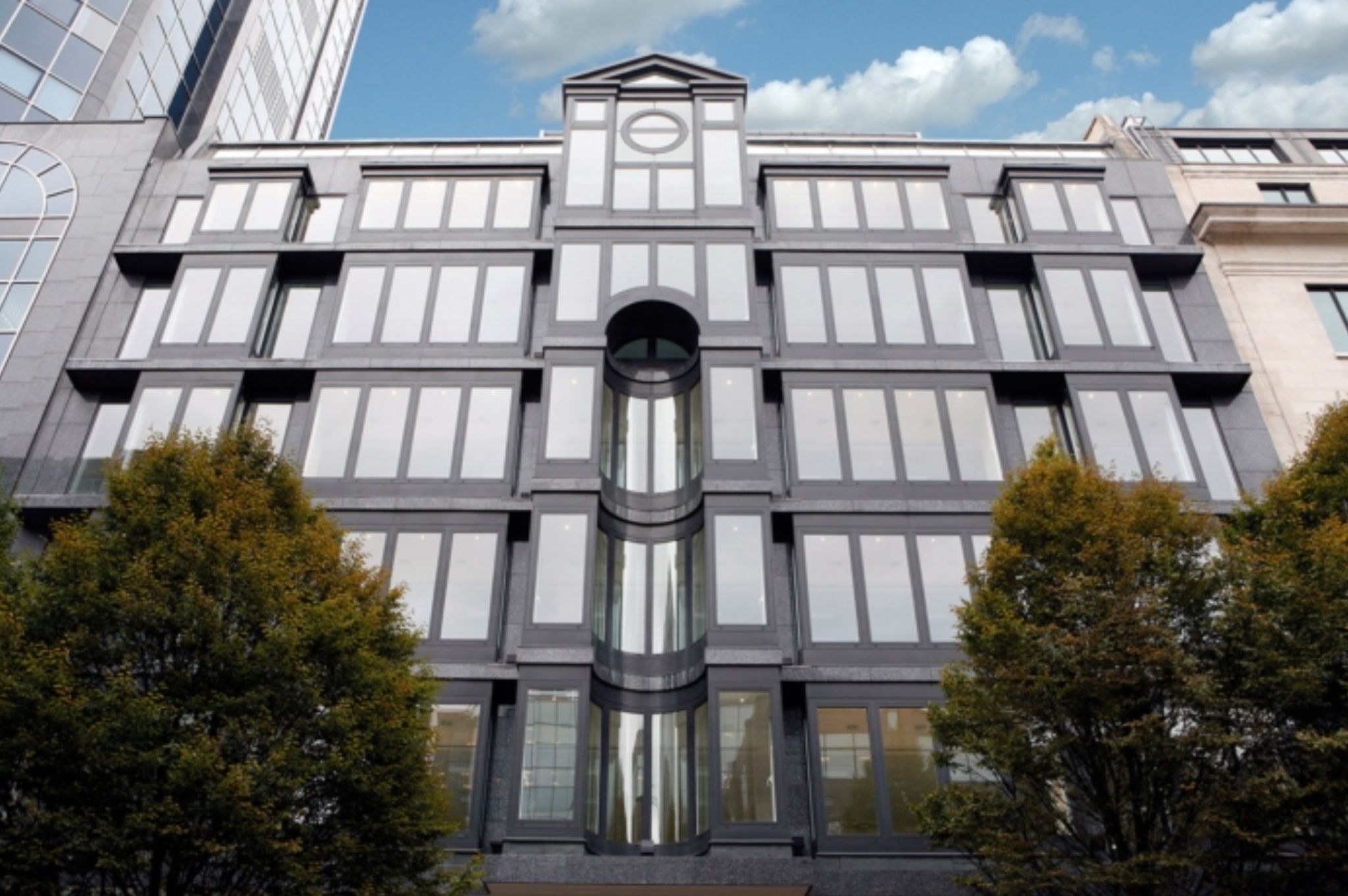
In the 20th and 21st centuries, Colmore Row gradually acquired a new layer—one of glass and concrete—which had not been part of the original ‘plan.’ The idea was simple: the city must continue to function, and therefore historic buildings cannot simply be preserved in amber. But in practice, this proved more difficult.
Any new intervention in the dense Victorian-Edwardian fabric required a balance between two extremes—either a complete imitation of the past (which looks artificial) or a stark modernist contrast (which easily disrupts the ensemble).
Nevertheless, the architects did their best. One of the most striking examples of contemporary intervention is 10 Colmore Row, a refurbished office complex where the historic façade has been preserved, but the interior has been completely redesigned to accommodate modern business spaces. Here, the ‘facadism’ strategy typical of Birmingham is at work—preserving the historic shell whilst giving it a new functional interior.
It is also worth mentioning the smaller office extensions and refurbishments that contribute to the overall contemporary feel. As a result, Colmore Row is not a museum but a layered organism where glass and stone do not compete but—albeit somewhat reluctantly—coexist.
The harmonious coexistence of architectural styles
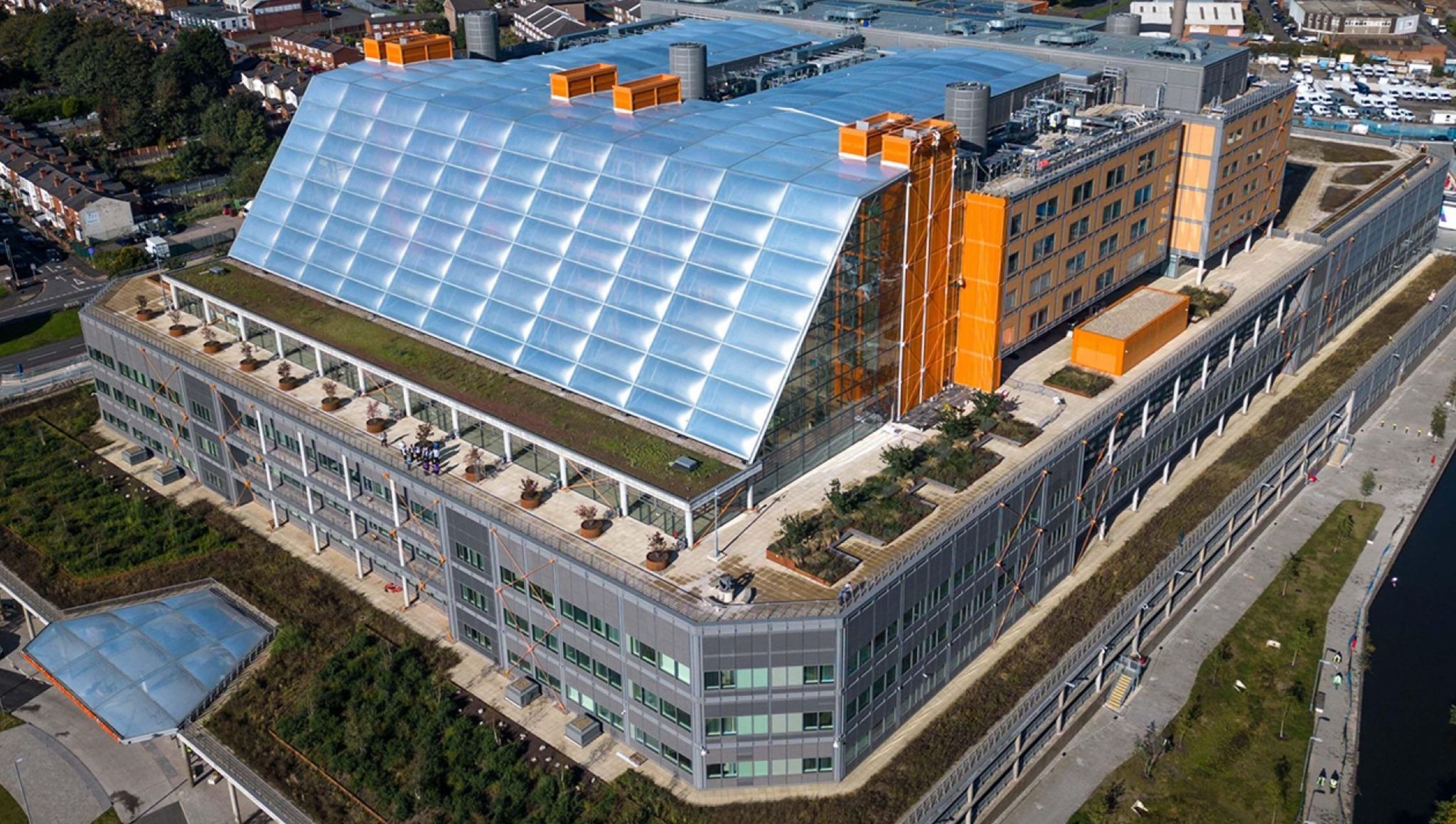
Ultimately, the example of Colmore Row clearly illustrates how Birmingham has learned to engage with its history without undue reverence, yet without destruction. The Victorian and Edwardian buildings here have not become museum props—they continue to fulfill their functions, adapting to the new demands of business and urban life.
The modern glass and concrete elements have not destroyed the old fabric, but rather highlighted it through contrast. As a result, the street looks like a living archive, where different eras do not clash but coexist.
Sources: