

As is well known, the British have a rather peculiar relationship with the sacred. Whilst in southern Europe a ‘sacred place’ is almost guaranteed to be a cathedral with frescoes and relics, in England things are not quite so simple. Here, it is entirely possible that such a place might be an old workshop, a factory chimney, or even an entire neighbourhood where, for two hundred years running, buttons, chains, and jewellery were dutifully churned out for half the empire. In this sense, Birmingham is almost a separate religion.
A city that once earned a reputation as the industrial heart of Britain has learnt to see the sacred not only in its Gothic spires but also in its red brick, narrow alleyways, and 19th-century factory façades. Incidentally, you can read more about modern Birmingham and its transformation at birmingham-future.com.
That is precisely why the Jewellery Quarter has long been more than just a historic district to the locals. It is a kind of industrial shrine to Birmingham, where the scent of metal and workshops replaces incense. Instead of icons, there are shop windows displaying jewellery and old factory buildings, which the British seem to revere no less fervently than medieval abbeys.
What is the Birmingham sacredness?
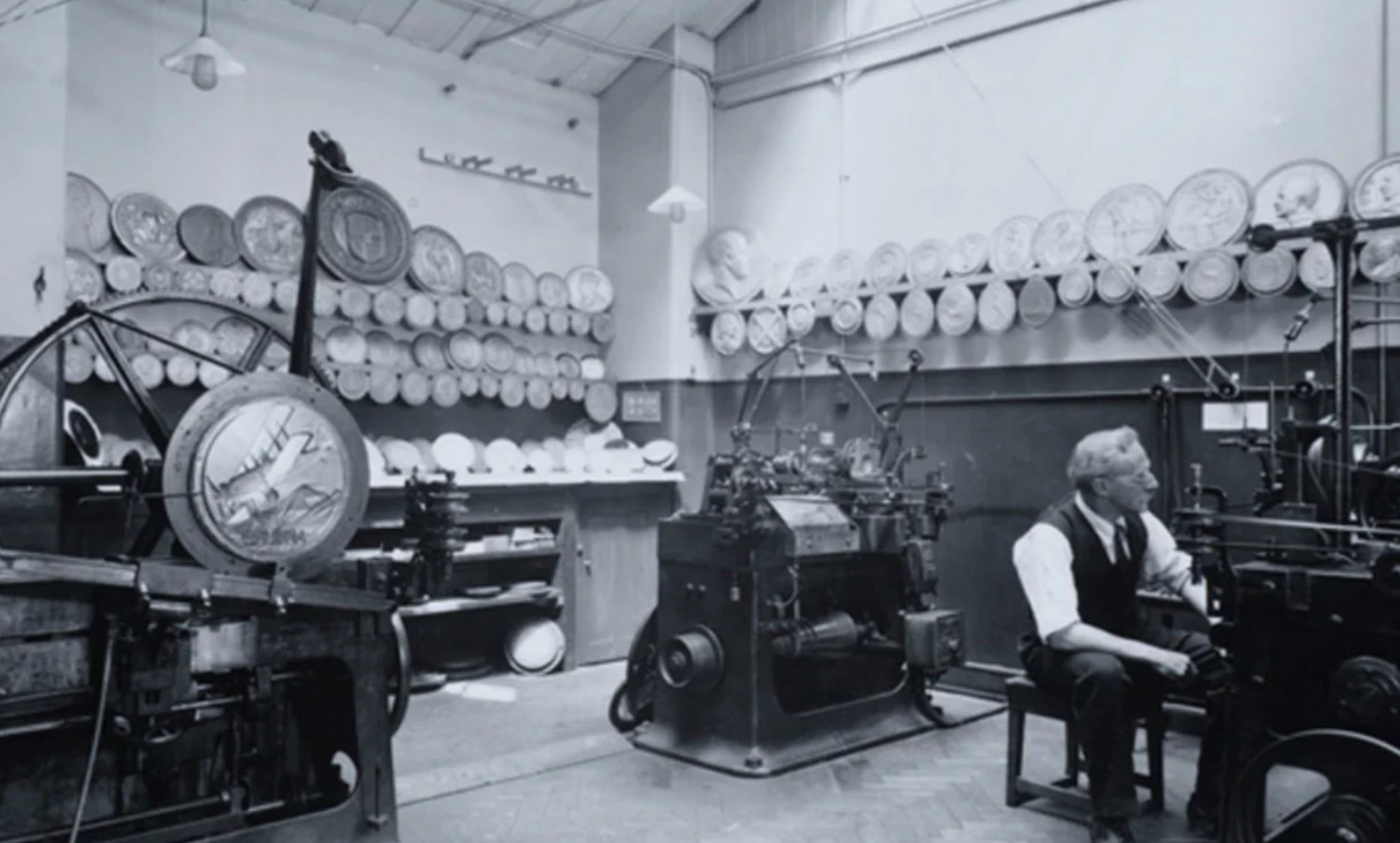
A special place in this unique sacred geography of the ‘City of a Thousand Trades’ is occupied by the Jewellery Quarter—Birmingham’s Jewellery Quarter. Admittedly, the name is somewhat misleading. Yes, jewellery was indeed produced here on an industrial scale, but the district itself never lived by rings and brooches alone.
Over the years, local factories and workshops produced literally everything that could be made from metal: from weapons and buttons to medals, watch parts, and even whistles for the British police. Yes, indeed, it is believed that it was J. Hudson & Co., based in the Jewellery Quarter, that produced the famous whistles for the ‘Titanic’—and this is, perhaps, very typical of Birmingham: a district where, alongside jewellery, items for war, industry, and maritime disasters were created.
All of this inevitably influenced the architecture of the neighbourhood. The Jewellery Quarter bears no resemblance to the ‘picture-postcard’ England of perfectly manicured lawns and sterile historicism. Its aesthetic is red brick, dense development, factory façades, narrow passageways between buildings, and endless rows of large windows, through which as much daylight as possible was once intended to reach the workshops. Here, the logic of the industrial era is almost physically palpable: the buildings did not seek to impress; they simply functioned.
Yet, the area, strangely enough, does not look purely industrial. Victorian façades, old warehouses, former factories, and workshops form a surprisingly cohesive ensemble in which industrial functionality has long since given way to aesthetics. And perhaps that is precisely why the Jewellery Quarter is perceived today not as a museum of the Industrial Revolution but as a place where Birmingham still retains its own character—a little chaotic, a little sooty, but absolutely alive.
A factory masquerading as a palace
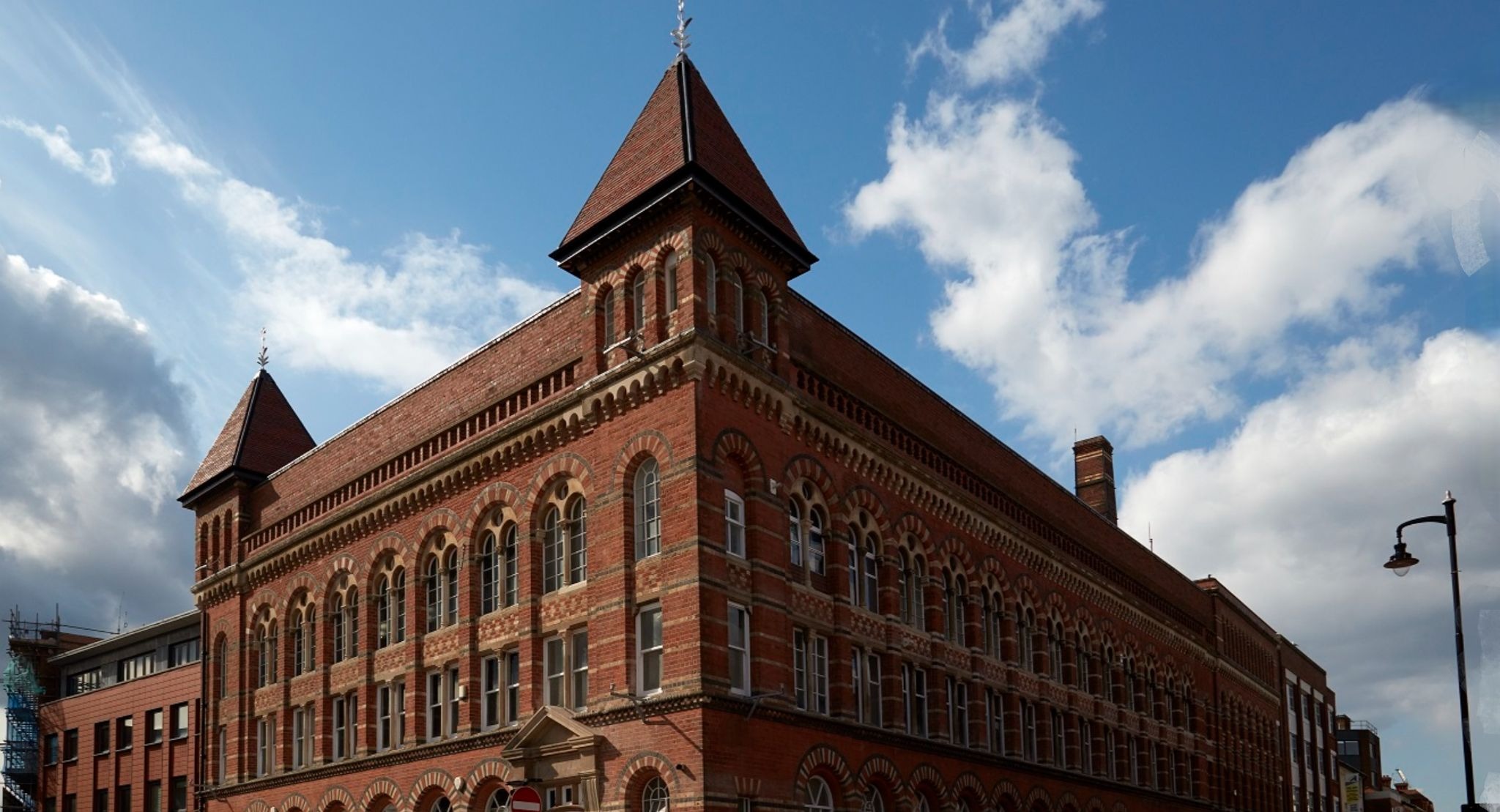
If one were to look for a building that best captures the essence of the Jewellery Quarter, one of the leading contenders would be the Argent Centre—a massive Victorian complex on Frederick Street that looks more like a Florentine palace that has somehow ended up in the heart of industrial Birmingham.
It was built in the 1860s for W. E. Wiley, a manufacturer of gold nibs and metal parts for writing instruments. And that, too, is very typical of Birmingham: a city that took both jewellery and the factory production of pens equally seriously.
The project was designed by architect John George Bland, who approached the factory without any particular desire to conceal its industrial nature. The building was designed around an inner courtyard, featuring long, narrow workshops and huge windows—daylight was, at that time, literally part of the production process. At the same time, the Argent Centre was given such a decorative façade of coloured brick and Renaissance motifs that, from the side, it looked not at all like a factory. It was rather a very ambitious attempt to demonstrate that the Industrial Revolution could also possess a sense of style.
Interestingly, the complex was also remarkably advanced for its time. Inside, fireproof structures made of metal and hollow bricks were used, and the heat from the factory machinery was even channelled to heat the Turkish baths, which operated right within the building. Nineteenth-century Birmingham was generally fond of such unusual combinations: alongside the clatter of machinery, Victorian spa treatments could easily have existed here.
Today, the Argent Centre no longer produces gold nibs, but remarkably, the building has retained almost all of its original character. Inside, it now houses offices, design studios, jewelry workshops, and creative businesses. And this is perhaps the best illustration of how the Jewellery Quarter has learned to transform its industrial past not into a museum exhibit but into a part of modern city life. Although history is not forgotten here, the Pen Museum, now located here, is a vivid confirmation of this.
‘Deadly’ accessories
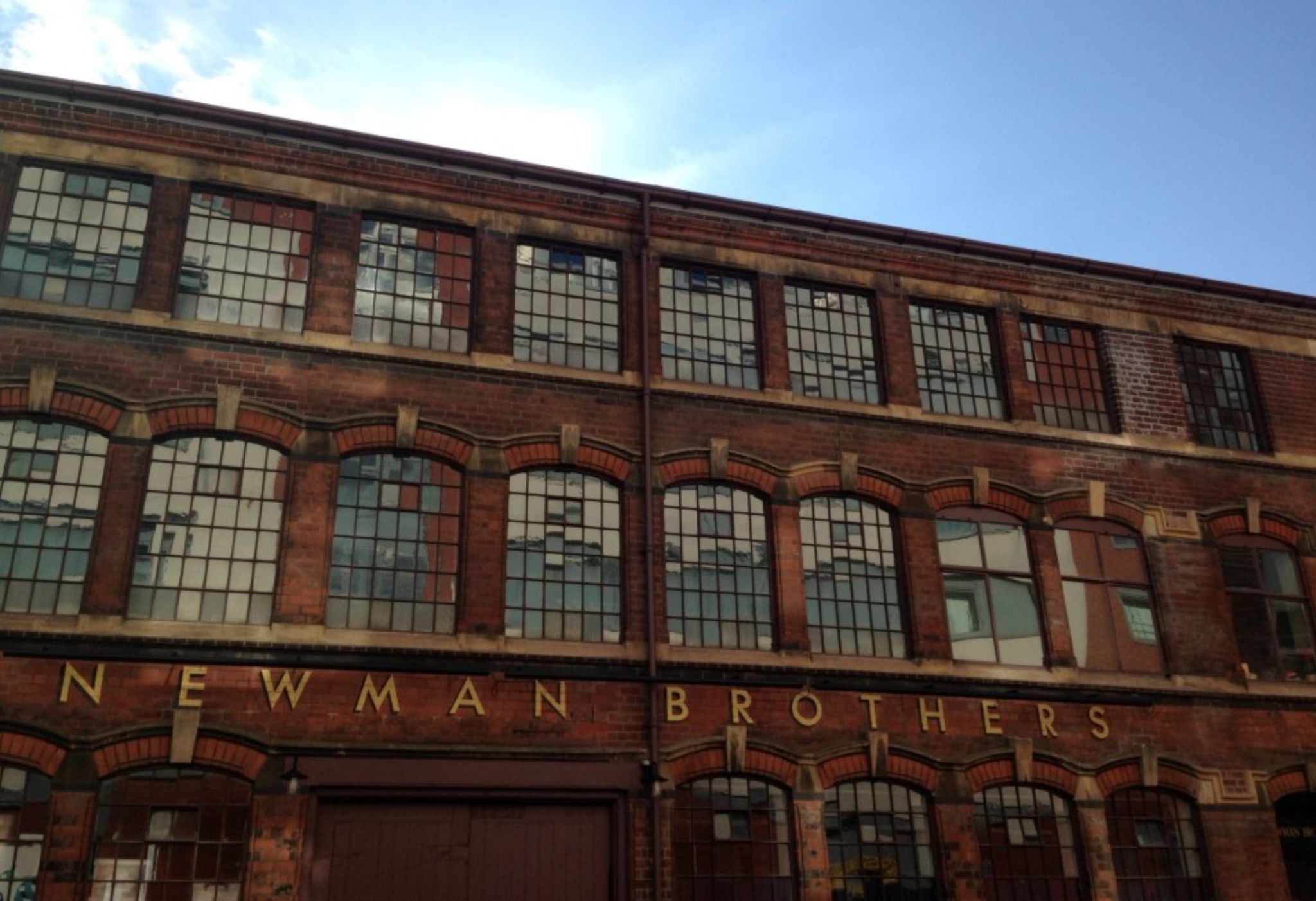
And here is another building in the Jewellery Quarter that could be considered a sacred site for ‘Brammi.’ We are talking about the Newman Brothers factory on Fleet Street—a place where, for decades, they produced not jewellery at all, but items far more prosaic and yet very British: metal fittings for coffins, funeral handles, decorative elements, and burial accessories. It was here that the handles and decorations for the coffins of many prominent figures were made, including Churchill, Chamberlain, and Diana, Princess of Wales.
In general, Birmingham had a knack for turning any niche into an industry, and death, it seems, was no exception here either.
Architecturally speaking, Newman Brothers is no longer a decorative Victorian ‘factory-palace’ in the style of the Argent Centre. The building is considerably more understated, utilitarian, and true to its industrial nature. It was built in 1894 and remained in operation until 1999.
The red brick, large factory windows, narrow production spaces, and the distinctive rhythm of the façade are not designed for beauty’s sake but for functionality. And that is precisely what makes the complex so compelling. It looks as though the industrial era simply left everything as it was and stepped out of the room for a moment.
Newman Brothers had been operating here since the late 19th century, and the building itself was gradually extended as production grew. Inside were workshops, warehouses, stamping shops, and offices—a typical vertical microcosm of Birmingham industry, where each floor had its own function and the space was utilised with almost no ‘superfluous’ architecture. Yet today, it is precisely this density and practicality that create a surprisingly atmospheric feel.
The most interesting thing is that the building has been preserved almost in its original state. It now houses the Coffin Works museum—one of Birmingham’s strangest and most unusual museums. And this is highly symbolic for the Jewellery Quarter: a district that once manufactured everything from police whistles to funeral fittings has now itself become a living artefact of the industrial era.
The sacredness of the industrial architecture of the past
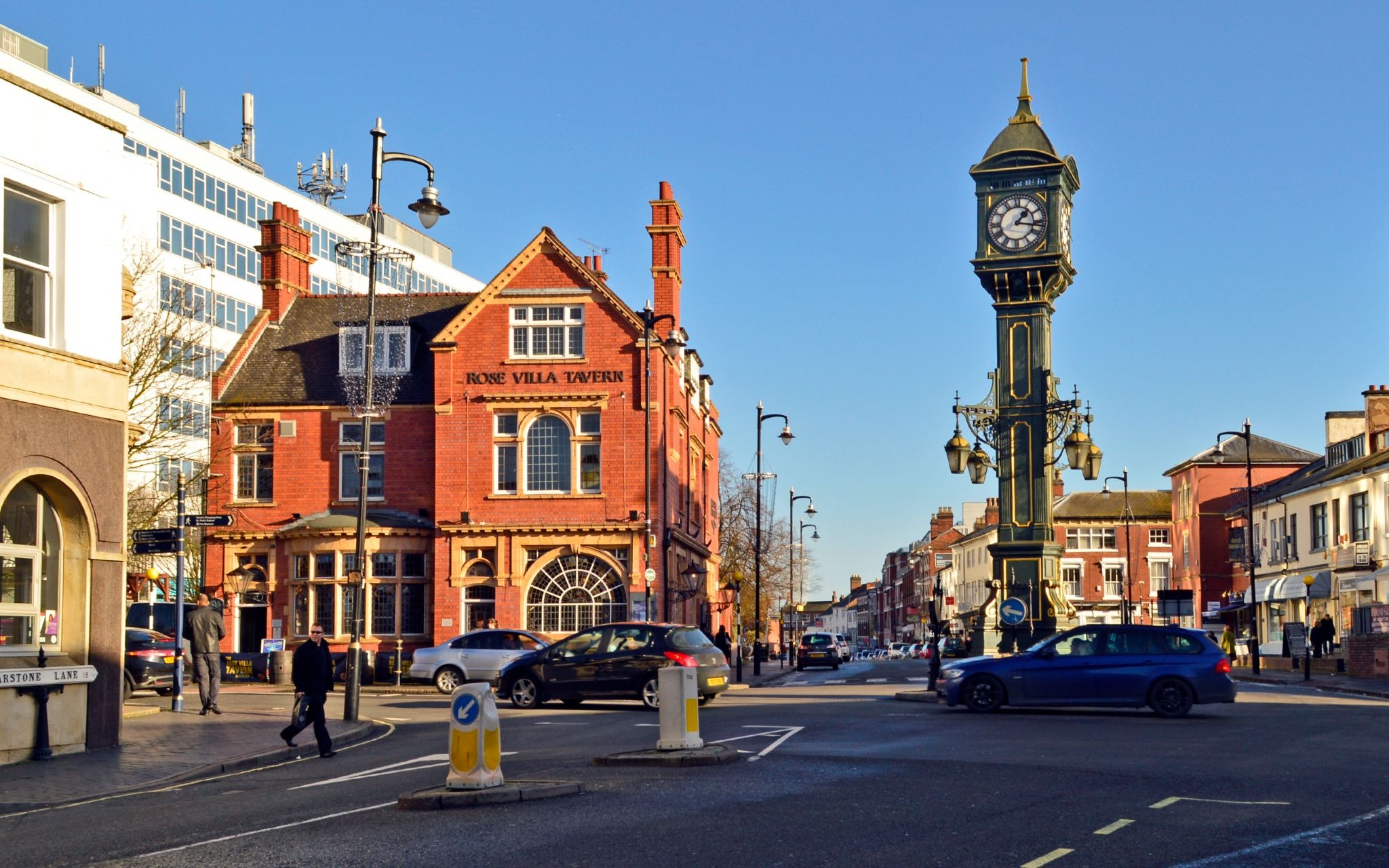
The history of the Jewellery Quarter clearly shows that, to become a sacred place for a city, a building does not necessarily have to be a cathedral or a temple. Sometimes all it takes is decades of honest labour, brick façades, soot-stained workshops, and the memory of the people who worked here. Birmingham has, in fact, turned industrial architecture into part of its own urban religion—without any gilding, but with a very British respect for time, craftsmanship, and the character of the place.
Sources:
- https://www.thejewelleryquarter.org/our-story/
- https://mitchelandco.com/blogs/the-journal/the-rich-history-of-the-jewellery-quarter
- https://penmuseum.org.uk/
- https://billdargue.jimdofree.com/placenames-gazetteer-a-to-y/places-j/the-jewellery-quarter/
- https://whichmuseum.com/museum/newman-brothers-at-the-coffin-works-birmingham-4382