

Architectural styles rarely ‘take over’ cities on their own—as if they were travelling salesmen with a suitcase full of concrete or Gothic arches. Usually, it is the city itself that chooses what to dress in at one stage or another of its history. And it is not just a matter of fashion. Although architects, like all creative people, also love to collectively become so enamored with something that they then spend half a century trying to tear it down.
Similarly, Birmingham’s choice of modernism was by no means accidental. A city that grew up on factories, smoke, railways, and industrial pragmatism could hardly pretend to be a picture-postcard museum forever. By the mid-20th century, it was already thinking in terms of speed, transport, production, and efficiency. You can read more about the city’s architectural history and individual buildings at birmingham-future.com.
The Second World War played a significant part in this, providing a convenient excuse to radically rebuild everything: part of the old town was destroyed by bombing during the infamous ‘Blitz,’ whilst another part was enthusiastically condemned to demolition by the city planners themselves—hello to the city’s chief engineer, Herbert Manzoni.
For Birmingham, modernism became not merely an architectural style but almost an official ideology for the city’s future. Concrete was meant to symbolise progress, roads freedom, and high-rises a new era.
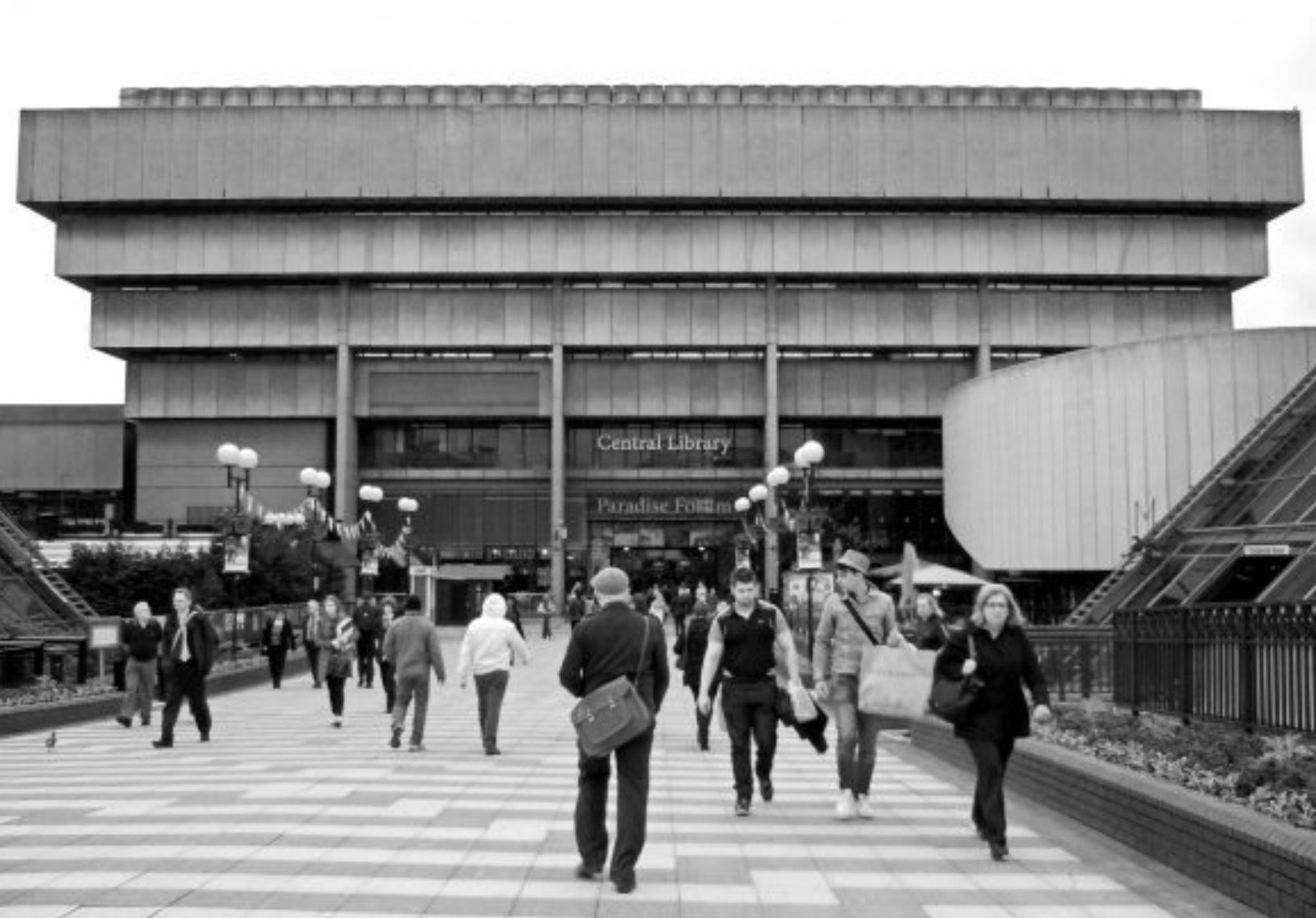
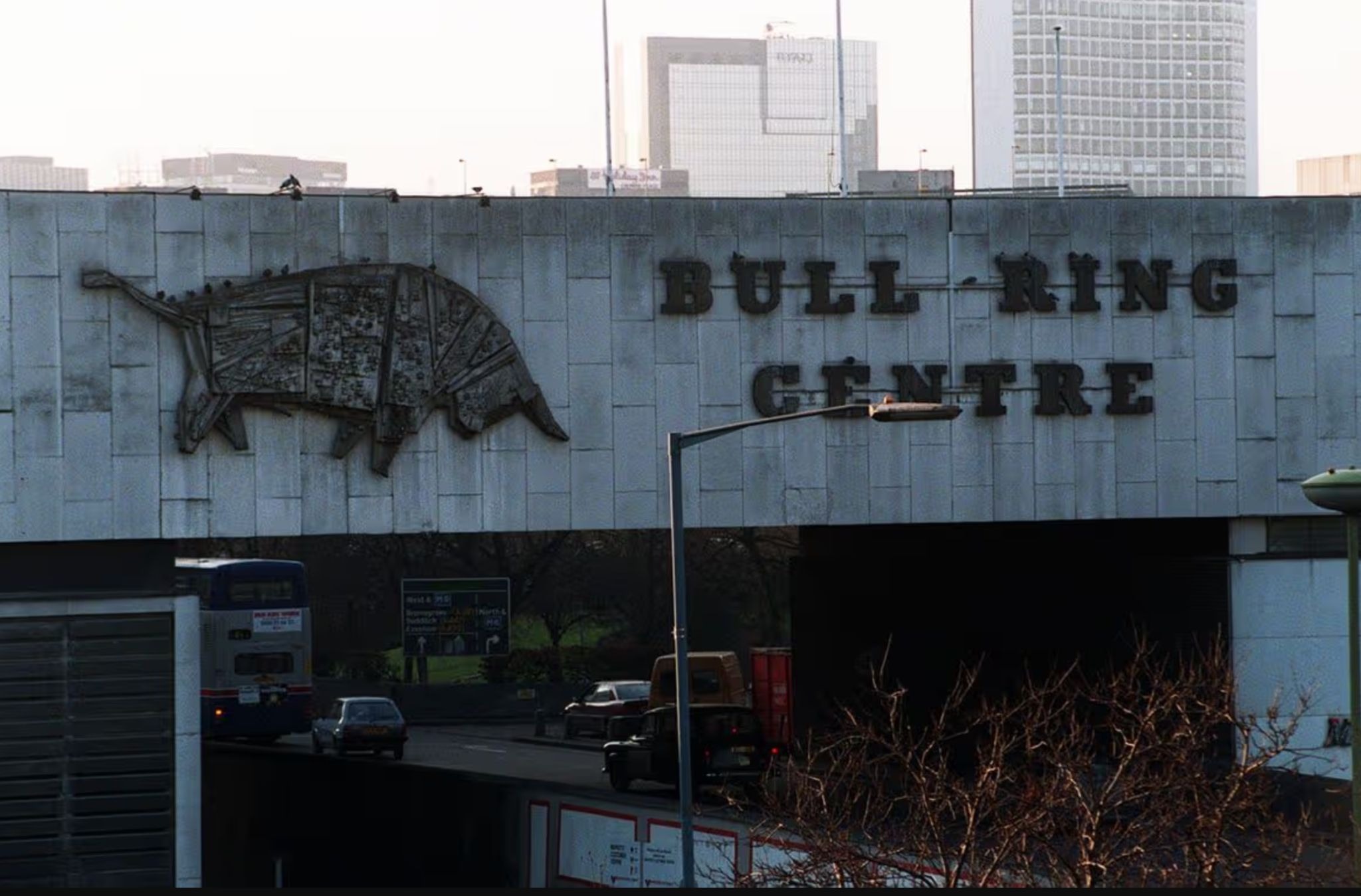
This immediately brings to mind John Madin’s famous library and the Bull Ring. Although they were demolished amidst loud protests from architects and defenders of modernism, they were nevertheless torn down with the tacit consent of the majority of the townspeople. It seemed as though they truly hated ‘grey concrete.’ But that is another story.
So that’s what modernism is like
Modernism in architecture did not emerge simply because someone had suddenly grown tired of columns, stucco moldings, and statues of melancholic ancient men. The early 20th century was generally ill-suited to decorative excesses. The world was rapidly industrialising, cities were growing, and two world wars finally convinced Europe that the future had to be practical, cheap, and functional.
This is precisely how modernism came into being—an architectural style that effectively declared war on everything ‘superfluous.’ The new architects believed that a building should honestly reveal its structure, rather than disguise concrete as marble or adorn façades with decorative elements ‘for beauty’s sake.’ Ornaments were replaced by straight lines, glass, metal, and reinforced concrete.
After the Second World War, modernism became almost the official language of the reconstruction of British cities. But it was Birmingham that went further in this direction than many others. Whilst London was still trying to strike a balance between its historical heritage and new neighborhoods, Birmingham at times looked as though it had decided to move entirely into the future.
It was here that Brutalism—the most radical and controversial form of modernism—really took root. It is hard to mistake it for anything else: massive concrete structures, gigantic geometric forms, minimal decoration, and maximum functionality. The symbols of this era for Birmingham were, as mentioned above, John Madin’s legendary library and the old Bull Ring—structures which, for some, were architectural masterpieces, whilst for others, they were the most compelling argument for never again trusting architects with concrete.
Once the concrete had set
However, modernism in Birmingham is not just about concrete monstrosities, flyovers, and urban architectural experiments that still make lovers of Victorian architecture cringe. Following the approval of a large-scale urban regeneration plan in the 1950s, Birmingham did indeed begin to change rapidly, but by no means all modernist buildings turned out to be as unsuccessful as is sometimes portrayed in retrospect.
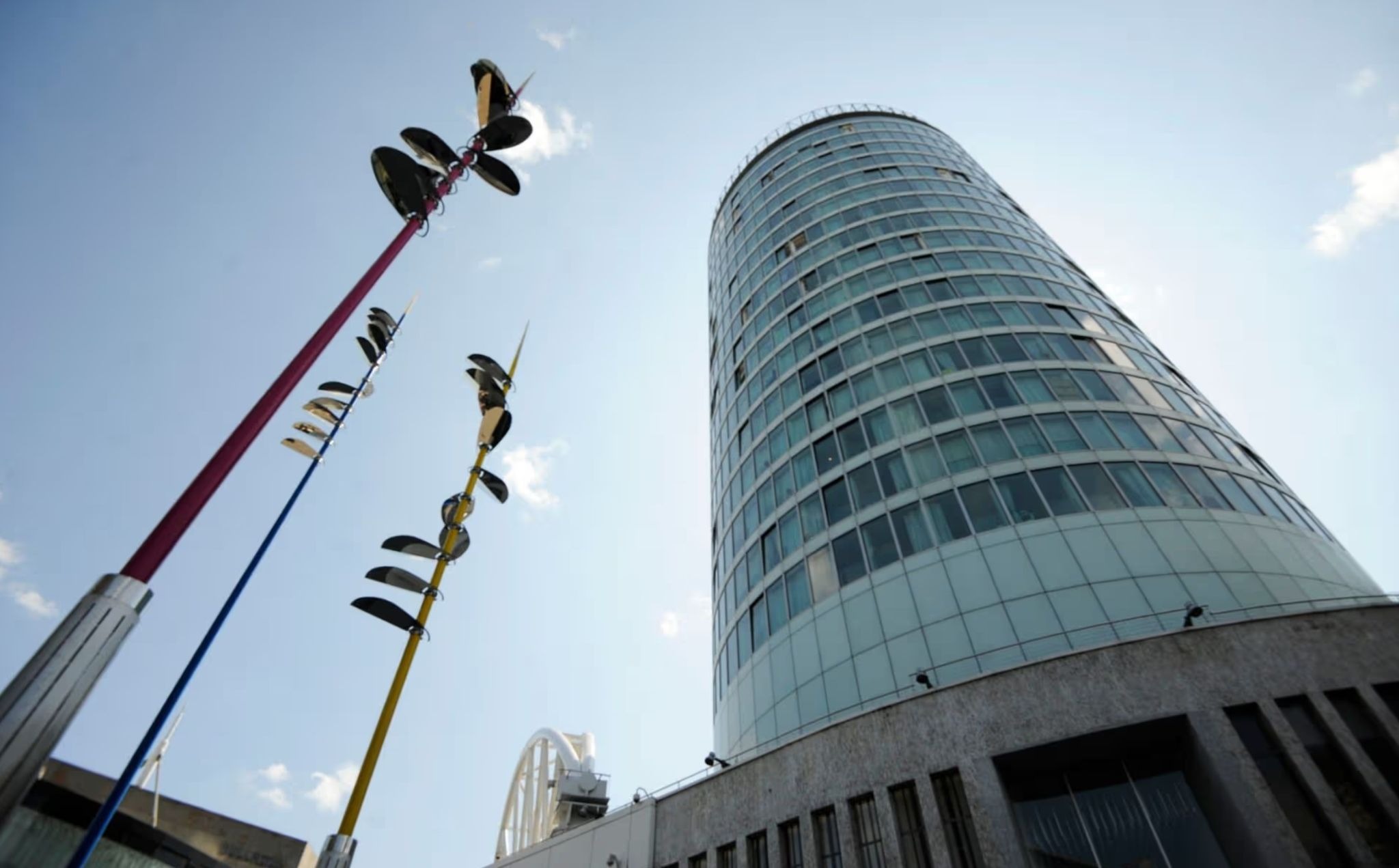
What’s more, some of them have blended quite naturally into the urban landscape and, over time, have even become local symbols of the era. A good example is the Rotunda—a cylindrical high-rise built in the 1960s near the Bull Ring. Against the backdrop of Birmingham’s massive and often overly linear Brutalism, it looked almost futuristically elegant.
The building did not seek to overwhelm the townspeople with its concrete mass; on the contrary, it created a sense of lightness and movement. Its rounded shape looked so unusual for the British architecture of the time that the Rotunda quickly became one of the most recognisable features of the city skyline. Although, to be fair, it should be noted that its status as a listed building, which the Rotunda was granted in 2000, also played a part in its preservation.
Paradoxically, it was modernism that gave Birmingham much of its current visual identity. The thing is, the city, caught up in new ideas, simply failed to put the brakes on in time at a certain point.
The city after the concrete
Consequently, by the end of the 20th century, modernism in Birmingham had suddenly ceased to look like a promise of the future. What had been regarded just yesterday as a bold step forward was now increasingly being called a planning mistake. And the city, which had once rebuilt itself with such enthusiasm, set about dismantling it with equal vigour.
In the 1980s and 1990s, a wave of demolition and redevelopment swept through a significant portion of the modernist built environment. This was often presented as ‘urban regeneration,’ but in practice it meant the loss of entire swathes of post-war architecture. The aforementioned demolition of the old Bull Ring complex became one of the most symbolic moments of this transformation—not only physical but also ideological.
The debate surrounding this process quickly spread beyond professional architectural circles. Activists, historians, and some residents began to speak of the loss of the modernist heritage as a distinct issue. What had not long ago been perceived as an ‘uncomfortable legacy’ gradually began to acquire the status of the city’s historical charm, which cannot simply be erased without consequences.
Similarly, at the start of the 21st century, modernism and brutalism began to be reinterpreted as part of cultural identity, rather than merely as an architectural mistake. In Birmingham, this led to the selective preservation and adaptation of a number of buildings. In particular, the Rotunda itself remained a key landmark in the city centre, having undergone renovation and adaptation for modern use. The building was closed for refurbishment in 2004 and reopened in 2008.
A similar fate befell a number of office and residential towers from the post-war era: some were modernised, some were integrated into new neighborhoods, and some were preserved as a reminder of that period when the city unhesitatingly built its future out of concrete.
Postmodern Birmingham
In the end, when there was simply too much grey concrete, it gradually began to evoke not admiration, but weariness and aversion. What once seemed like a promising future had become the backdrop to everyday life.
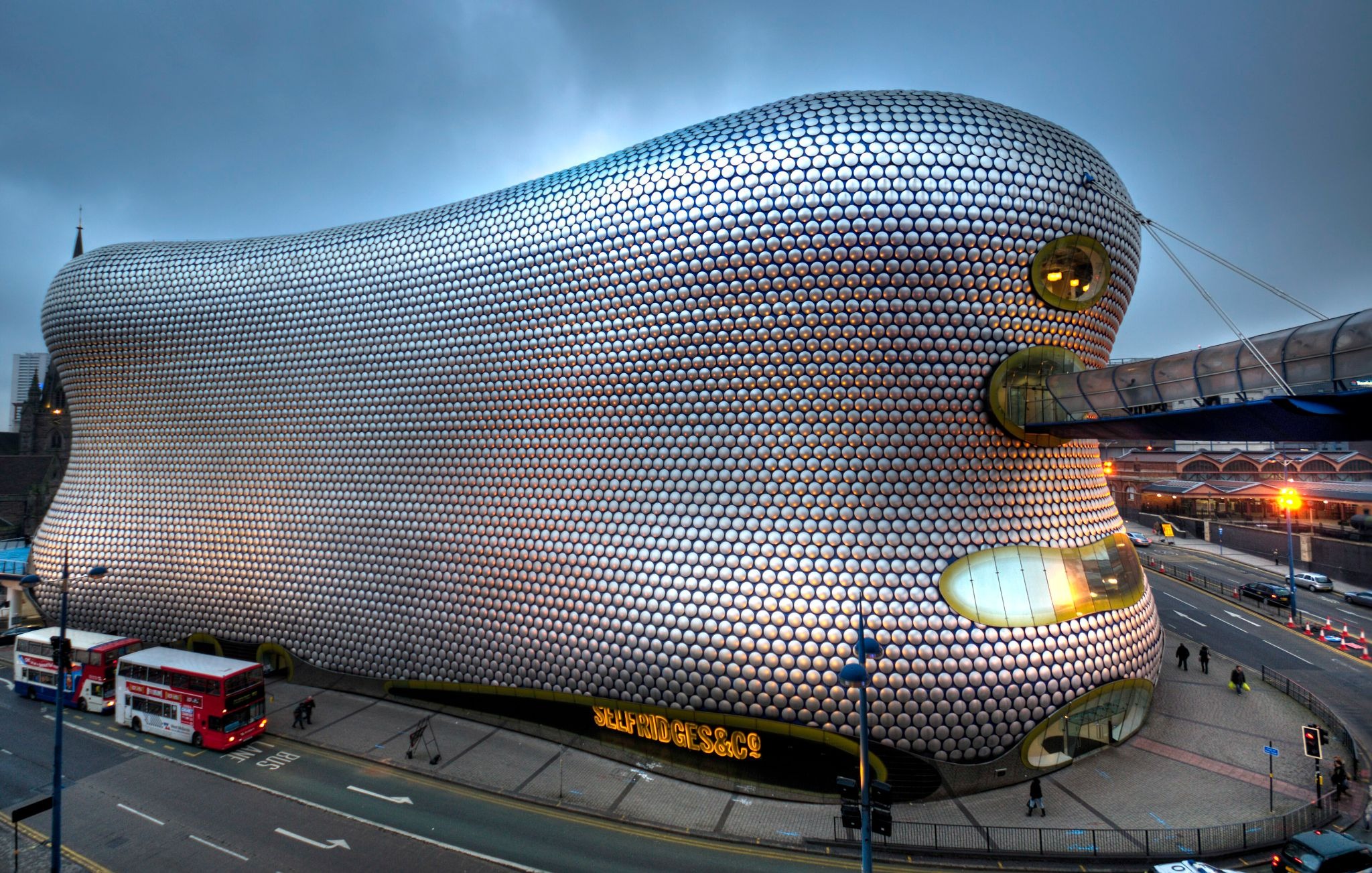
But modernism is not dead. In our time, it has been replaced by postmodernism and a new wave of architecture featuring glass, metal, and a more ‘light’ visual language. Birmingham is keeping pace in this regard too: iconic buildings such as The Cube and the Selfridges Building have emerged, shaping a different image of the city—one that is more vibrant, diverse, and commercially friendly.
For now, they are popular with locals and tourists alike, but architectural history has a habit of repeating itself. And what will become of these landmarks in 50 to 100 years’ time is a question to which no style has yet provided a clear answer.
Sources:
- https://www.tandfonline.com/doi/abs/10.1080/02665433.2011.550446
- https://www.birminghammail.co.uk/news/nostalgia/birmingham-future-seen-from-1950s-5778029
- https://www.kupi.com/en-ae/explore/united-kingdom/birmingham/history
- https://www.cloud-cuckoo.net/openarchive/wolke/X-positionen/Birmingham/birmingham.html
- https://c20society.org.uk/lost-modern/birmingham-central-library