

The UK is not only the birthplace of the railways but also a place where, from time to time, they have made their presence felt in ways far from desirable. British railways have seen it all. There have been disasters for which words and explanations were long lacking—one need only recall the Quintinshill rail disaster, in which over 200 people died, or the Harrow and Wealdstone rail crash, which claimed 112 lives. Against this backdrop, the incident near Birmingham seems a far lesser tragedy—and, to be honest, it’s a good thing it is.
But there is one detail here that spoils things a little. The scale of the tragedy isn’t always the most important thing. Sometimes you only need to travel a few kilometers from the city center to come across a story that people don’t particularly like to recall but which clearly illustrates how the system works. And how it sometimes breaks down. If the reports on birmingham-future.com are to be believed, one such story took place just 10–12 kilometers from the center—and it seems far less coincidental than one might like to think.
The railway as the backbone of urban transport
Birmingham is a city that always seems to be in a hurry. Not in a romantic sense, but in a very practical one. Everything here revolves around movement: goods, work, transport a constant flow of people. And naturally, the railway became for it not a beautiful story of progress, but simply a means of survival.
It’s not London with all its glitz, nor is it a small provincial town where you can wait for trains in peace, gazing into the distance. Birmingham is a waystation, a hub through which things are constantly passing and almost never stay for long.
And, in fact, the railway here did not emerge as something ‘experimental.’ It was built quickly to meet the needs of industry, serving factories, warehouses, and transport. The priority was not perfect planning, but capacity. In other words, it had to keep moving, not stand still. In the 19th century, this was seen as progress, but at the same time it laid the foundations for a certain fragility in the system—because speed often took precedence over safety.
How reliable was it? For its time, it was adequate and at times even impressive. But it depended heavily on people: signalmen, drivers, and station staff. Automation that could ‘back up’ against human error simply did not exist in the modern sense. Consequently, even the slightest inaccuracy could turn into a serious problem.
The day before the Birmingham accident
The day before the accident, 22 January 1955, was no different from any other. The railway was operating as usual: trains arrived and departed on schedule, and the staff carried out their routine duties, which had long since ceased to be perceived as anything difficult or dangerous.
The system appeared stable—as stable as an infrastructure can appear, given that everything depended on constant human attention. The signal boxes were operating as normal, the signalmen were coordinating traffic, and no one expected anything to go wrong in the near future.
The accident was not caused by a single sudden failure but by a gradual accumulation of errors. Under modern conditions, this simply would not have happened—the speed control systems would have kicked in and prevented the train from continuing to travel in a dangerous state.
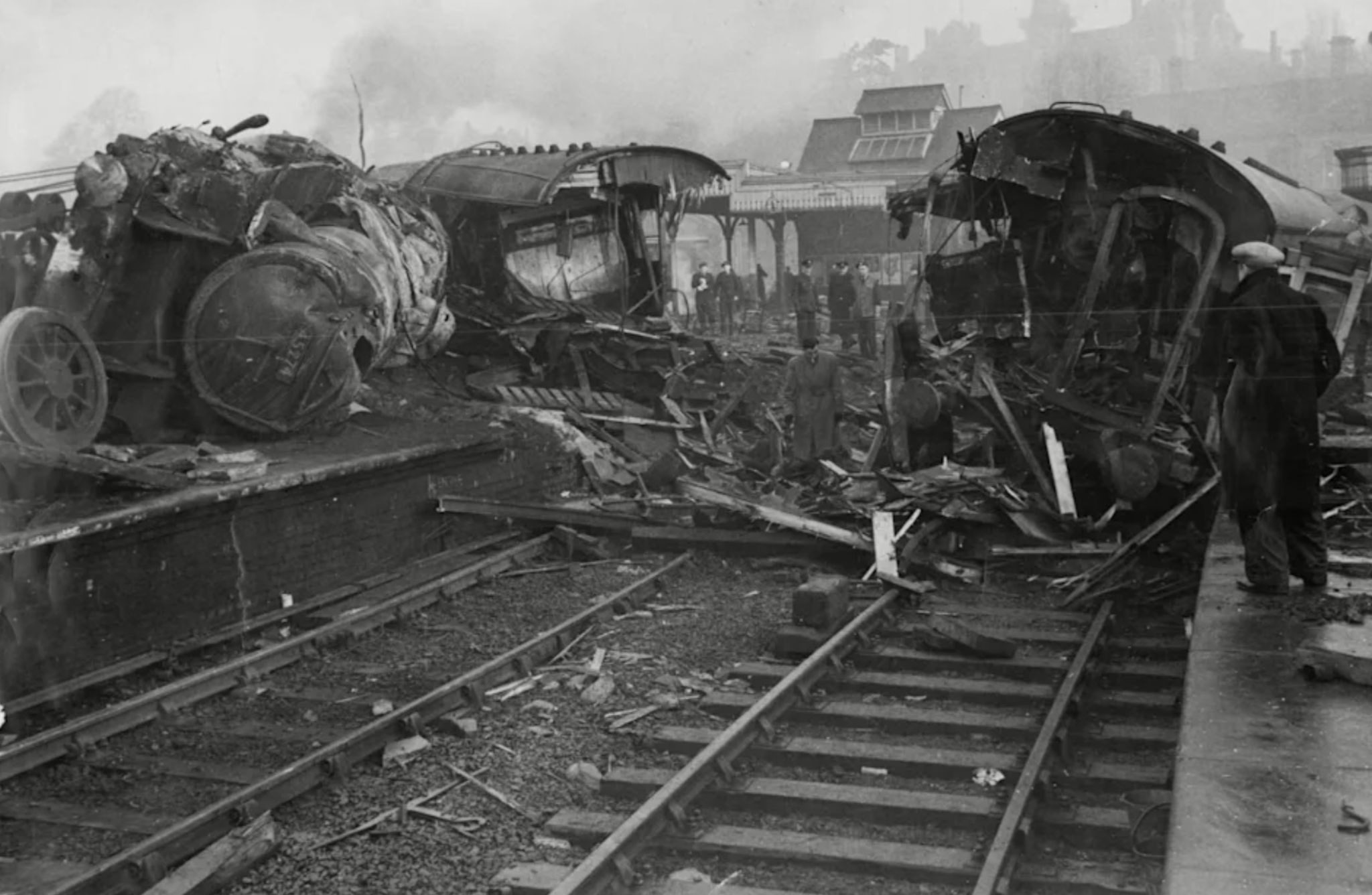
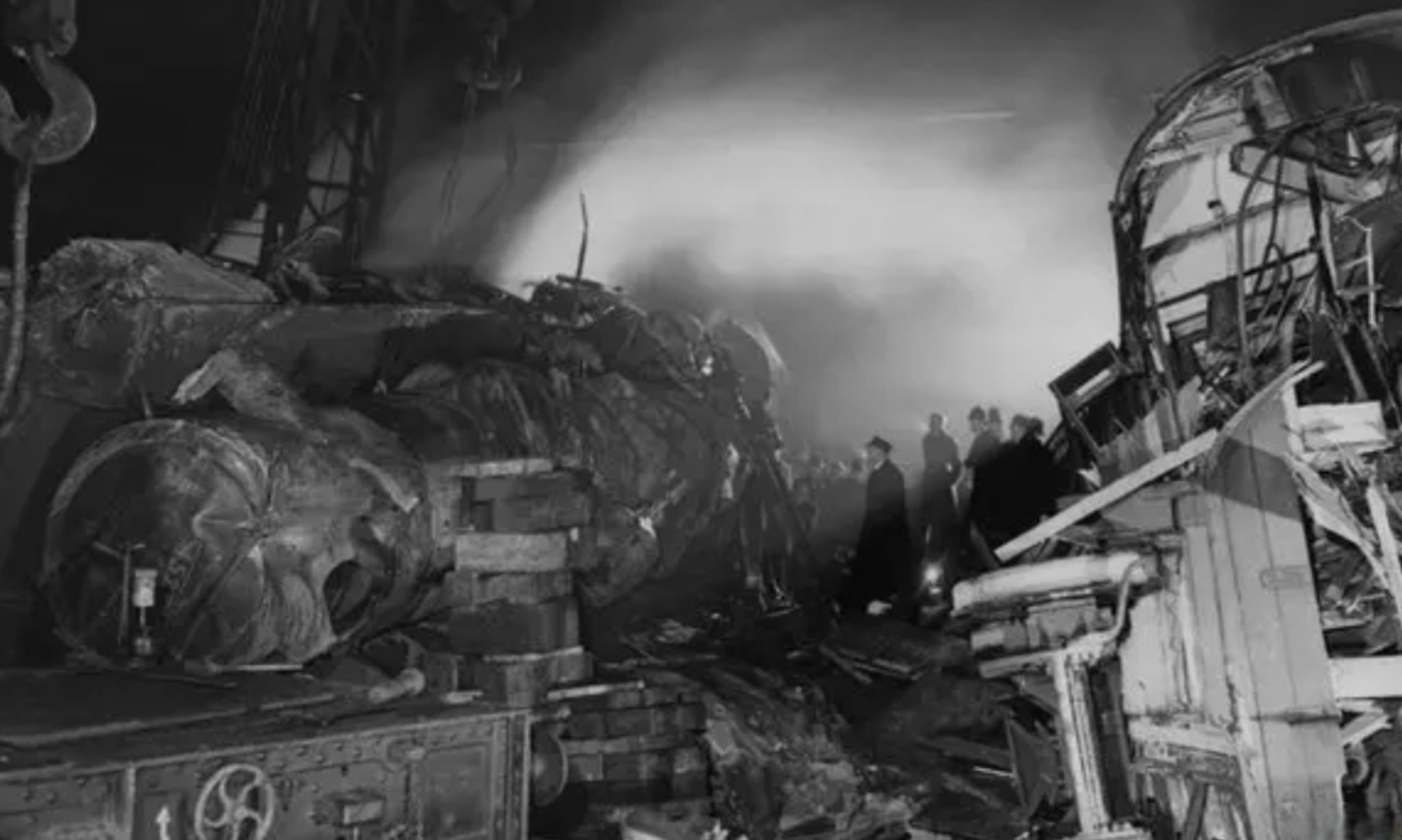
The collision between the system and reality happened in an instant. The carriages derailed, part of the train was seriously damaged, and people found themselves trapped in structures that, just a few minutes earlier, had seemed like ordinary transport.
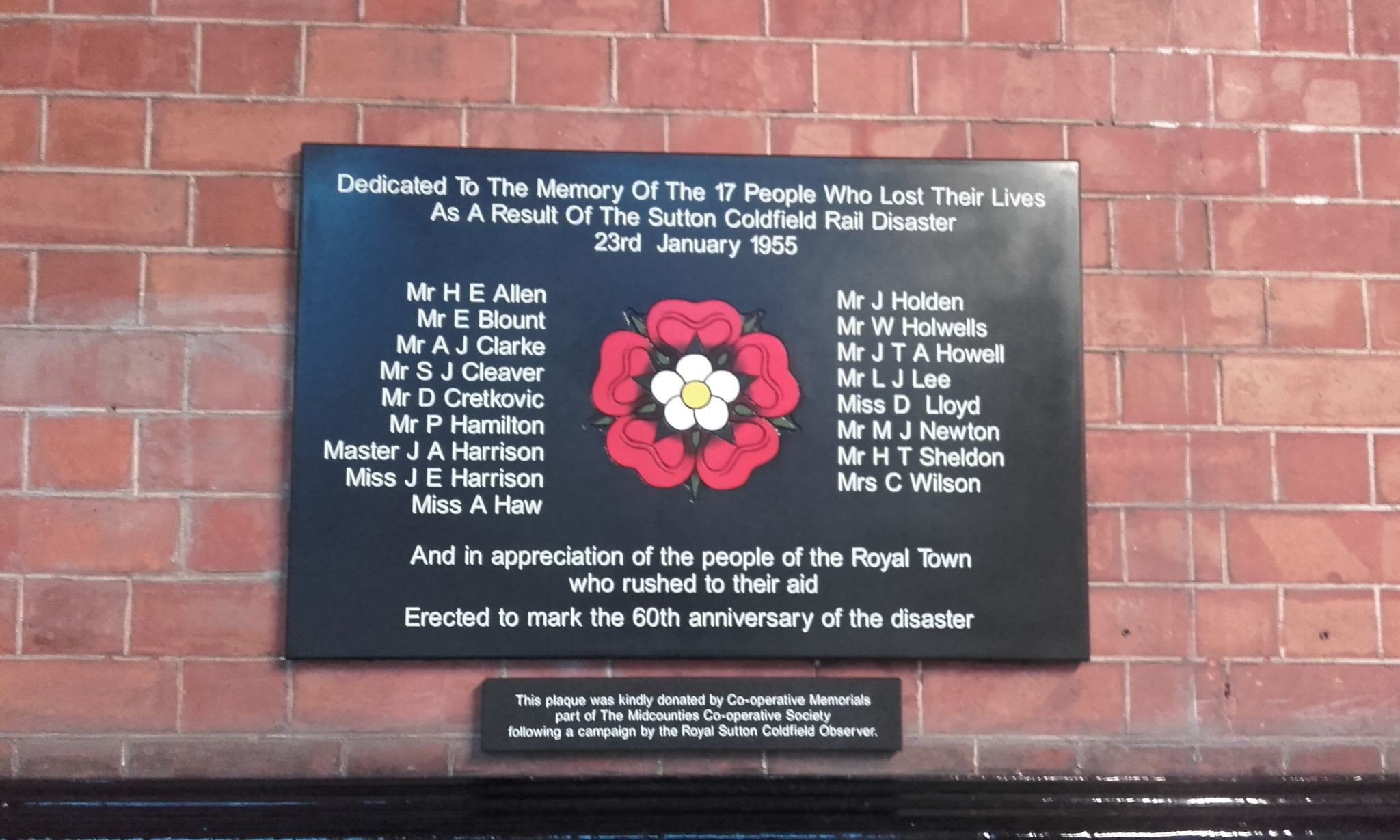
The death toll was later confirmed at 17, with dozens injured. Whilst not the largest disaster in terms of scale, it was serious enough to once again raise questions about the limits of human control.
Who is to blame?
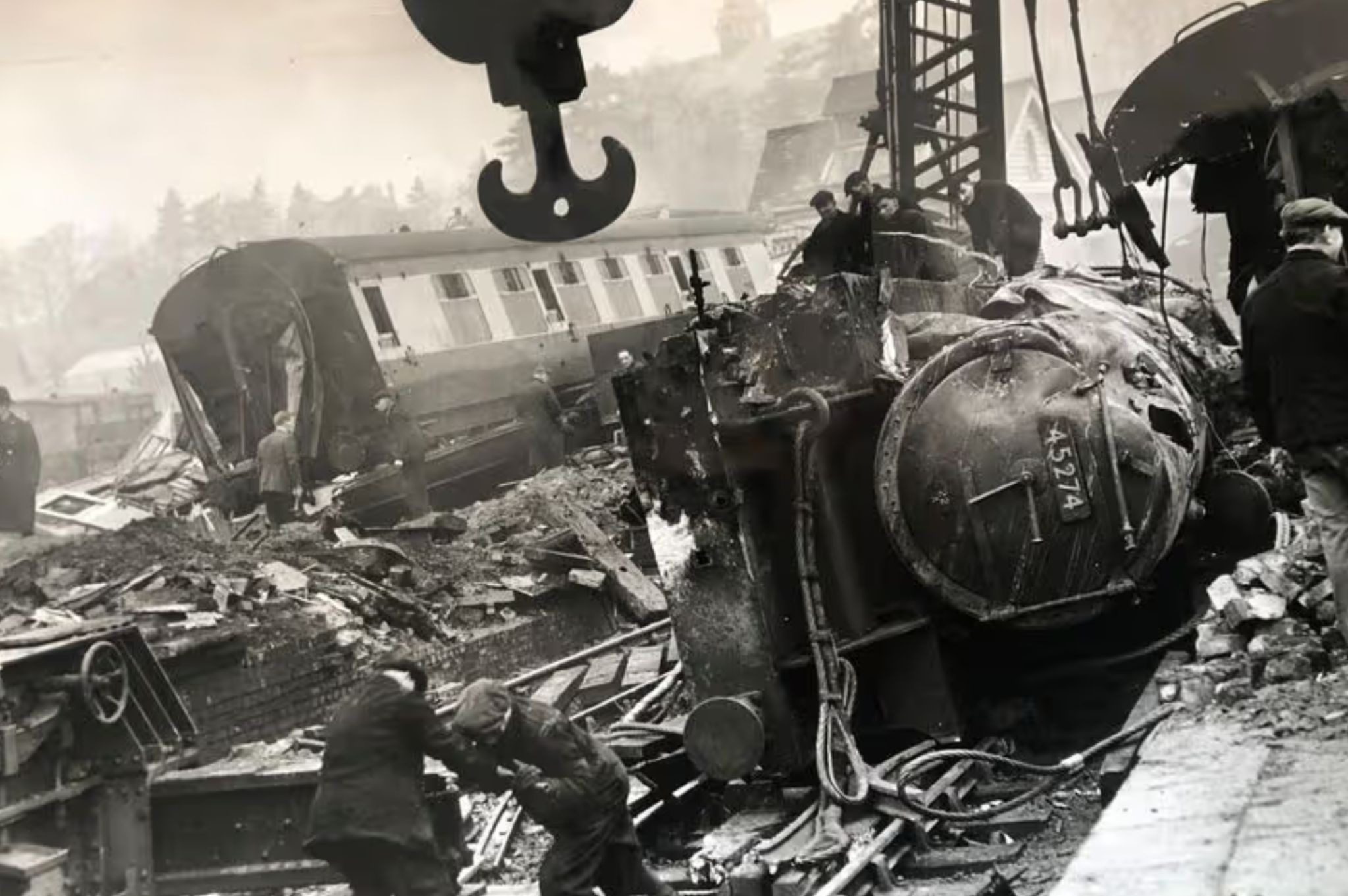
Immediately after the accident, they began to investigate what exactly had gone wrong. It soon became clear that the problem was not a technical fault. It was a fatal combination of human error and the lack, at that time, of automatic controls that could have provided a safety net for the human operator.
In the case of the Sutton Coldfield rail crash, speeding on a curved section of track and the locomotive crew’s misjudgement of the situation played a key role. The train entered the curved section near the station at a speed that significantly exceeded the safe limit for that stretch of track. It can now be said that modern safety systems would simply have halted the train’s movement, thereby preventing the tragic accident and saving the passengers’ lives.
It should be noted that on that Sunday evening, following the weekend, there were around 300 passengers on board this train, returning from their weekend break. Unfortunately, in January 1955, the safety of these hundreds of people depended solely on the train driver’s vigilance, and this reliance proved to be far too fragile.
The investigation revealed that there had been no failure of the signals or damage to the tracks. It was a combination of circumstances in which a subjective decision taken in the locomotive cab proved fatal under the actual conditions of the journey. That is precisely why the reports of the time emphasised not only the crew’s fault but also the need for technical improvements to speed control and automatic warning systems. It became clear that passengers’ lives could not be left entirely dependent on the concentration of a single person.
As for punishment, there were no high-profile criminal convictions, as the driver himself and his assistant were killed in the crash. In Britain, the usual procedure in such cases was followed: thorough internal investigations, a review of operating procedures and the modernisation of the tracks. The guilty party is not ‘designated’ merely for the sake of it if they are no longer around; instead, responsibility seems to dissolve into systemic shortcomings. And this is often what appears most cynical—because the tragedy remains, yet it is no longer possible to pin the blame on any individual.
As for those who lost their lives, they were ordinary passengers. Workers, people returning home or travelling on business, with no connection to one another other than the chance choice of the York–Bristol train. And it is precisely this randomness that always strikes hardest in such stories: none of them had anything to do with the causes of the incident, yet they all became its victims because of a single fatal error in management.
Lessons that will always ‘pay off’
Following the Sutton Coldfield rail crash, everything unfolded, as ever, according to the familiar pattern. Investigations, findings, reports, and discussions of the causes. And almost immediately—the conclusion that is most often heard in such cases: the system needs to be improved.
The discussion focused primarily on speed control on challenging stretches of track, clearer instructions for train crews, and the development of automated warning systems that could reduce reliance on human factors. In other words, measures that, in essence, should be in place as a safeguard before anything happens.
But there is always one problem here. In such cases, lessons are indeed documented, formalized, and recorded in the minutes. The only question is how long they remain relevant in the day-to-day running of the system.
Because every story of this kind seems to follow the same cycle: tragedy—explanations—promises of change—and a gradual return to business as usual, where schedules, speed, and bandwidth matter once again.
And that is precisely why these ‘lessons learned’ always sound a bit perfunctory. Not because they didn’t happen, but because they are usually only mentioned after the event has already taken place.
Today, only a small commemorative plaque at Sutton Coldfield station serves as a reminder of that Sunday in January 1955. It hangs there as a quiet reminder: the railway system is not just about timetables and metal, but above all a huge responsibility, where the cost of a mistake is measured not in minutes of delay, but in human lives.
Sources:
- https://www.bbc.com/news/uk-england-birmingham-30947182
- https://www.railwaysarchive.co.uk/docsummary.php?docID=292
- https://www.geograph.org.uk/photo/1746595
- https://www.bbc.com/news/uk-england-birmingham-30947182
- https://www.birminghammail.co.uk/news/nostalgia/gallery/70-years-ago-17-people-30846672