

Nineteenth-century Birmingham is rarely associated with tranquillity. It was a city of metal, factories, smoke and industrial clamour. It was here that the Industrial Revolution transformed England into the ‘workshop of the world’ and the city itself into one of the centres of a new urban era. And, it would seem, in such a place one would expect people to think mainly of coal, profits and the latest patent for an improved mechanism. But amidst this mechanical reality, a strange and almost paradoxical thing emerged—stained-glass windows, as ifthey were denyingthe very spirit of the industrial age.
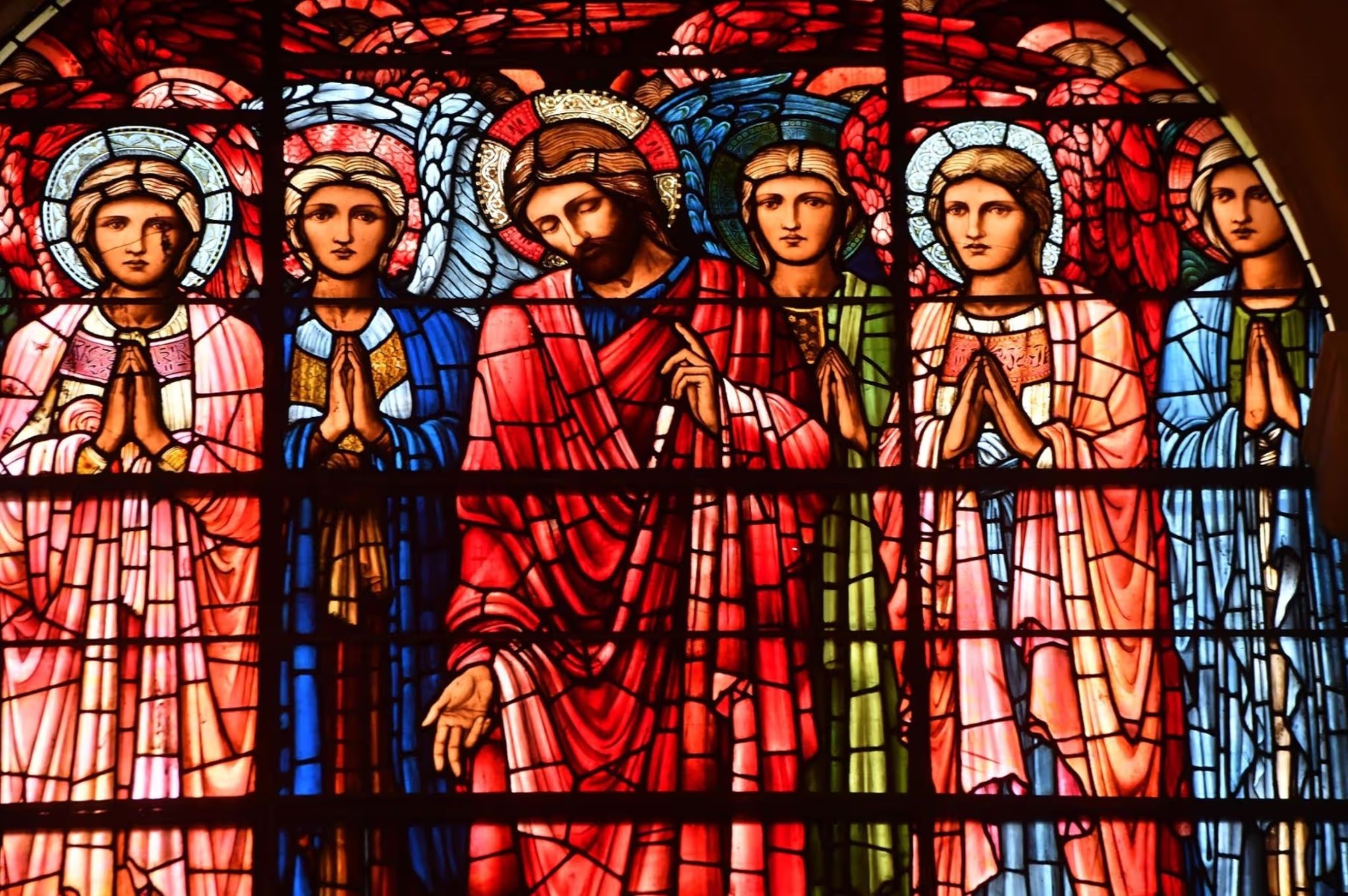
Birmingham Cathedral, better known as St. Philip’s Cathedral, is home to four famous stained-glass windows by Edward Burne-Jones, created in William Morris’s workshop in the late 19th century. They are considered among the finest examples of Victorian stained-glass art in the world. And this is somewhat ironic: some of the most poetic works of British sacred art were created in a city that most people still imagine as a vast forest of factory chimneys. You can read more about this at birmingham-future.com.
From medieval lighting to Victorian glass
The earliest techniques for producing coloured glass existed as far back as the ancient world—among the Romans and the peoples of the Middle East. Admittedly, at that time these were mainly decorative inlays or small coloured elements. The stained-glass window as a full-fledged part of architecture emerged much later, around the early Middle Ages, when Christian churches began to transform not merely into places of worship, but into complex spaces of symbolism.
But the true heyday of stained-glass art began in the 12th century in France. It was there that Gothic architecture effectively ‘opened up’ the wall to let in light. Whereas Romanesque churches were heavy and massive, Gothic architecture suddenly decided that stone need not be the main material. Flying buttresses, pointed arches and new structural solutions made it possible to create huge windows, which began to be filled with stained glass. The idea was quite ambitious: the light in the church was meant to symbolise the presence of God.
Chartres Cathedral became one of the most famous centres of early stained-glass art, where a significant proportion of the medieval stained-glass windows have survived to this day. It was the French Gothic tradition that laid the foundations for the subsequent spread of stained-glass art throughout Europe.
This trend reached England fairly quickly—along with Gothic architecture following the Norman Conquest. As early as the 12th and 13th centuries, English cathedrals began to make extensive use of stained glass, although the local tradition gradually became more restrained than the French one.
However, the 16th-century Reformation, the civil wars, Puritanism and the traditional British tendency to occasionally ‘clean up’ churches in a radical manner led to the destruction of a vast number of medieval stained-glass windows. Some were smashed, some were sold, and some simply disappeared during the rebuilding of churches.
And that is precisely why the 19th century marked a great revival of stained glass in England. The Victorian era suddenly decided that the Middle Ages weren’t so bad after all. Riding the wave of Neo-Gothic revival, British architects, artists and craftsmen began to revive old techniques. Thus, workshops emerged that transformed stained glass not merely into a church element but into a distinct art form.
How a Baroque church became a canvas for stained-glass windows
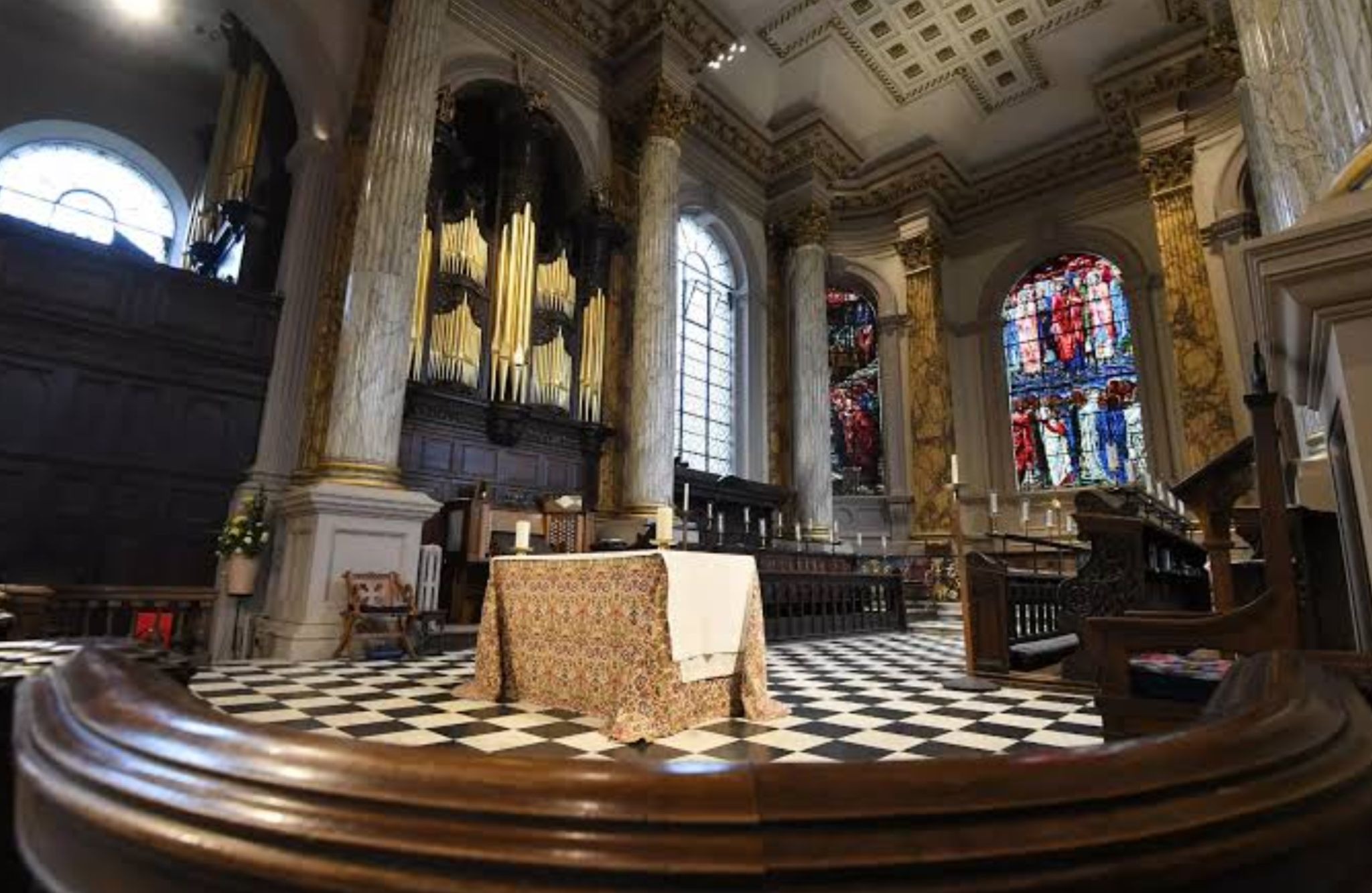
One of Birmingham’s most famous stained-glass windows is the one at Birmingham Cathedral. Its history began on a much more modest scale than one might expect from one of the main cathedrals of a major British city. In the early 18th century, Birmingham was not yet an industrial giant—rather, it was a rapidly growing centre of trade and craftsmanship that was already outgrowing the confines of the old parishes. That is why, in 1709, construction began here on the new St. Philip’s Church, designed by the English architect Thomas Archer.
Interestingly, the cathedral, which is now associated with Victorian stained-glass windows and the Pre-Raphaelites, was originally a rather modest, understated Baroque church.
The church was granted cathedral status only in 1905, when a separate Birmingham diocese was established. The fact is that the 19th century brought factories, railways, new neighbourhoods and a huge increase in population to Birmingham.

Moreover, Victorian society, weary of industrial monotony, suddenly discovered the Middle Ages for itself. And although St. Philip’s Cathedral itself was not a Gothic cathedral, the idea of adding stained-glass windows to it seemed entirely logical: the church lacked the emotional and visual impact that had become almost obligatory for 19th-century sacred architecture.
In the 1880s, Edward Burne-Jones—a native of Birmingham and one of the most famous artists of the Pre-Raphaelite circle—was commissioned to work on the stained-glass windows. The work was carried out by William Morris’s workshop, which by that time had effectively become a symbol of the British Arts and Crafts movement.
Burne-Jones devised the compositions and figures, whilst Morris’s workshop was responsible for the technical execution, the colours and the actual production of the glass. As a result, the stained-glass windows became not merely part of the interior but almost a separate system for perceiving space. They transformed the atmosphere of the cathedral depending on the weather, the time of day and even the British sun, which, let’s be honest, does not often grace England with its presence.
The removal of stained-glass windows during the Second World War

When you look at the beautiful stained-glass windows of Birmingham Cathedral today, it’s hard to believe, but they might well not have survived into the 21st century. And this time, it wasn’t down to Victorian fashions, changing architectural tastes or yet another British reform. The greatest threat to them came from the Second World War.
Once the German bombing raids began, people in British cities quickly realised that the war was taking a heavy toll on their historical heritage. This was particularly true of the most fragile artefacts, made of thin coloured glass. Birmingham, as one of Britain’s major industrial centres, was an obvious target for the Luftwaffe.

That is precisely why, right at the start of the war, a decision was taken at St. Philip’s Cathedral to remove the famous stained-glass windows by Edward Burne-Jones. The idea was quite pragmatic: if they were left in place, the very first serious blast wave would reduce the Victorian masterpiece to several thousand coloured shards. As time has shown, the decision was the right one. It literally saved these masterpieces of decorative and applied art.
The dismantling process was complex and required the precision of a jeweller. Each element had to be carefully removed, labelled, packed and transported to a safe location. In effect, the stained-glass windows were temporarily ‘taken apart’ to give them a chance of surviving the war. And this decision proved to be absolutely the right one.
After the war: the happy return of the masterpieces

As is well known, during the Birmingham Blitz, the city suffered severe damage. German bombing raids between 1940 and 1943 damaged thousands of buildings, and in places the city centre looked like a scene of utter devastation.
Incidentally, St. Philip’s Cathedral was also affected—the explosions damaged the building, shattering the ordinary glass, and, what is more, part of the interior required restoration. But the main event had taken place earlier: the stained-glass windows had been removed, and they were no longer there.
It was only after the war had ended that Burne-Jones’s stained-glass windows were returned to their original locations as a reminder of not only industrial but also cultural Birmingham.
Sources: