

Brandwood End Cemetery, located in Birmingham, was officially opened on April 13, 1899, by George Tallis, chairman of the local cemetery committee. The first burial took place two days later, on April 15, 1899, and, sadly, it was for a young child. A quintessential Victorian cemetery, it features a landscaped design with a central tree-lined avenue intersected by smaller paths, forming a grid structure. At its highest point stand the twin chapels, constructed from terracotta brick: one for nonconformists and the other consecrated for the Anglican Church. These chapels are connected by an arched belltower that forms the centerpiece of the cemetery. Next on birmingham-future.com.
The Twin Chapels
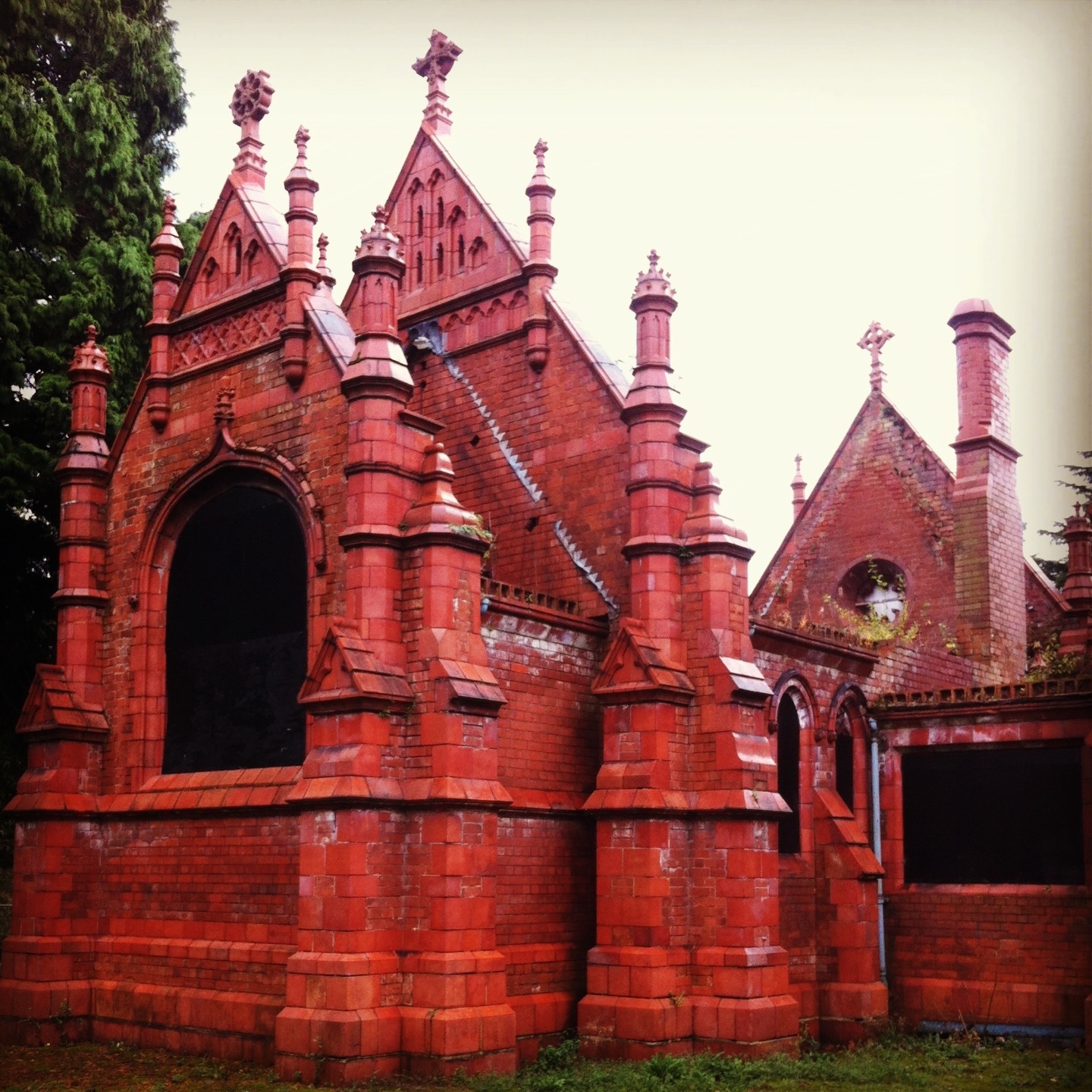
The twin chapels of Brandwood End Cemetery, built in 1898–1899, are significant examples of Gothic architecture, designed by local architect John Boulton Brewer Holmes and constructed by Edward J. Charles. Notable for their terracotta brickwork, these chapels are unique within Birmingham, as no other funeral chapels in the city utilize terracotta in their construction. The chapels were connected by a carriage arch, providing a dignified entry point for funeral processions.
The foundation stone of the Anglican chapel was laid on April 30, 1898, with a time capsule, containing a copy of the Birmingham Weekly Post, placed beneath it. The chapels were completed early in 1899 and officially listed as buildings of architectural and historical significance in 1997.
A Serene Place of Reflection
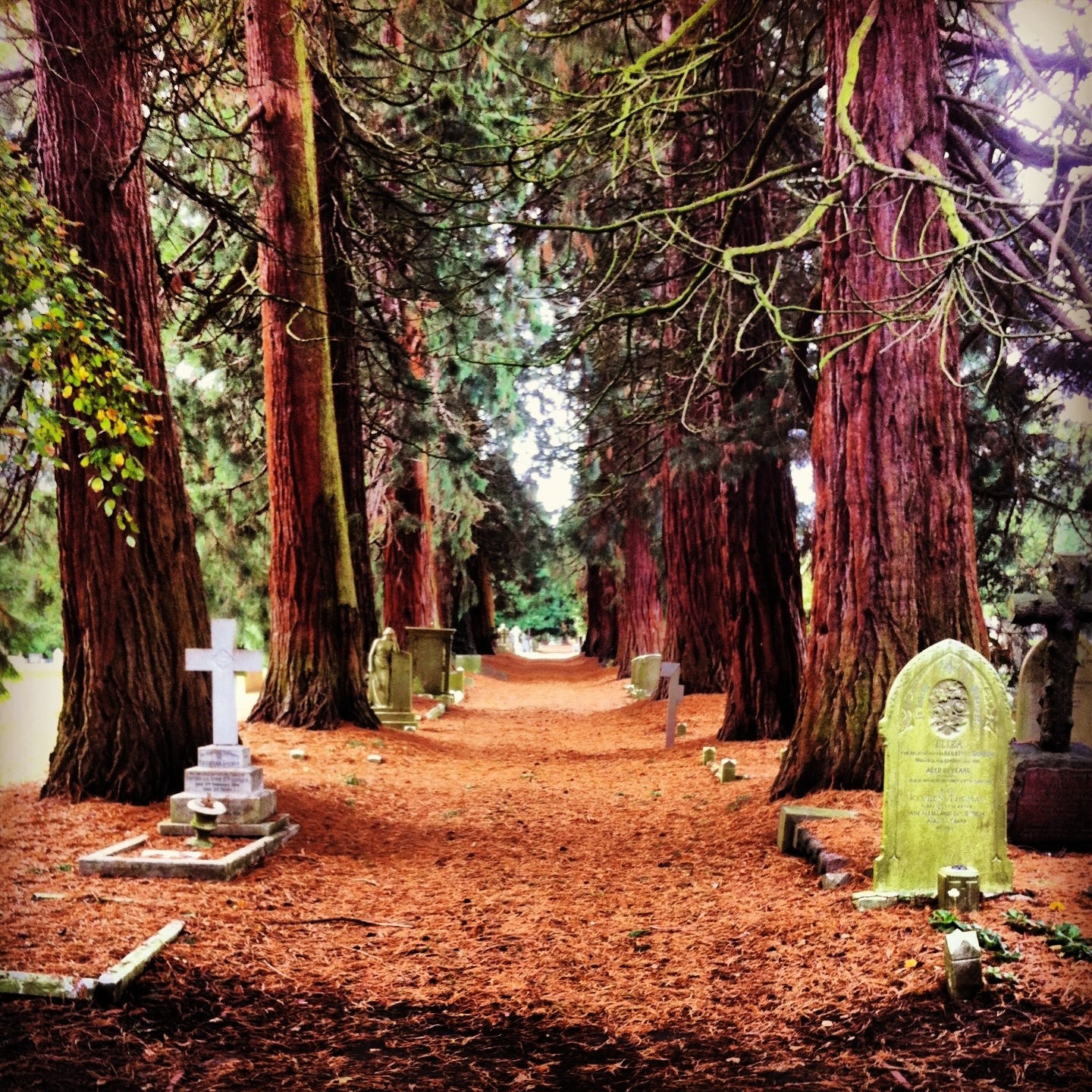
Brandwood End Cemetery is celebrated for its peaceful and picturesque setting, especially during autumn. Its design includes avenues of pine, cypress, and Wellingtonia trees, contributing to its designation as a historically significant landscape in 2001. Over the years, the cemetery has expanded to approximately 53 hectares, with portions of the land sold in 1919 to the local Jewish community for a separate cemetery.
Initially established on farmland to accommodate Birmingham’s growing suburban population, the cemetery became part of the city in 1911 through the Greater Birmingham Act. It later acquired additional land in 1915, 1917, 1920, and 1950, reflecting the city’s expanding needs.
Graves of Interest
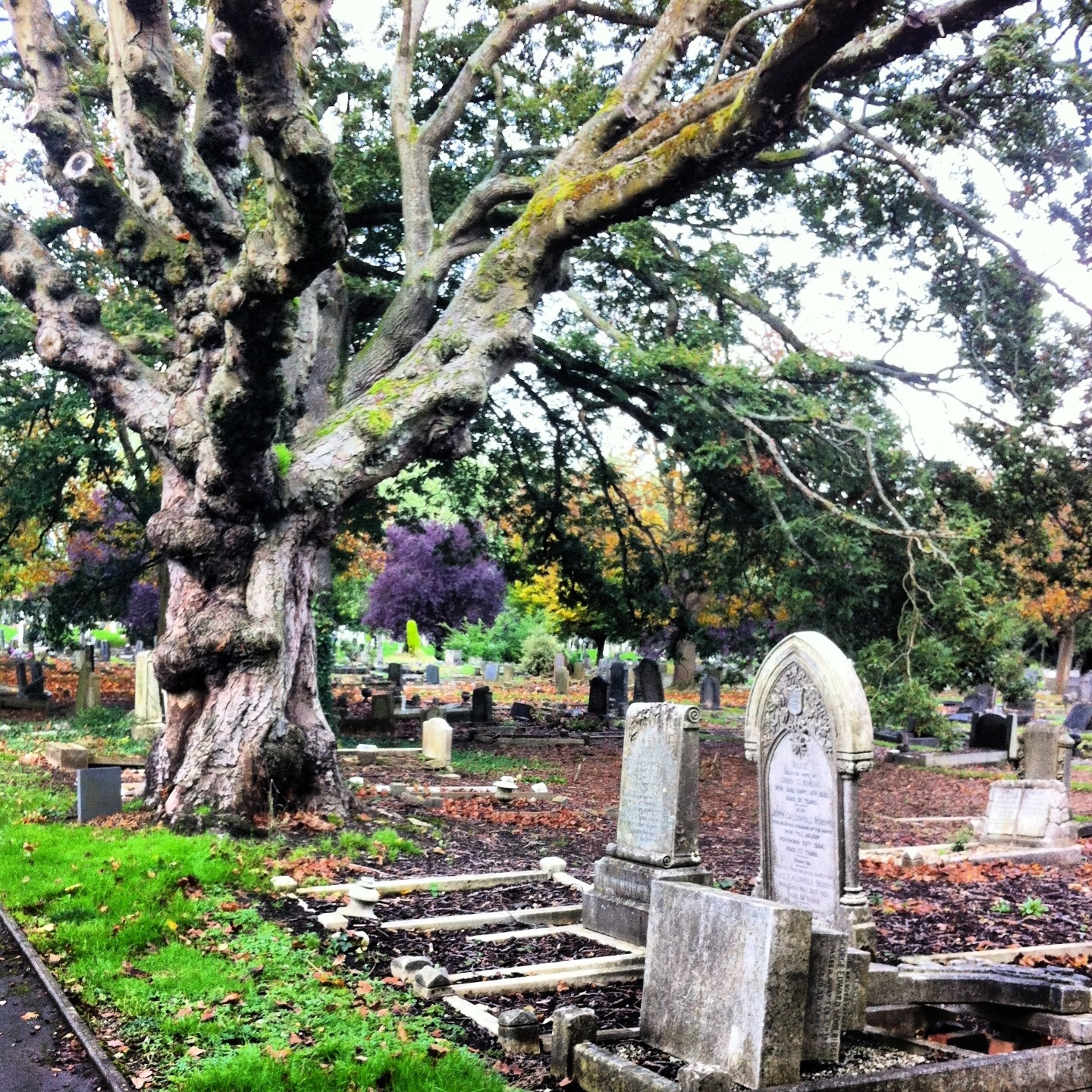
Unlike other Victorian cemeteries in Birmingham, Brandwood End Cemetery does not host many graves of famous figures. However, it is the final resting place for Patrick Waite, a member of the reggae group Musical Youth, and Sidney Harold Meteyard, an artist associated with the Birmingham School and a designer in the Arts & Crafts style.
The cemetery contains 108 World War I burials, many of whom were brought back to Birmingham for treatment in military hospitals. A Cross of Sacrifice, designed by Sir Reginald Blomfield in 1918, commemorates these individuals. It was officially consecrated in 1930 and remains a central feature of annual Remembrance Services.
The Cross of Sacrifice
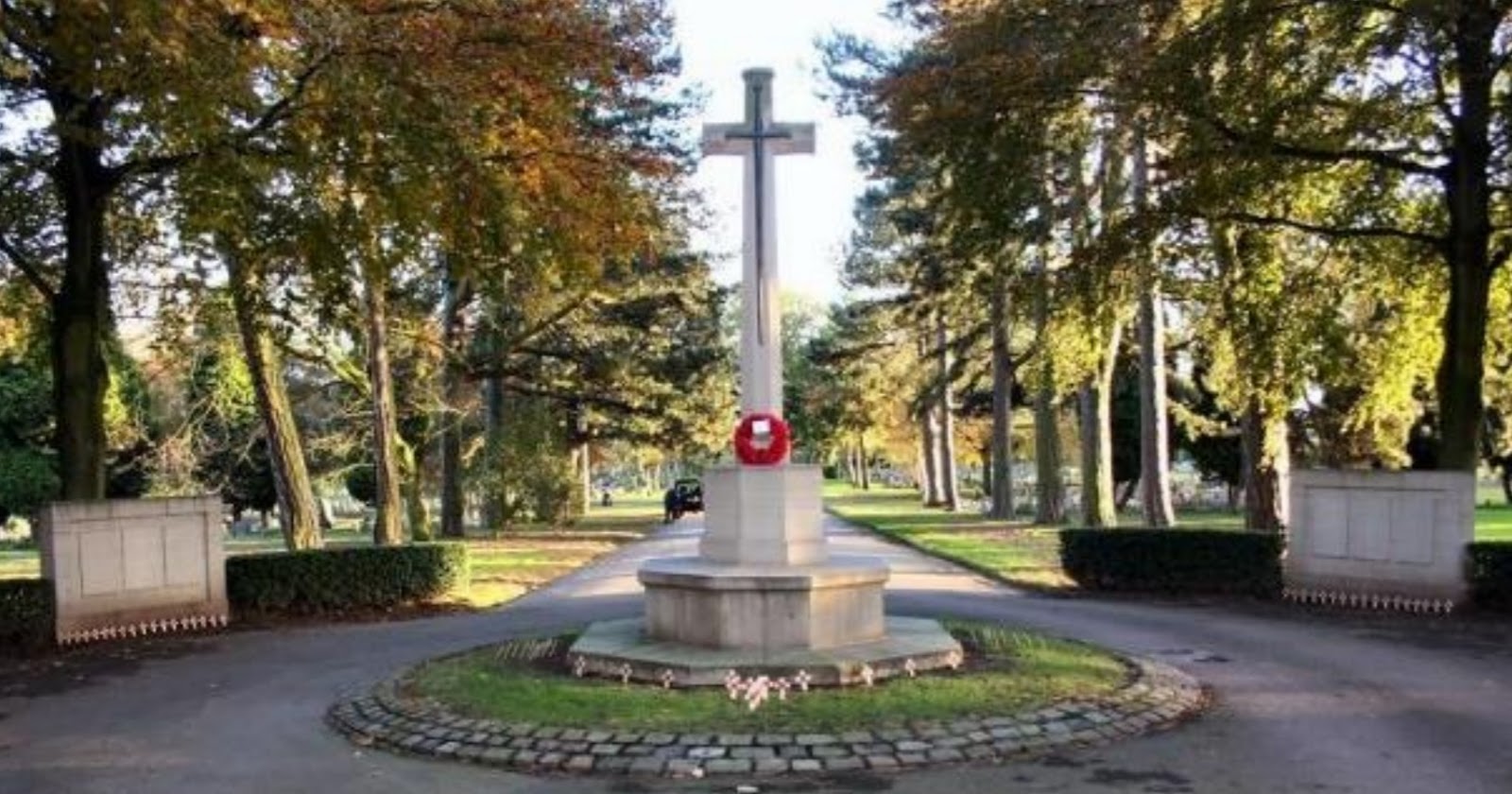
Standing over 3.5 meters tall, the Cross of Sacrifice is made from Stanclyffe sandstone and marks the cemetery’s dedication to Commonwealth war graves. Flanked by memorial walls bearing the names of those without marked graves, the Cross serves as a poignant reminder of the sacrifices made during the World Wars. Each November, the graves of the 350 identified military burials at Brandwood End are marked with a poppy cross by the Royal British Legion.
Brandwood End Cemetery has reached its full capacity, with over 86,000 graves, and is now closed to new burials except in existing family plots. It remains a peaceful and historically rich site, offering a glimpse into Birmingham’s past while providing a serene space for reflection and remembrance.