

Nowadays, digital applications are an integral part of everyday life. They often successfully help people organise their work, travel, social relationships, and even take care of their personal safety.
Of the millions of users, hardly anyone now thinks that all these applications are the result of a long technological, cultural, and social evolution that began long before the advent of modern smartphones. These devices are now most associated with various useful applications. In addition, the army of developers of various applications has also grown. They are also present in Birmingham, but more on that here: birmingham-future.com.
First applications

The first computer applications appeared in the mid-20th century, along with the advent of large central computers. These programmes were developed for administrations, universities, and industry representatives. They were used to performing specific tasks, such as scientific calculations, data management and logistics planning. At that time, software was a functional tool unknown to the general public. However, even then, it was gradually becoming indispensable in the life of contemporary society.
In the 1980s, after the advent of personal computers, the situation changed dramatically. Computer science went beyond specialised centres and entered the offices and private homes of the British. Programs became more accessible, visual and diverse. For example, word processors, spreadsheets, educational software, and video games.
These programmes accompanied the growth of digital culture in the professional sphere, especially in industrially developed countries such as the United Kingdom, where universities and businesses were quick to adopt new technologies. Similarly, digital culture also entered everyday life.
A decade later, the next rapid breakthrough in the development and, accordingly, the use of various technologies took place with the widespread spread of the Internet. From that moment on, applications no longer had to be installed exclusively on personal computers; they became remote, remaining accessible through web browsers.
Email services, the first interactive websites, e-commerce platforms and search engines redefined the very concept of an application. The United Kingdom played a significant role in the development of the Internet, particularly through its universities and ecosystem of technology start-ups, especially in London, Cambridge, and Manchester.
Mobile applications
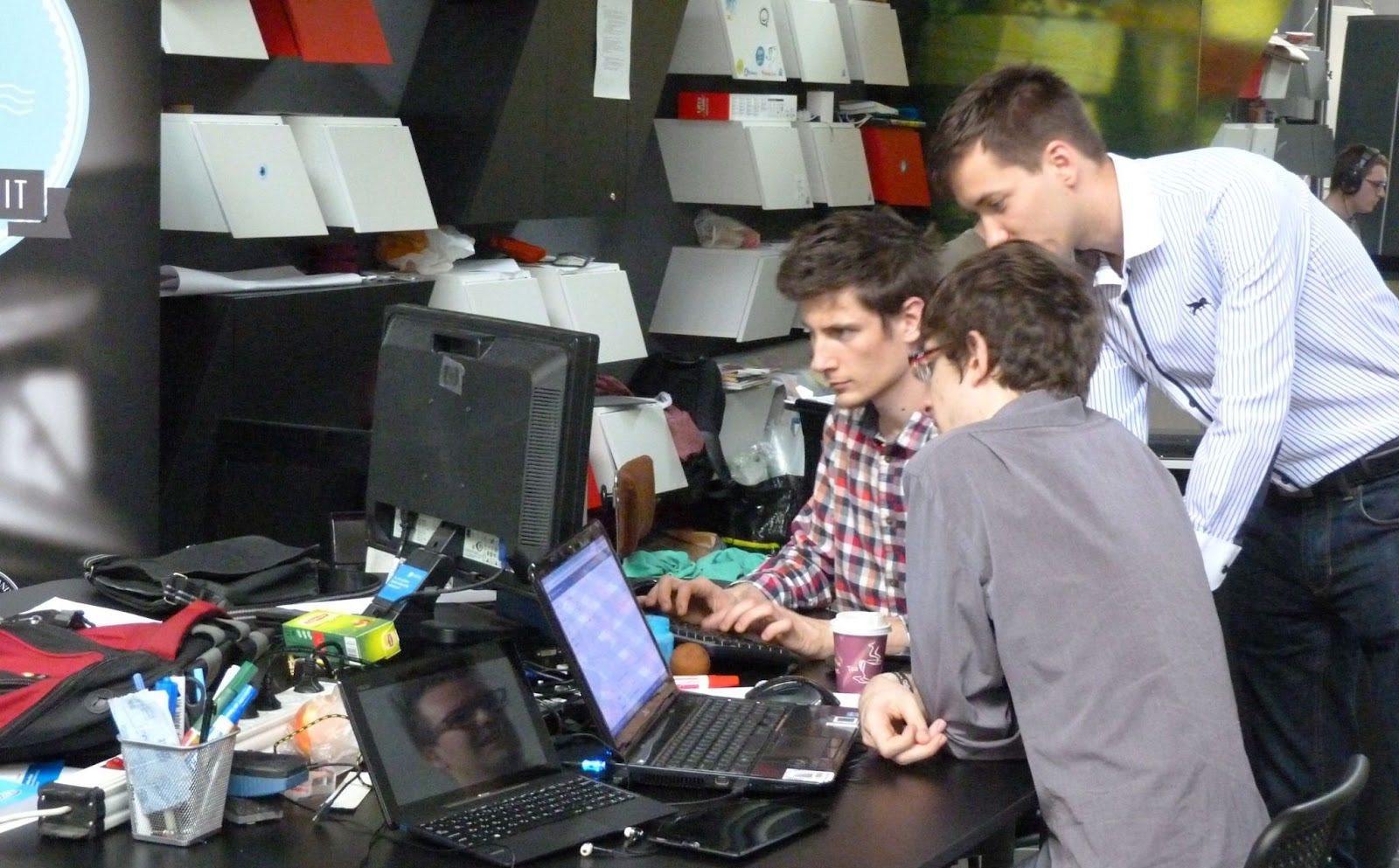
The latest stage in the development of applications is the mobile application. They appeared in the early 2000s. Even before the advent of smartphones, some phones already offered applications, albeit fairly simple ones. For example, various games, calendars, calculators. Of course, the first applications were quite limited, but they introduced a fundamental idea — that an application could be personal, portable, and closely connected to the user’s everyday life.
It was then, in the 2000s, or rather in the early 2010s, with the spread of smartphones and the creation of app stores, that a real boom in applications began. From that moment on, the United Kingdom as a whole, as well as Birmingham, became one of the main European centres for the development of applications.
British apps often shared certain characteristics. These included a strong focus on practical utility, ergonomics, data protection, and social dimensions. And it didn’t matter whether we were talking about financial services, educational platforms, healthcare apps or mobile solutions. The British approach often gave and continues to give preference to reliability, clarity and social impact.
Birmingham occupied a special place in this parade of applied programmes. Unlike London, for example, which often focuses on global financial markets, Birmingham develops applications that are directly related to the everyday needs of citizens.
Becky and her safety
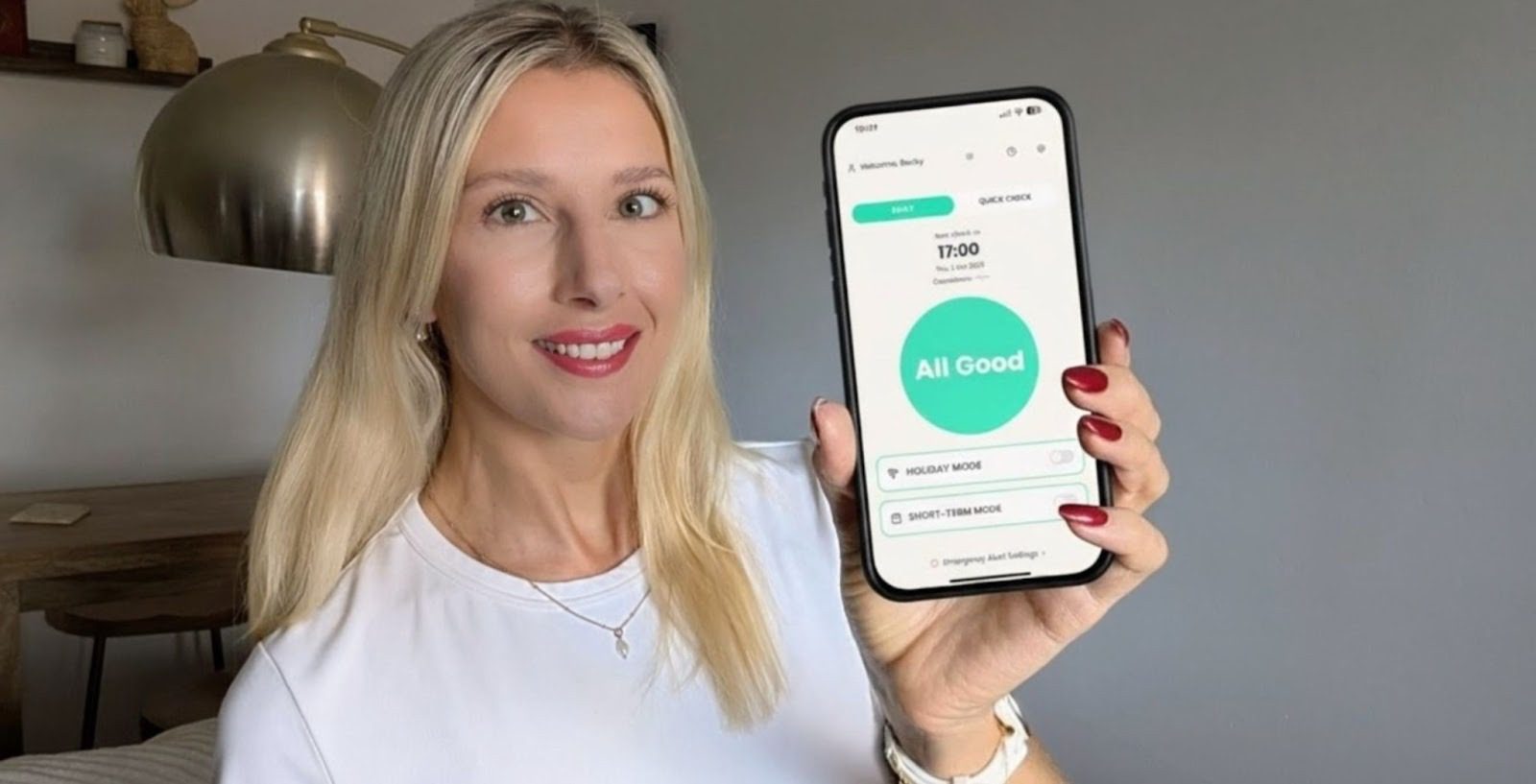
It was in this context that 32-year-old marketer Becky Watson created her app. She realised that if something happened to her at home, no one would notice for several days, or perhaps even longer. So she decided to take action and do something about it. The result was The All Good app. It is a very simple personal safety tool. It can notify loved ones if the user misses their check-in. That’s it in a nutshell.
Becky lives alone and works from home, so she said that if she got sick and needed help, there was no way for her loved ones to quickly find out about her condition. The girl was very afraid that during those few days, until her relatives noticed that she was out of contact, her dog would be left unattended. According to Becky, the app she created is designed to give people peace of mind. After all, it provides confidence that if something goes wrong, someone will find out about it.
It is an interesting fact that, for many people, creating any application requires a whole team of developers, external funding, or, at the very least, experience in the field of technology. Becky Watson categorically refused to engage in these matters, which she considered unimportant. She was motivated solely by personal concerns and a keen awareness of how vulnerable people who live alone can be. She creates a solution to the security problem on her own.
Over the course of many nights and weekends, using accessible artificial intelligence tools, no-code platforms, and open resources, Becky brought her app to life. She said that technology is so accessible now that if someone has an idea, they can bring it to life. Becky showed that ordinary people can create something that actually helps others.
As a result, The All Good app can solve a real and growing social problem. After all, as we know, millions of people live alone. So when an accident happens, such as a simple fall, fainting, or some other medical incident, if no one knows about it, help may be delayed for hours or even days. The consequences can be unpredictable.
What the statistics say
For those who think that the situation is not so dire, as of 2023, according to data from the Office for National Statistics, 8.4 million people in the United Kingdom live alone, which is about 30% of all households. At the same time, 6,000 people die each year from accidents in the home. The most common cause of death is falling.
It is well known that residential buildings are the most common place for domestic injuries. The only competition they face is from injuries sustained on the roads. According to data from the University of Birmingham, they account for 38.1% of all injury-prone incidents.
At the same time, people increasingly prefer to meet through apps, social networks and while looking for work. This means that face-to-face communication is almost non-existent. Although most such encounters are positive, it is important that people share their location or connect with someone they trust. The All Good app makes this process simple and automated.
Sources:
- https://newsbywire.com/birmingham-woman-single-handedly-launches-the-all-good-app-a-personal-safety-check-in-tool-helping-people-who-live-alone-stay-connected-and-protected/
- https://theallgood.app/
- https://www.birminghammail.co.uk/news/midlands-news/i-live-alone-work-home-32811040
- https://uk.news.yahoo.com/live-alone-home-something-happened-083000026.html