

This rather surreal Birmingham building, the destination of many a school trip as a child. Smart people say that on paper it looks like it shouldn’t work, but somehow it does. Some people even call this building the eighth wonder of the world. We are talking about the famous “Spaghetti Junction”, or officially, the Gravely Hill Interchange.
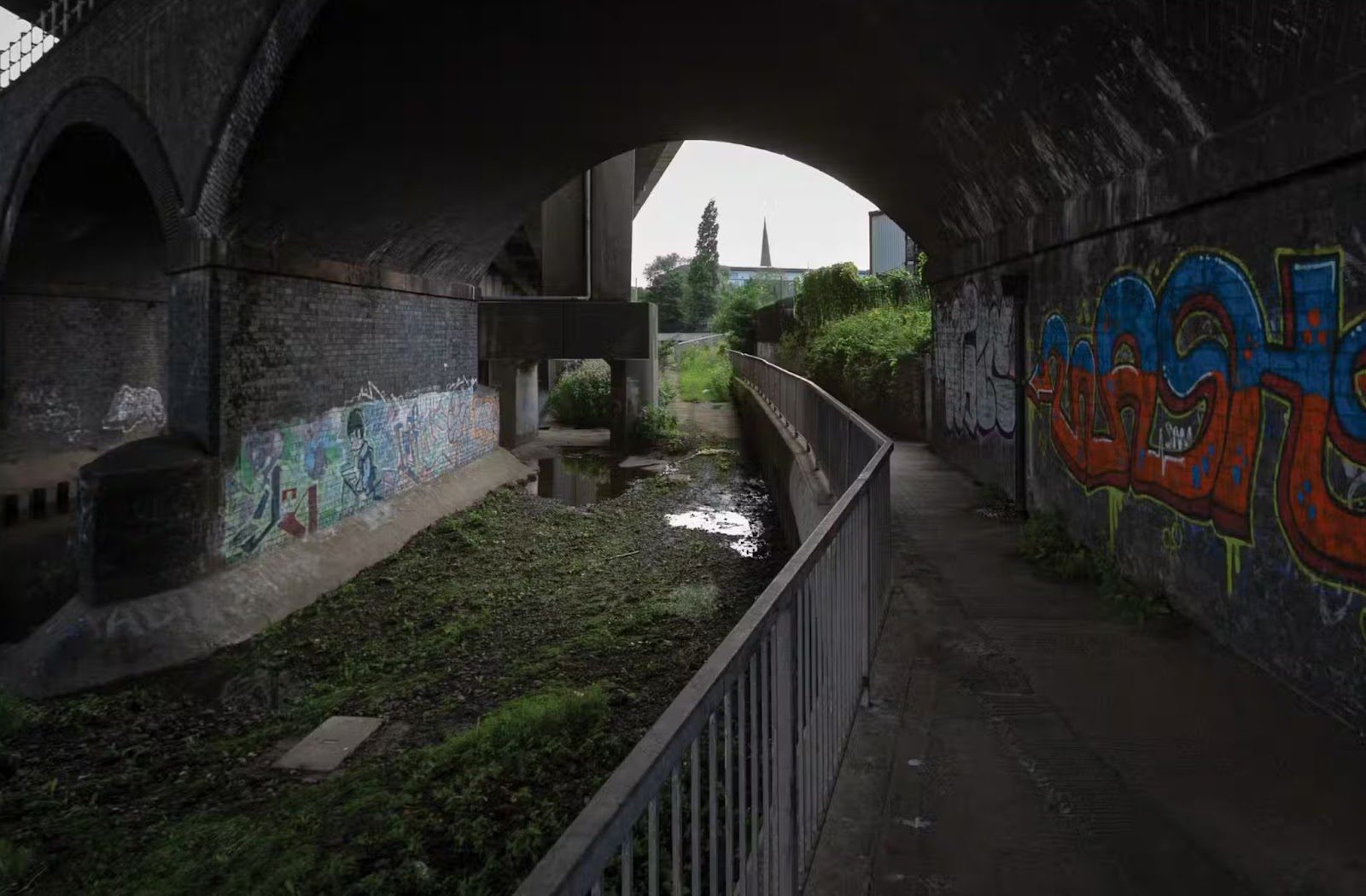
By the way, from the point of view of a pedestrian, who has the space under Spaghetti Junction, which is heavily decorated with graffiti, at his disposal, it is almost calm. There is greenery here, which fights the exhaust fumes from the cars overhead to the best of its ability. In addition, this space offers a shelter with a roof over their heads for the homeless in the area, who are often kicked out of other places. The underground part of Spaghetti Junction is definitely an underrated area. Read more about Birmingham’s controversial transport interchange, which recently celebrated its half-century anniversary, at birmingham-future.com.
The eighth wonder of the world
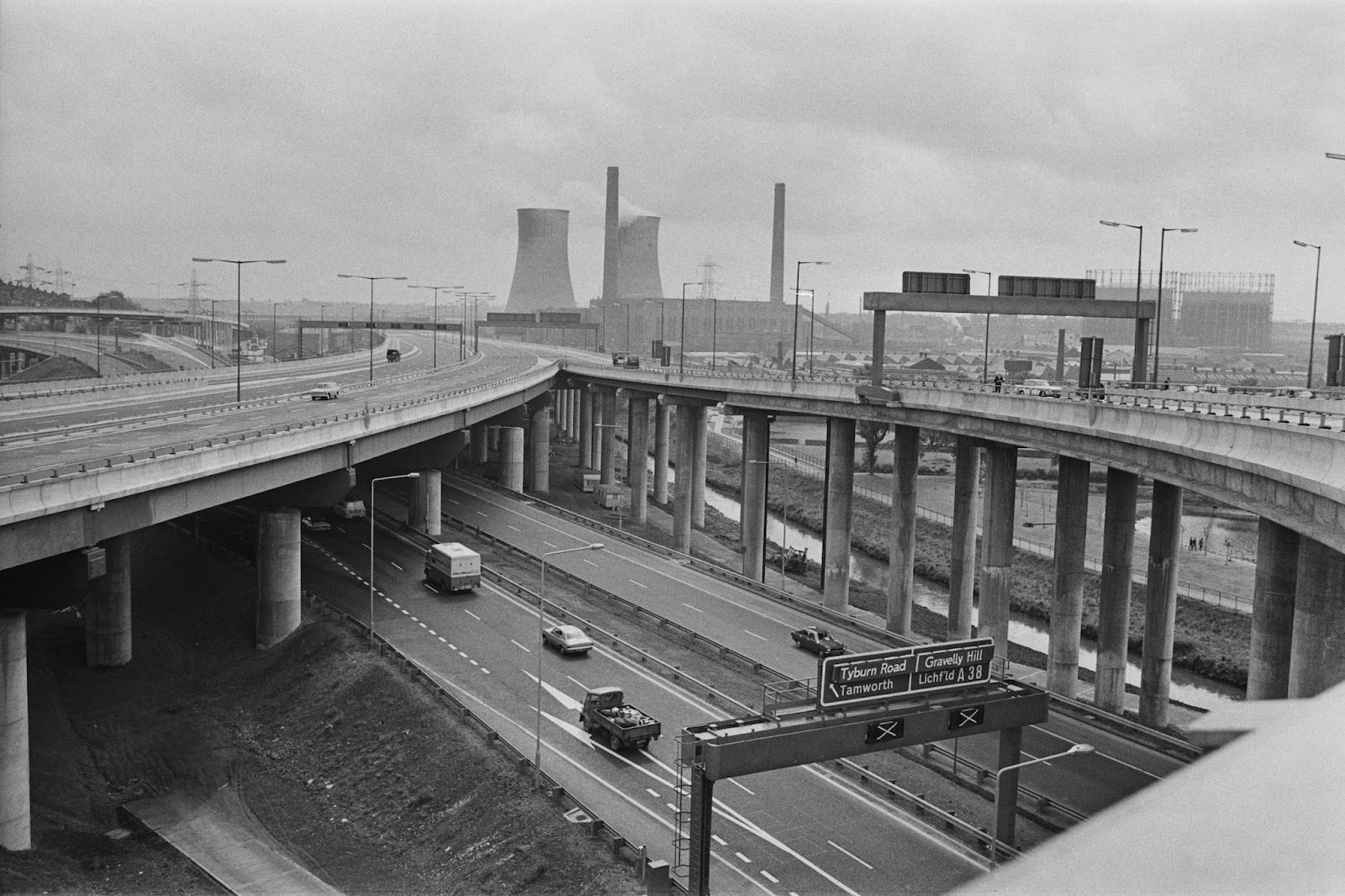
The Gravely Hill Interchange, affectionately known as the “Spaghetti Junction,” has been a source of controversy for more than half a century, and was opened on 24 May 1972. The event was a great success, as this transport hub was the final element of a major infrastructure project designed specifically to connect several major traffic flows in the centre of a new motorway system. Not even for Birmingham, but for the whole of England.
What was supposed to happen a little bit earlier happened, namely, this complex multi-layered concrete and steel structure united both national and local motorways, directing traffic flow to the city of Birmingham via the multi-lane Aston Expressway. It would seem that it has done what it was supposed to do, united and united, directed and directed, that’s what it was built for. But the fact is that Gravely Hill has always been more than just a transport hub, it has been and is much more than that for the people of Birmingham.
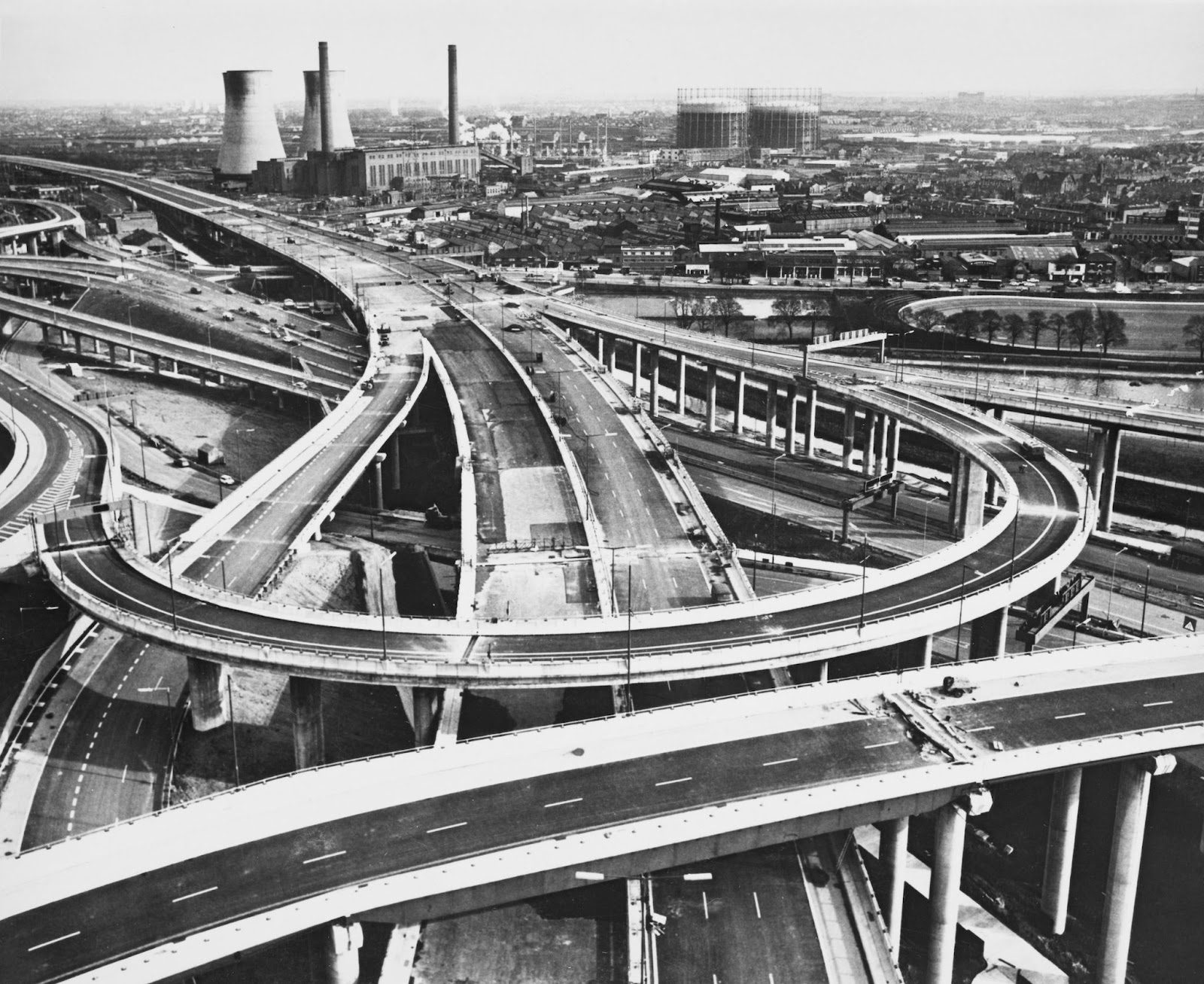
“The Spaghetti Junction was an engineering marvel that took a toll on local communities and the environment. As many as 146 houses were demolished to make way for almost 12,700 tonnes of structural steel and 175,000 tonnes of concrete. On top of that, the landscape around the interchange had to be redesigned. This meant that the River Thames was redirected, creating the Salford Reservoir, and, as often happens in such cases, a park. But that’s not all. Across the river, the interchange spanned the Grand Union, Birmingham and Fazeley canals, the Birmingham, and South Western Railway line, and the main regional gas pipeline.
Given the amount of work involved, the project was heralded as a modern-day wonder, which was unlike anything else. Even Los Angeles, world-famous for its road infrastructure, was simply resting, according to the Brammies. After the construction, in 1972, the architectural critic Rayner Benham noted in an article for the New Society magazine. The densely spaced curved and intersecting perspectives of the double rows of columns seemed even more extraordinary when viewed from the window of a moving car. In general, according to the critic, this transport hub was a great work of art in Birmingham.
The author of the project
A few words about the project’s author, chief engineer, and London-based architect Owen Williams. Williams was known for a number of key modernist buildings, including the Express building in Manchester and the D10 Boots building in Nottingham. He was born in 1890 in Tottenham to a Welsh grocer. Later, his family moved to London. It is known that Owen Williams studied at a school in Tottenham and was a great expert in mathematical sciences. Later, the young man worked for a London-based company, while earning an engineering degree at the University of London.
This was followed by a job as a chief consultant at the British Empire Exhibition, thanks to which he met the architect Maxwell Ayrton. As a result, this creative duo designed bridges in Scotland. It is known that Williams designed his buildings as functional structures, furnishing them with decorative facades. More of an engineer than an architect, he worked on a series of reinforced concrete structures in the interwar period.
After the Second War, Owen Williams was invited to work on the development of the first plan for the UK motorway system. His non-road-related work includes the Dorchester Hotel, the Boots pharmaceutical factory in Nottinghamshire, and the Pioneer Health Centre in south London.
How the interchange has changed Birmingham
When it was commissioned, Spaghetti Junction was a coup, not only for motorists in the city and the country, but also for the Birmingham authorities. This made it possible to restore the city’s authority both in the UK and on the world stage. As you know, Birmingham has long wanted to build a ring road. This became especially important after the Second World War, when the automotive industry was booming. During the war, Birmingham suffered significant damage from bombing by German aircraft. With increased prosperity came greater mobility. As cities and areas to the north and south of Birmingham attracted suburbanites, passenger traffic increased.
But there were also some problems. In the early 1970s, the multi-lane motorway that so brazenly cut through urban development was a completely new phenomenon. So it is not surprising that people had to adapt to its existence. Even after its construction, there were cases when pedestrians tried to cross the Aston Expressway, manoeuvring among the streams of fast moving vehicles.
But the novelty of the junction had a mixed effect not only on pedestrians. Motorists also sometimes got into trouble. For them, a special advice guide was even issued, advising them how to drive safely on this part of the road.36 Among the tips were the following ones: use your eyes, follow the signs, and then you won’t get lost on the Spaghetti.
Meanwhile, the British Automobile Association has tried to allay motorists’ concerns about using the intersection. It told its members that the information collected by electronic detectors on the roadway would be analysed by a digital computer. This was necessary to track accidents or malfunctions and prevent traffic jams.
Intersections as a source of inspiration
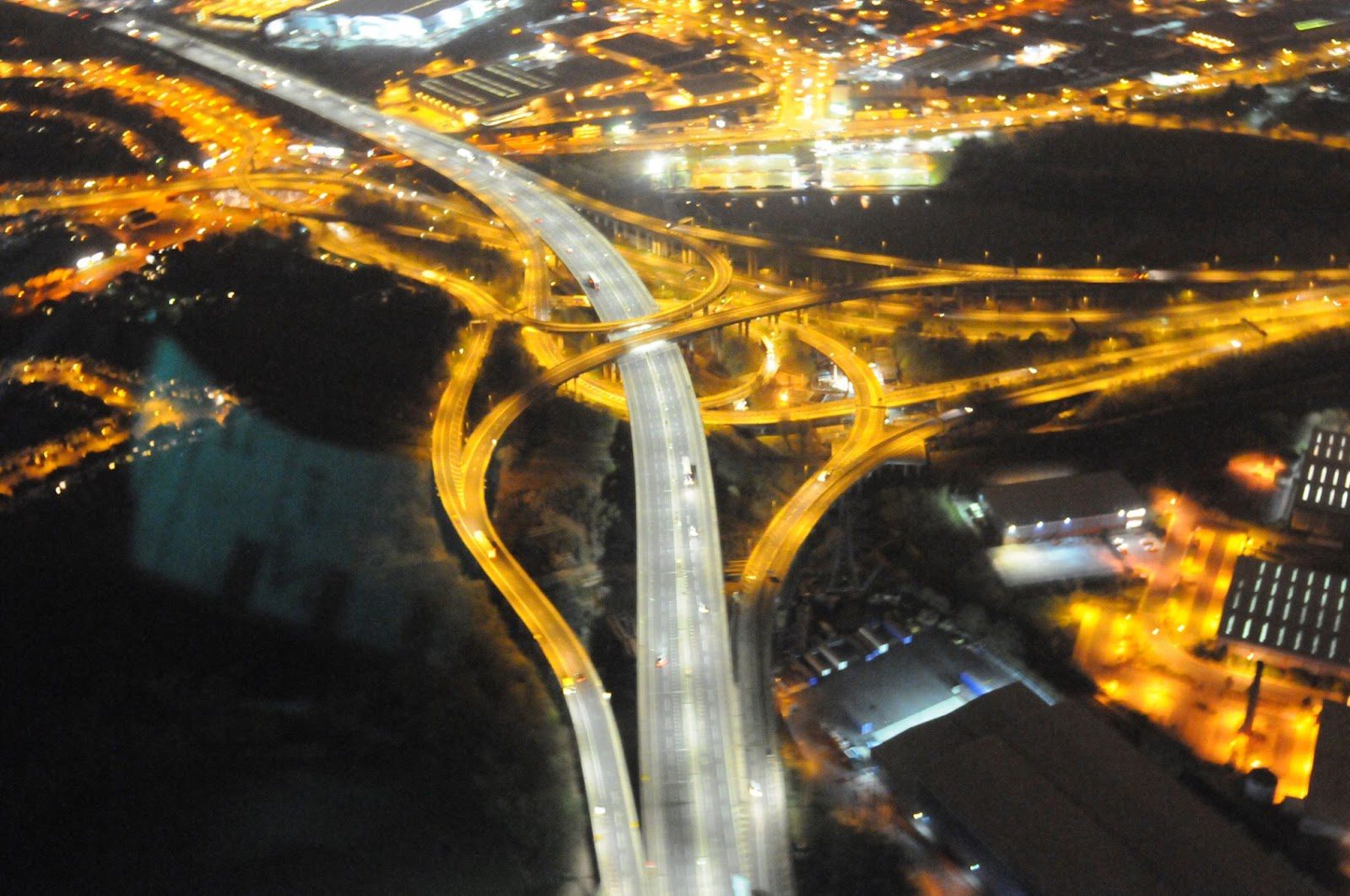
As it turned out, this interchange changed not only the way people used to use the roads, but also the very understanding of the city. We can say that the modern era began with its appearance. Filmmakers were the first to recognise the situation and take advantage of it quite quickly.
For example, British director David Askey in his 1973 pseudo-psychedelic musical Take Me High told the story of the introspection of merchant banker Tim Matthews, played by Cliff Richard, during his mission to save the Bramburger restaurant. In a statement on the transitional state of the mid-century British city, Matthews chooses the canal as his home and the Spaghetti Junction flyover as his mode of transport, using it as a symbol of modernity.
Sources: