

Aston Hall is a Grade I listed Jacobean castle designed by John Thorpe and built by Sir Thomas Holte in 1618-1635. Aston Hall has a rather turbulent past. In 1643, for example, it was besieged by Parliamentary troops during the Civil War, for example, in 1643. The grand oak staircase still bears the marks of the bombardment. In 1818, the castle was sold and leased to James Watt the younger, son of the engineer James Watt, who lived there until his death in 1848.
Instead, in 1858, it was acquired by the Aston Hall and Park Company and opened as a place for public entertainment. Queen Victoria was invited to attend the opening ceremony. It was one of her two visits to Birmingham as Queen. It is still owned by the city council and managed by the Birmingham Museum Trust, find out more at birmingham-future.com.
History of the Holte family
Aston Hall has proudly watched over Birmingham for over 400 years. But it’s not just one of the last great buildings built in the James II style. It also has its secrets. For example, it is said that Aston Hall is one of the most haunted castles in the world.14 Whether this is true or not is difficult to say, because it is also difficult to verify. But let’s try to find out here, by diving into the history of the Golte family, and maybe we can find out something.
So, the Holte family was very influential. It was one of the great noble families of Warwickshire, which performed a significant part of the administrative functions in the county. Moreover, this took place not only in the 16th and 17th centuries, but almost two centuries. In other words, the Holte family lived in Aston Hall for almost 200 years, possessing a huge heritage, both in terms of size and property, dating back to the 14th century. The man responsible for the growth of the family’s prosperity was Sir Thomas Holte. It was he who initiated the construction of Aston Hall.
To understand how ancient a family lived in this castle, you should know that the Gaulte family name dates back to 1331, when Simon Gaulte purchased the Nechells estate for money earned from the wool trade. Later, in the middle of the 16th century, John Gaulte acquired the Duddeston and Aston estates. Thomas Gaulte, Sir Thomas’s grandfather, added several hundred more acres of land by “cutting off” them from neighbouring manors.
Sir Thomas Gaulte, the eldest son of Edward Gaulte and Dorothy Ferrers, was born in 1571. It was he who initiated the construction of Aston Hall. Thomas studied at Magdalen College in Oxford from 1588 to 1590. The young man was very eager to succeed in life, so he did not put off this plan until he was a new broom. To begin with, he acquired two estates in Warwickshire. We are talking about the Lapworth and Bushwood estates.
It is well known that in the 16th and 17th centuries, land, or rather its presence, was not just a sign of status, but also a major economic resource. Therefore, in 1599, Thomas Holte also acquired a secular residence in Aston, which was not surprising, as Sir Holte’s income was almost £2 thousand per year. Thus, he secured the title of the leading landowner in Warwickshire, and received the title of High Sheriff, which was a position in the law enforcement agencies of those times.
So, in order to emphasise his status in society, wealth and power, Sir Thomas Holte began to build Aston Hall. Work began in April 1618. He deliberately chose a place on a hill that could be seen from everywhere, for miles around. The construction of the hall itself lasted seventeen years. It is no coincidence that it is one of the finest examples of James II architecture in England.
Aston Hall is an architectural masterpiece
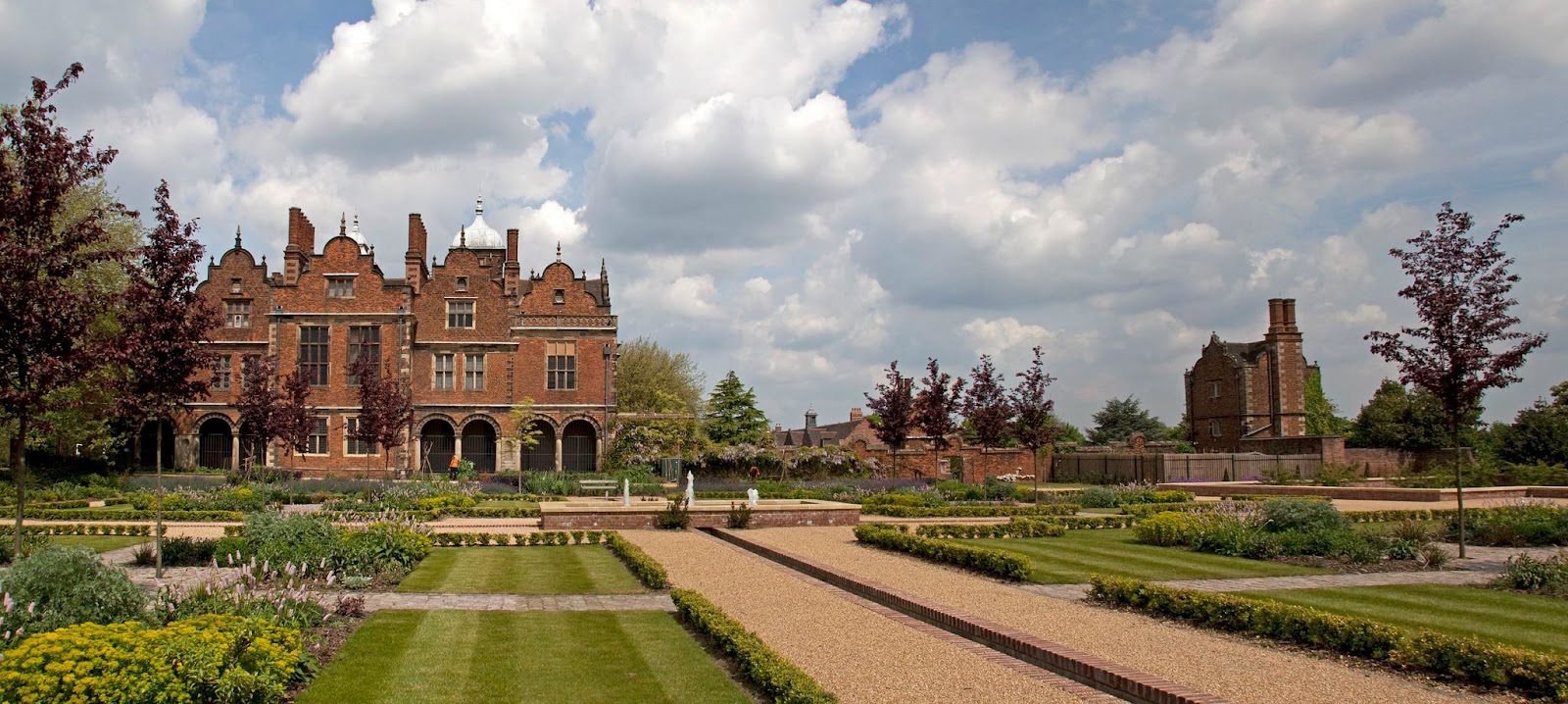
The castle was designed by John Thorpe. It is characterised by its red brick exterior, stone cladding, diaper patterns and a symmetrical layout with a central block of the main hall surrounded by curved wings. The chateau’s outstanding features undoubtedly include a long gallery, a large oak staircase, a majestic fireplace and an equally large hall, famous for its plaster ceiling.
The main part of the house with its curved wings is oriented to the east, which emphasises the symmetry of the facade. In addition, the building includes an arcaded loggia, a covered passage with arches, which adds to its architectural interest. In addition, the red brickwork is often decorated with the already mentioned patterns, which are decorative compositions of square or diamond-shaped shapes. Aston Hall also has a large living room, which has been converted into a chapel, and a green library.
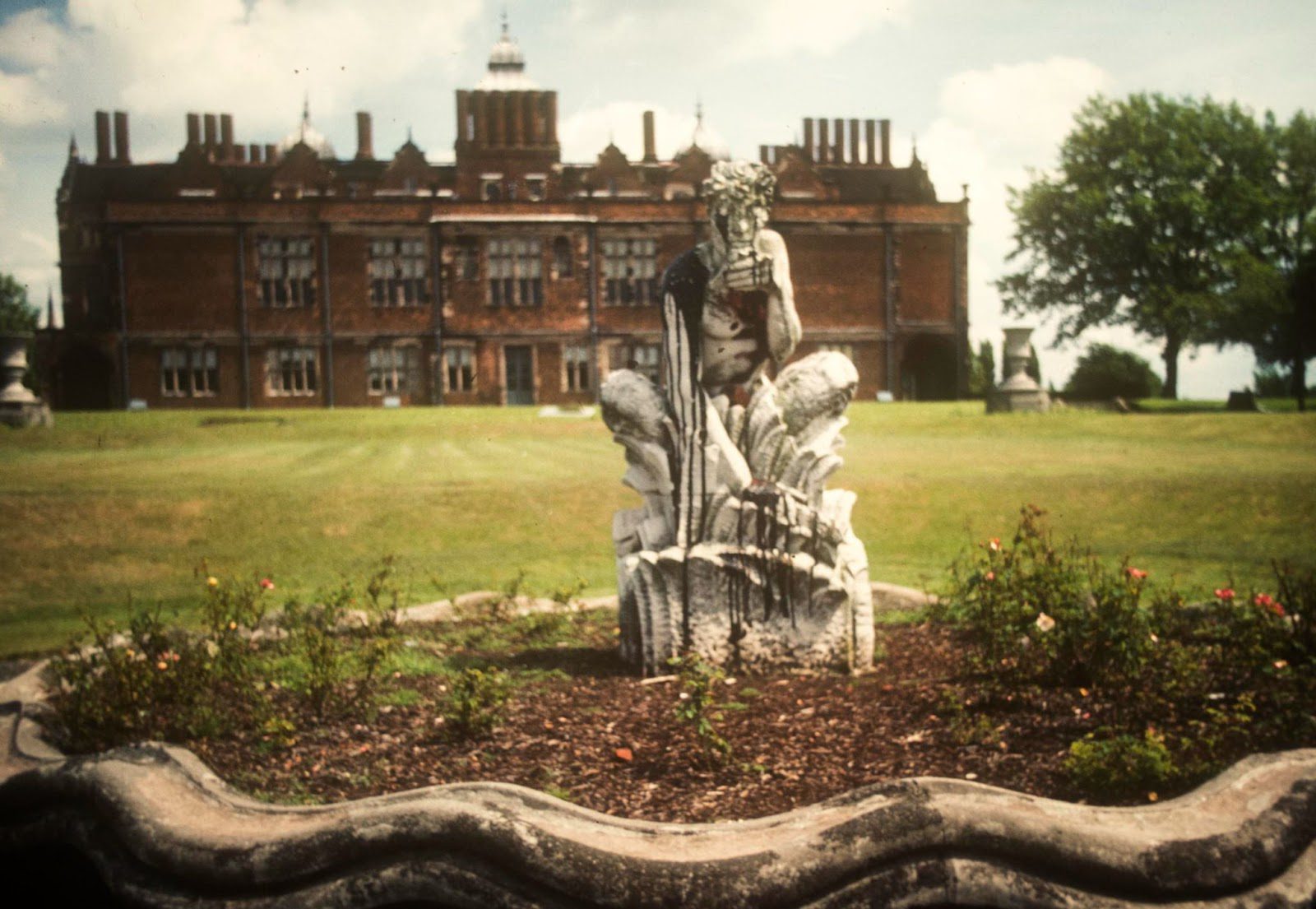
To top it all off, the house is located in a beautiful public park, which was even awarded the Green Flag in its day. The park is an oasis of tranquillity to the north of the city, and just a step away from the famous neighbouring Villa Park. The gardens were laid out in 1934 at the request of the Birmingham Civic Society. Among the features of the park is the statue of Pan, the Greek god of forests and shepherds, sculpted by local sculptor William Bloy.
As for the interior, Aston Hall has more than 30 rooms, including King Charles’s chamber, an exquisite grand staircase and a fascinating long gallery. Read more about the gallery – it is considered one of the best in Britain. It was used for recreation and demonstrated the wealth and status of the estate owner. It is also very well-preserved, remaining virtually unchanged since its construction
Architect John Thorpe
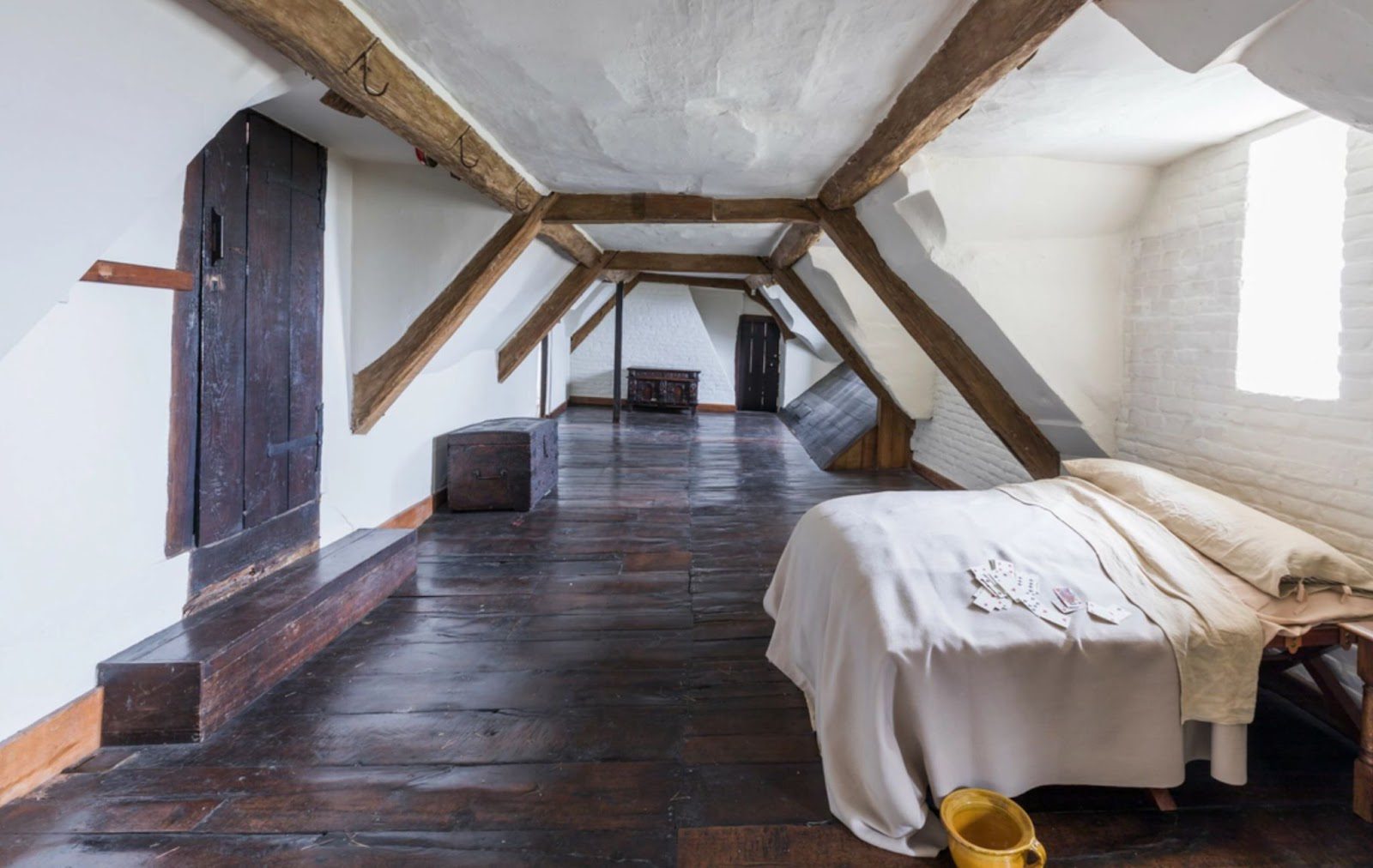
Aston Hall is also known for its exquisite decorative ceiling mouldings, which include images of elephants, orange trees and devils. Perhaps it was these devils that became the source of the ghost legends. There is also a butler’s pantry in the very attic of the house, and servants’ rooms on the ground floor.
In terms of architecture, Aston Hall is a prime example of the Jacobean style, characterised by symmetry, red brickwork, stone work and decorative details.
A few words about the author of the project, the architect John Thorpe. Unfortunately, not as much information about his life has survived as we would like. Some of them cannot be explained logically. For example,29 he is credited with building some of the most iconic English houses, such as Longleat in Wiltshire. But the fact is that it was built before he was born. As a result, Thorpe’s main contribution to world architecture is the widespread corridor that was included in the plan for the Great House in Chelsea.
Sir Thomas, his only son and grandson
To conclude the story of the first owners of Aston Hall Castle, it is known that it was during its construction that Thomas Holte married Grace Bradbourne, the daughter of William Bradbourne of Gough in Derbyshire. Grace and Sir Thomas had fifteen children, but she never saw the castle built, as she died before it was completed. Later, Sir Thomas married Anne Littleton, who was almost forty years younger than him.
It so happened that Sir Thomas outlived all but one of his children, living to be a reverend, for those times, 83 years old. Clearly, his children did not inherit the estate, Sir Thomas Holte leaving it to his grandson Robert Holte, son of Edward Holte.
Sources: