

Birmingham boasts a rich railway heritage, having served as the northern terminus of the first intercity railway connecting to London. The exponential growth in rail travel demand during the 19th century led to the construction of New Street Station, which was once the largest railway station in the UK. Officially opened in 1854, it initially served as a shared station for the London and North Western Railway and Midland Railway. Today, New Street Station caters to nearly 200,000 passengers daily, making it one of the busiest railway hubs outside London. Next on birmingham-future.com.
London to Birmingham
The city’s first passenger station, Curzon Street, was opened by the London and Birmingham Railway in 1838. Nearby were two additional stations: Grand Junction Railway and Birmingham & Derby Junction Railway, which later became part of a consolidated railway network.
By 1846, the increasing demand for railway services rendered the small and peripheral Curzon Street station inadequate. Following the merger of the London, Birmingham, and Grand Junction Railways into the London and North Western Railway (LNWR), a decision was made to build a new, centrally located station: New Street Station. Agreements were also reached to allow the Midland Railway to use the station.
Construction of New Street Station
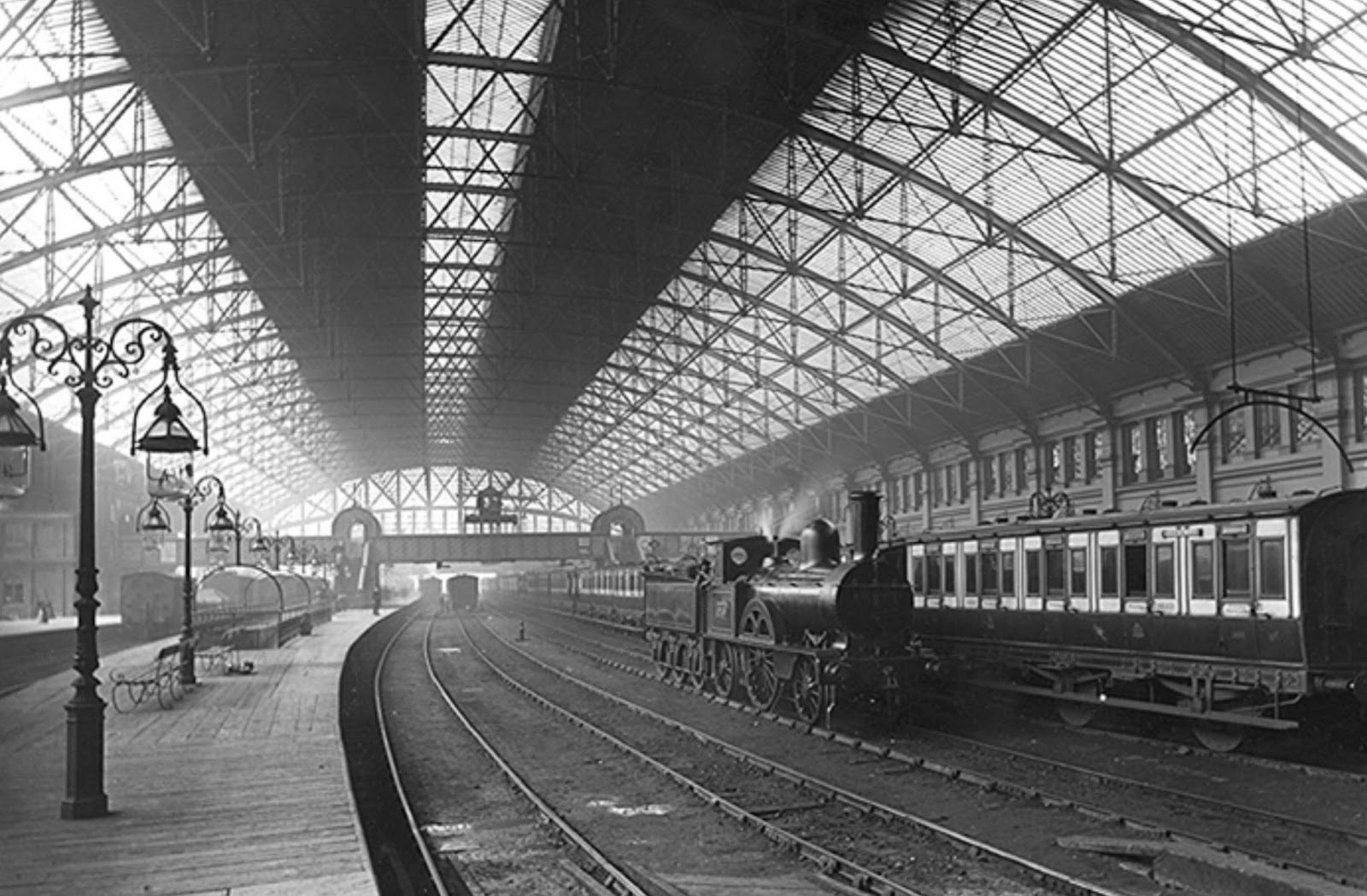
Funded by LNWR, New Street Station was designed to replace several smaller stations around Birmingham’s center. The project required the demolition of approximately 70 buildings across a 3-hectare site. Engineer Edward Alfred Cowper, renowned for his work on the Crystal Palace, designed the station’s signature arched metal and glass roof—the largest of its kind globally at the time.
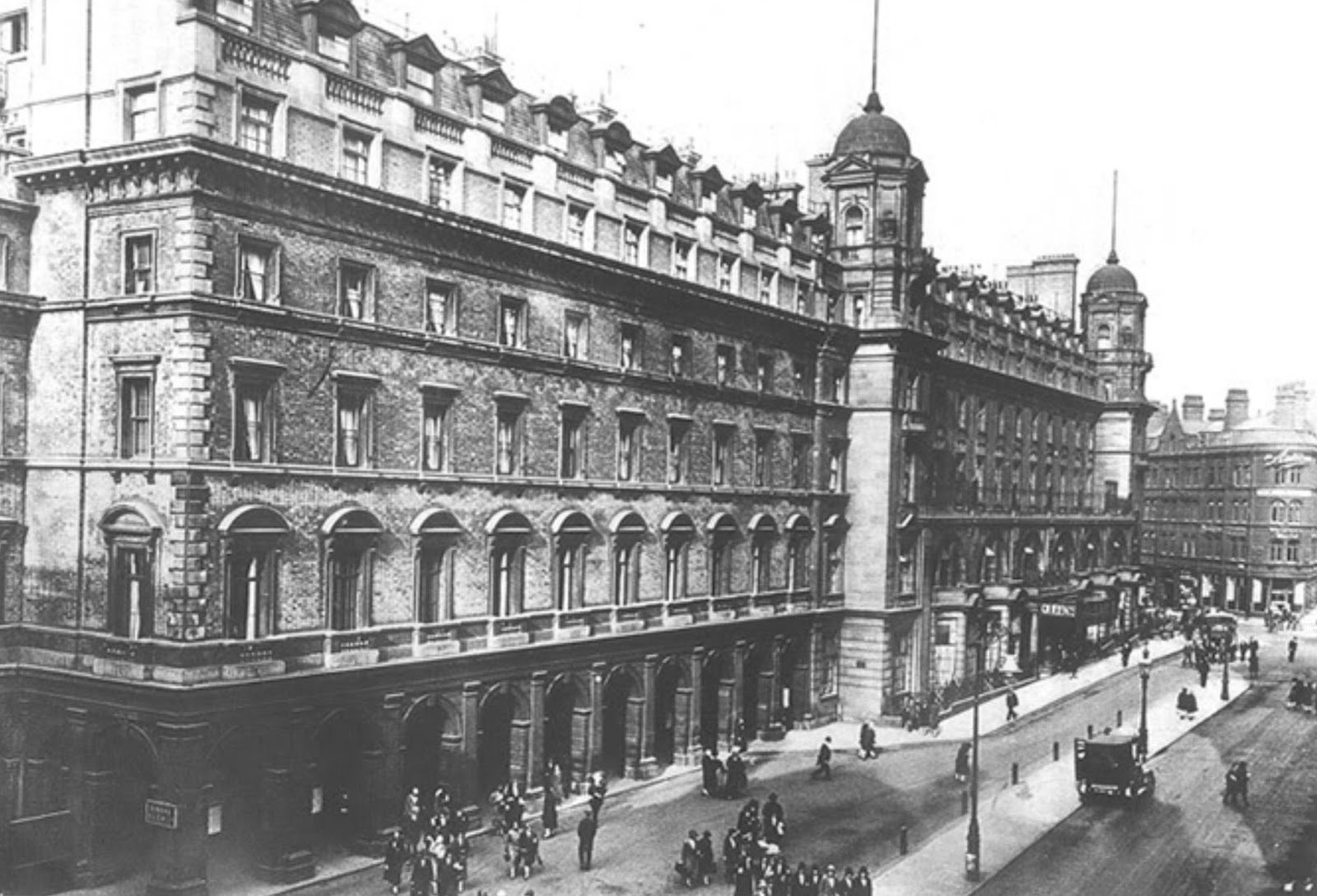
The interior platform layout was crafted by Robert Stephenson. The main entrance was located on Stephenson Street, below the opulent Queens Hotel, a four-story Italianate-style building catering to passengers.
Upon completion, New Street boasted a single-span arched roof measuring 212 feet wide and 840 feet long, covering four through platforms and four sidings. A pedestrian bridge was also constructed, providing convenient public access across the city.
19th-Century Expansion
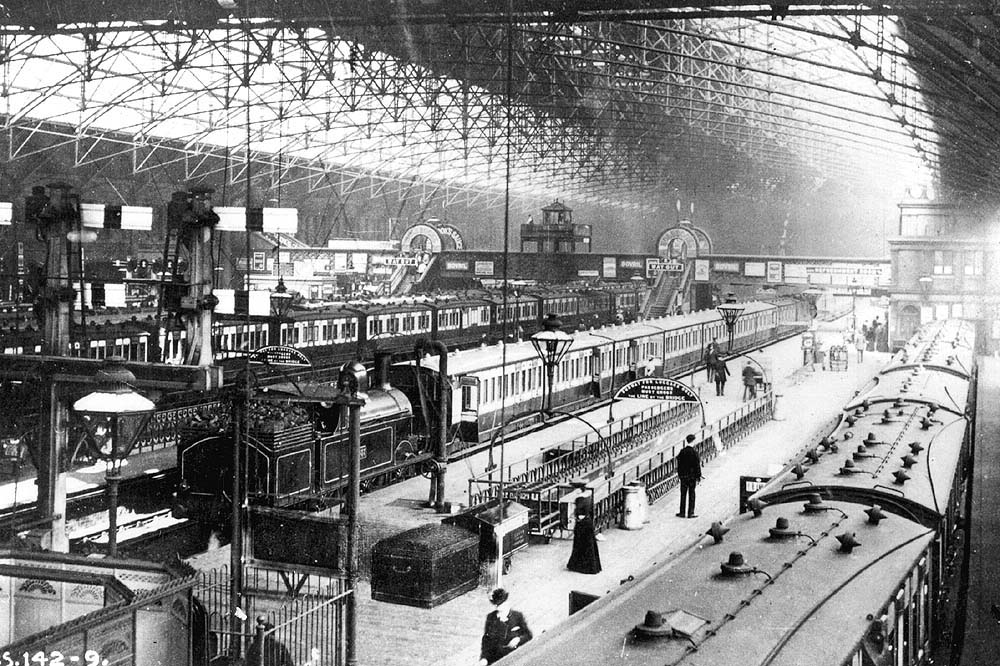
The station opened to passengers in 1851 and officially launched on June 1, 1854, the same day as the Queens Hotel. By the late 19th century, the station required expansion due to increased traffic. This effort, designed by LNWR’s chief engineer Francis Stevenson, included the addition of platforms on the south side for Midland Railway services.
During World War II, the station’s iconic roof was severely damaged by bombs and was later dismantled due to the high cost of repairs. Platforms were subsequently covered with simpler canopies.
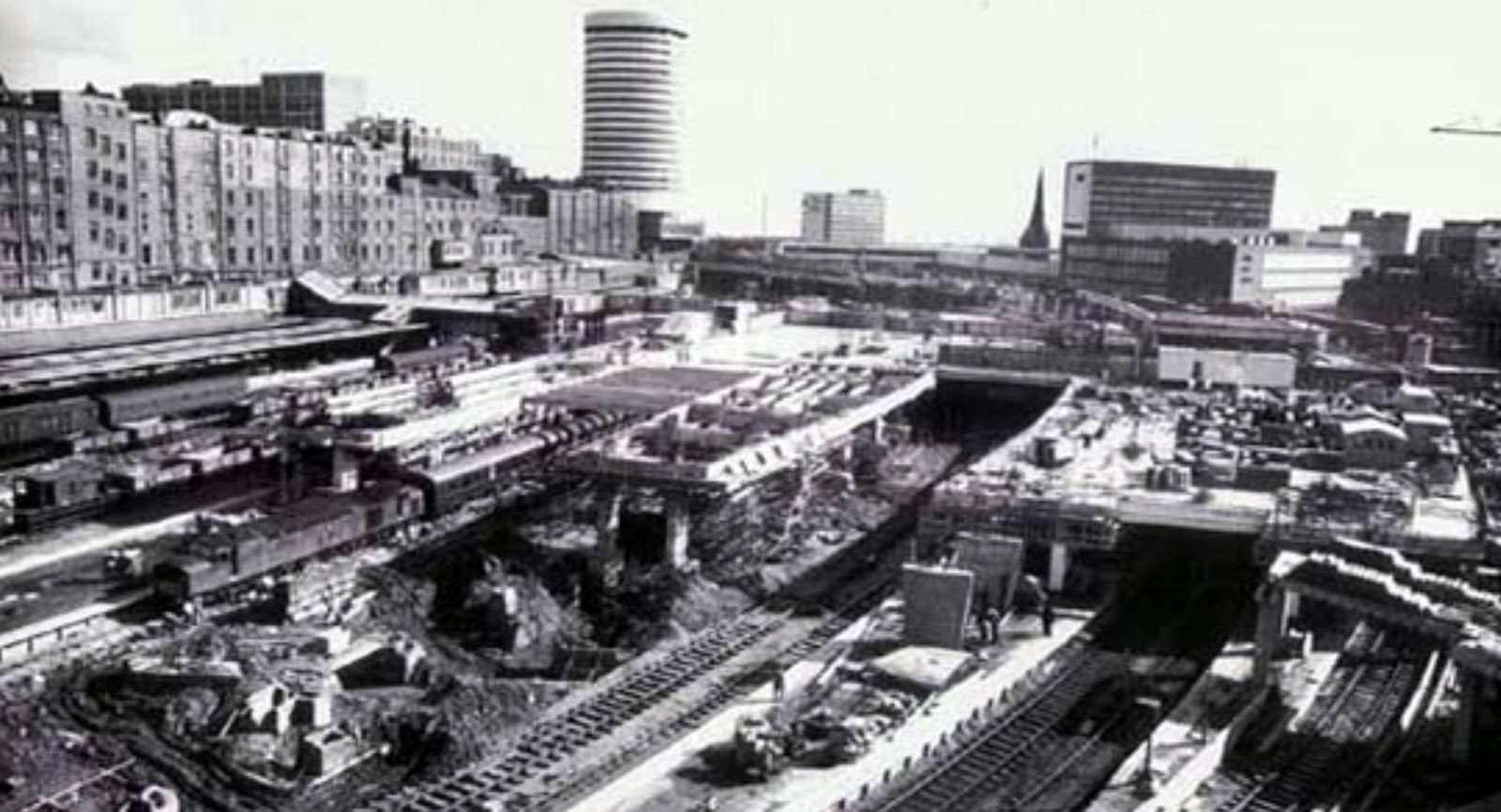
A complete reconstruction of New Street Station began in the 1960s. Both the original station and Queens Hotel were demolished by 1966. The redesigned station, overseen by Kenneth J. Davies, featured through platforms covered by a concrete deck. The station concourse and a shopping complex, Pallasades, were constructed above this deck.
Despite functional improvements, the station’s brutalist design was widely criticized. In 2003, readers of Country Life voted New Street the second “biggest eyesore” in the UK. By then, the station was operating well above its intended capacity, prompting plans for further redevelopment.
The 2015 Reconstruction
The most recent transformation of New Street Station began in 2010 as part of the Gateway Plus Project, an ambitious £388 million redevelopment effort. The project included a new concourse three times the size of its predecessor, capped by a massive atrium for natural lighting. Adjacent to the station, the Pallasades shopping center was revamped into Grand Central, featuring a flagship John Lewis store.
Completed in 2015, the redevelopment addressed longstanding issues of overcrowding and poor accessibility. The new design improved connections within Birmingham and bolstered the station’s role as a vital transport hub for the Midlands.
Over its 170-year history, New Street Station has undergone significant transformations, evolving from a single-arched marvel to a modern transport gateway. Today, it remains a testament to Birmingham’s industrial and architectural legacy, connecting nearly 200,000 passengers daily and catalyzing economic growth in the region.