

After World War II, technological innovation in Birmingham, Great Britain, was primarily driven by the massive transition from huge military production capacities to peaceful industry. This involved the automotive, mechanical, and electrical industries. It meant that key achievements, such as the cavity magnetron developed at the University of Birmingham for radar, were adapted from military research to consumer technologies.
One of the key technological achievements that was particularly relevant to Birmingham after the Second World War was the resonator magnetron, which was developed here during the war. It directly led to the creation of commercial and domestic microwave ovens. After the transition from the production of Spitfire and Hurricane aircraft in the local Castle Bromwich area, factories such as Longbridge not only began to produce cars, but also continued to lead the industry. And these are far from the last areas in which Birmingham has achieved success, but you can read more about all this in detail at birmingham-future.com.
Postwar period
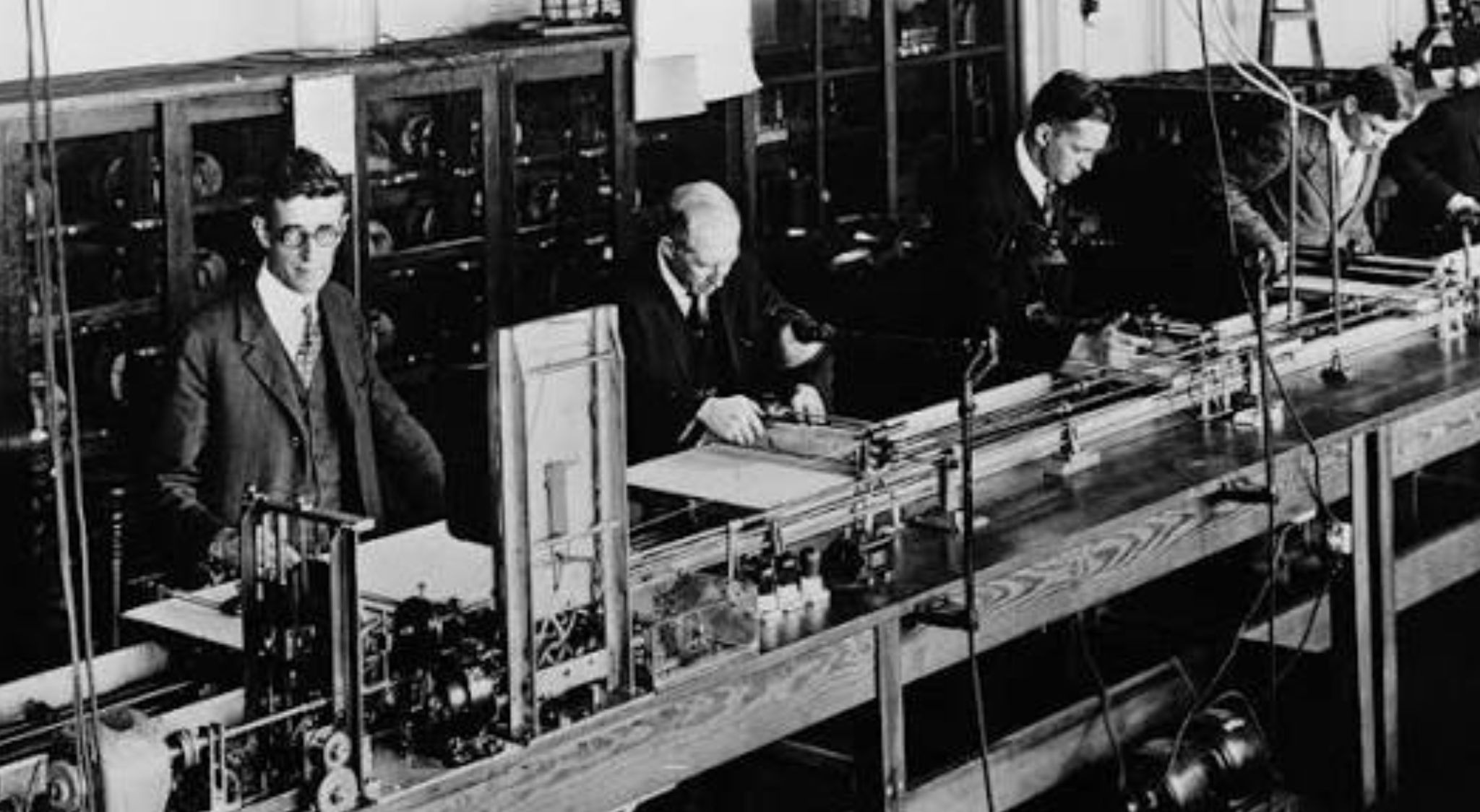
Thus, the post-war period of the city’s development was characterized by a transition from defense production to consumer technologies and a subsequent reliance on a powerful industrial base. When World War II ended in 1945, Great Britain faced a double challenge. On the one hand, it was necessary to physically rebuild the devastated country, and on the other, it was necessary to transform the economy from military to peaceful industries.
It was at this moment that Birmingham, which was and remains the heart of the West Midlands region, found itself in an exceptionally advantageous position. Unlike port and coastal cities, it avoided total destruction, preserving its factories, engineering schools, and skilled workforce. The city had a unique industrial heritage. It is known that since the 19th century, Birmingham had been a center for metallurgy, mechanics, and small-scale machine building.
During the war, aircraft engines, ammunition, electrical equipment, and complex mechanisms were mass-produced here. After 1945, these same production lines, design bureaus and engineers quickly reoriented themselves to civilian needs. Birmingham did not simply rebuild its economy — it created a new industrial model where innovation was not an abstract idea but a direct product of the factory.
Post-war automotive innovations

One of the key areas of technological breakthrough was automotive engineering. By the end of the 1940s, Birmingham factories and design centers had begun to develop engines with lower fuel consumption, which was critically important in the context of post-war resource shortages. Engineers worked to reduce friction, improve combustion efficiency, and optimize the working volume of engines.
The Longbridge plant, owned by the Austin Motor Company, became one of the main sites for these changes. Here, in the late 1940s and early 1950s, compact, reliable powertrains were developed for the mass market. At the same time, regional engineering teams associated with Rover and Jaguar Cars experimented with the balance between power and economy, which later became the standard for the British automotive industry.
Another revolution was the widespread introduction of independent suspension. Before the war, it had been an expensive and limited solution, but in Birmingham, it began to be adapted for mass production. This significantly improved the handling and comfort of cars, especially on the uneven post-war roads.
At the same time, the city became a center for the standardization of automotive components. Standardized fasteners, electrical connectors and assemblies reduced costs, sped up production, and made repairs easier. Birmingham effectively laid the foundation for the modular automotive logic that dominates the industry today.
Electrical engineering for transport as Birmingham’s strategic contribution

Electrical engineering played a separate, extremely important role in transport. It was here, in Birmingham, that the systematic production of electrical components began after the war, without which it is impossible to imagine a modern car. Generators, starters, ignition systems, and lighting—all of this became increasingly complex and, at the same time, more reliable.
Lucas Industries was a key player in this field. The company, closely associated with Birmingham, became the de facto standard for the British automotive industry in the 1950s. Its products were used in Austin, Jaguar, and Rover cars and were later exported to Europe, North America, and even the Commonwealth countries.
Lucas engineers not only manufactured components but also continuously improved them. For example, the stability of electrical systems was increased, adapting them to different climatic conditions and very long loads. As a result, Birmingham became a center not only for manufacturing, but also for technological expertise in the field of automotive electronics. This, in turn, strengthened Britain’s position in the global market.
Another fundamental contribution of Birmingham was materials and production technologies. After the war, active work was carried out here on new metal alloys, primarily based on aluminum and magnesium. These materials made it possible to reduce the weight of cars and mechanisms without losing strength, which was critically important for saving fuel and improving the efficiency of cars.
Precision casting developed in the city and its surroundings, ensuring minimal deviations in the dimensions of parts. This, in turn, gave impetus to serial machine building with small tolerances. It should be noted that with this approach, the quality of each part was predictable and stable. Such technologies were a direct legacy of military production, but in peacetime they became the basis of a competitive industry.
Thus, in the difficult post-war period, Birmingham engineers effectively proved that mass production could be highly accurate and innovation could be systematic. It was here that an approach was developed that combined a craft culture of precision with industrial scale.
How Birmingham’s innovations helped revive the British economy

All these technological advances had a direct economic impact. Automotive, electrical engineering, and mechanical engineering provided hundreds of thousands of jobs and became key export items. Birmingham helped Britain not only to rebuild its devastated economy, but also to take its rightful place in the post-war industrial world.
In other words, local innovations became one of the key factors in the recovery of the British economy after World War II. More efficient engines, standardized parts, and new materials reduced production costs and increased competitiveness in global markets. As a result, industry quickly transitioned from a war economy to peaceful growth, laying the foundation for a long-term economic recovery.
The city has become a symbol of how engineering tradition, multiplied by innovation, can work wonders in the economy, turning crisis into opportunity—which is why Birmingham can rightly be called one of the fathers of Europe’s post-war technological renaissance.
Sources:
- https://www.thenewatlantis.com/publications/the-science-before-the-war
- https://www.nationalww2museum.org/war/articles/scientific-and-technological-advances-world-war-ii
- https://britishmanufacturinghistory.uk/2024/07/22/birmingham-manufacturing-history/
- https://www.birmingham.ac.uk/news-archive/2018/the-birmingham-city-region-needs-investment-to-drive-innovation