

The Bull Ring, now commonly referred to as Bullring, has been a pivotal center of Birmingham since medieval times. Situated near the sandstone ridge leading to Digbeth, it stands opposite the neo-Gothic St. Martin’s Church. Currently home to some of the world’s largest retail brands, it is the most significant shopping hub in the UK city center. While the goods sold here have evolved over centuries, its role as the nucleus of Birmingham’s commercial activity remains unchanged. However, the origin of its iconic name is still a mystery to many locals. Next on birmingham-future.
Arena for Bull Baiting
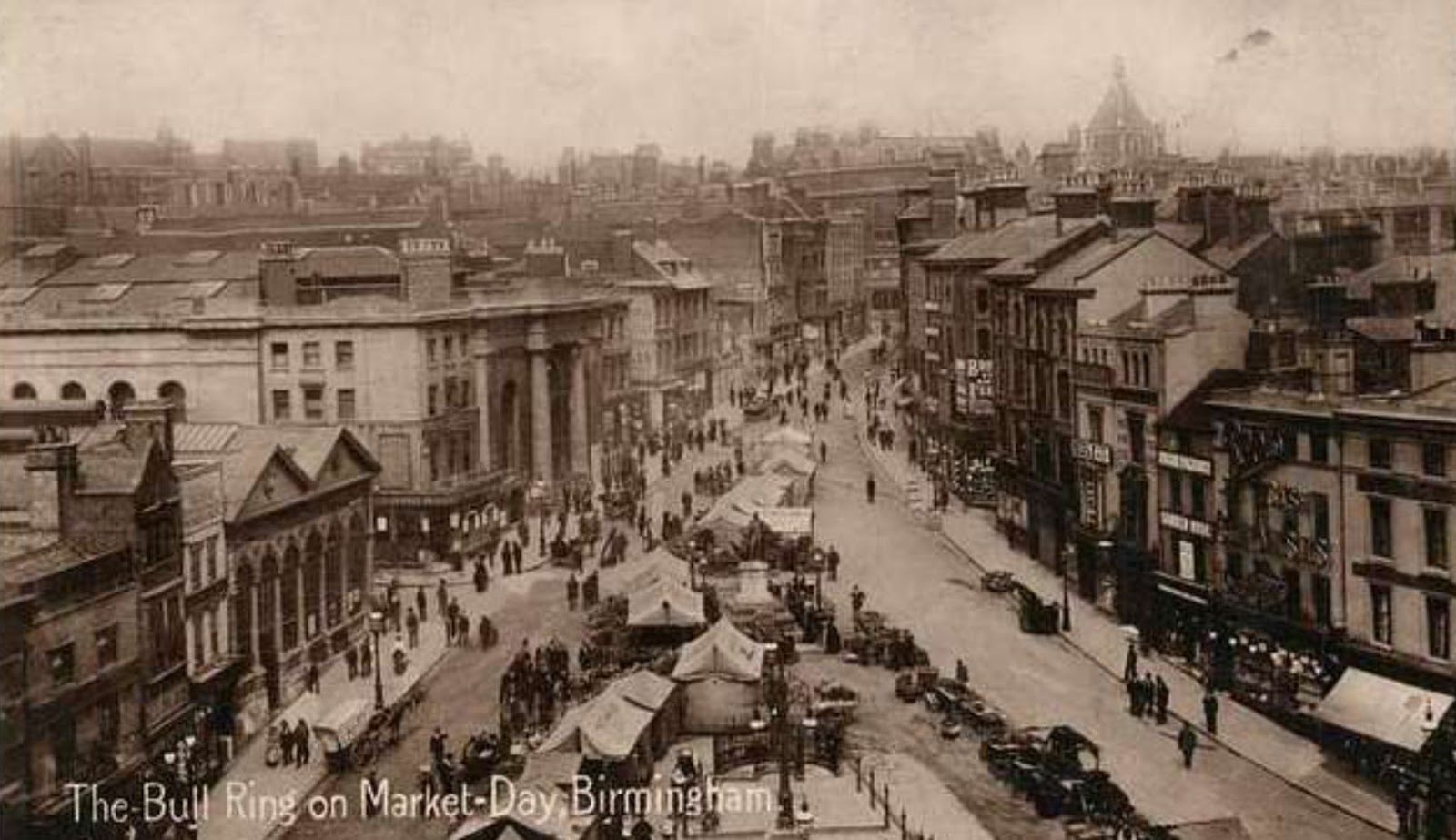
The market’s history dates back to 1154 when Peter de Birmingham, a local landowner, obtained a charter from King Henry II to host a weekly Thursday market, collecting tolls from traded goods. In 1189, King Richard I reaffirmed these rights in a charter preserved in the National Archives. Some historians argue that the market occupies the oldest part of Birmingham, once a medieval manor.
Initially known as the “Cheap Corn Market,” Bullring earned its name from being an arena for bull-baiting, a popular pastime in the 16th century. Spectators would watch dogs attack bulls chained to a central ring. This gruesome activity was believed to tenderize the meat. The practice ceased in 1798 when the arena moved to Handsworth, though the area retained its name. Notably, bulldogs excelled in these events, their name deriving from their role in bull-baiting. Parliament officially banned the “sport” in 1835.
Preparation for Construction
During the 2000 redevelopment of the Bullring, archaeological excavations revealed artifacts from the 12th century, including leather tanning pits, pottery shards, and melted metal. These findings marked the boundary between residential areas and a deer park, now the site of Moor Street Station.
Historical maps show a triangular market area bordered by St. Martin’s Church, Mercer Street (later Spicer Street), and Corn Cheaping. By 1731, temporary stalls evolved into permanent buildings. The northeast end, known as “The Shambles,” hosted meat stalls, where livestock was slaughtered on-site.
At the intersection of Spicer Street and Corn Cheaping stood the High Cross, a two-story structure dating to 1702. Its ground floor served as a covered market, while the upper level was used for court sessions and civic meetings. Known as Butter Cross, it became a hub for selling dairy products. The structure was demolished in 1784 to improve access to the market square.
Charles Edge’s Project
In 1801, Birmingham’s street commissioners began purchasing and demolishing encroaching buildings around St. Martin’s Church. Over the next decade, they cleared the area and relocated wholesale markets, including livestock (1817) and fruit and vegetables (1883), to Smithfield Market, while the Corn Market moved to Carrs Lane in 1848.
The commissioners decided to build a covered market hall, funding the project by selling adjacent land. Designed by Charles Edge in a neoclassical style, construction began in 1833 and was completed in 1835.
The impressive structure featured large arched entrances flanked by Doric columns. Measuring 365 feet long, 180 feet wide, and 60 feet high, it accommodated 600 stalls. The roof was supported by slender cast-iron columns, and the walls were clad with Bath stone.
Damage During World War II
At the center of the market hall was a bronze fountain gifted by the street commissioners in 1851. Decorated with lion heads spouting water, it featured a statue symbolizing Birmingham’s industrial sectors: arms, glassmaking, bronze, and engineering.
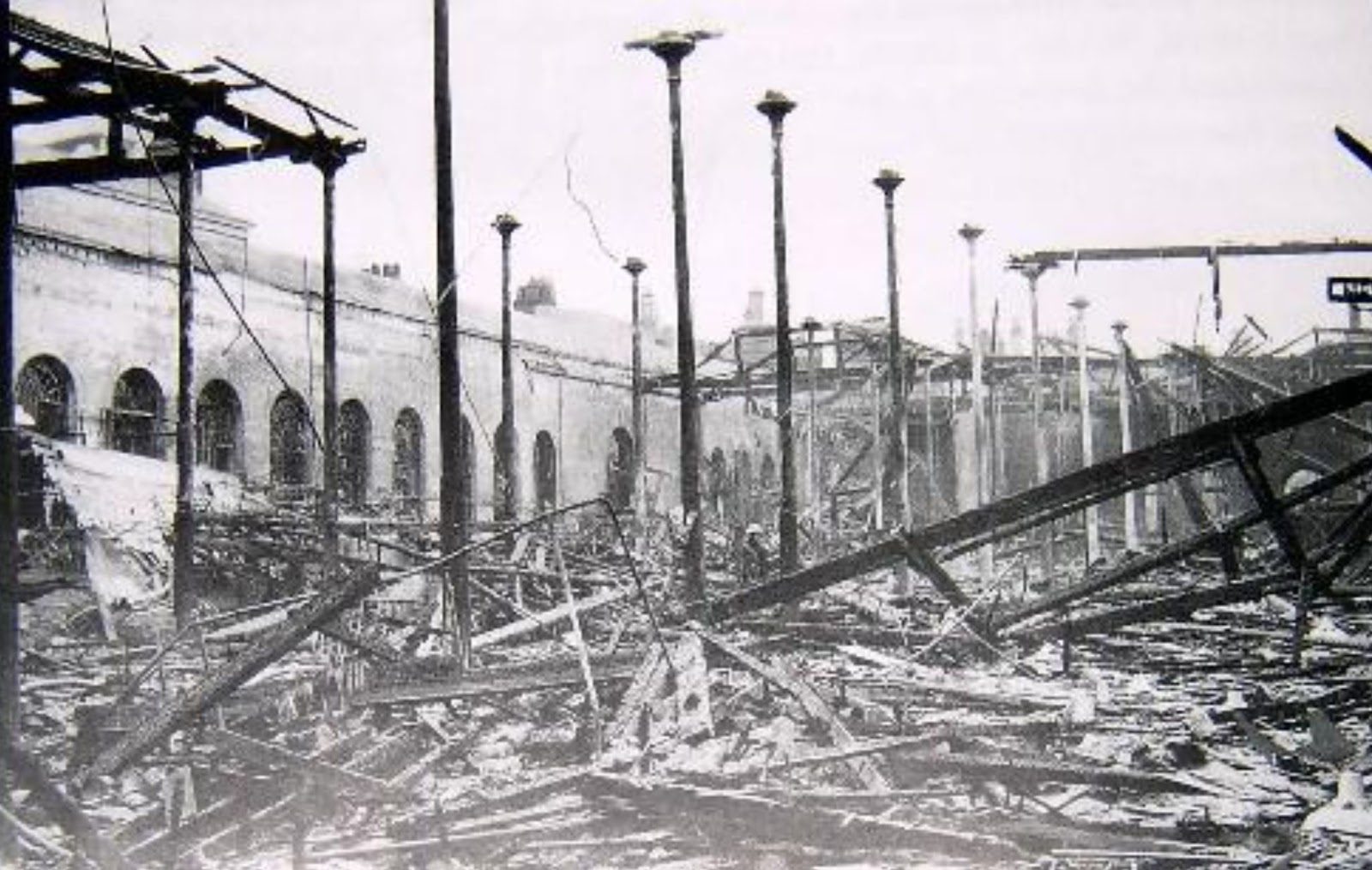
The market hall was gas-lit, allowing trade to continue into the evening, especially during winter. Unfortunately, World War II bombing raids heavily damaged the market, leaving a lasting impact on Birmingham’s historic trading hub.