

The BT Tower is one of Birmingham’s most famous landmarks, and for some, it even serves as a navigational aid, despite the availability of maps on phones and other ways to find your way around. If you walk past it in one direction, you will find yourself in the Jewellery Quarter, and in the other, in the bustling city centre. It is known that despite its age, the tower is still fully functional and will not be closed in the near future. For more details about the building, its history and current use, read here: birmingham-future.com.
Construction context
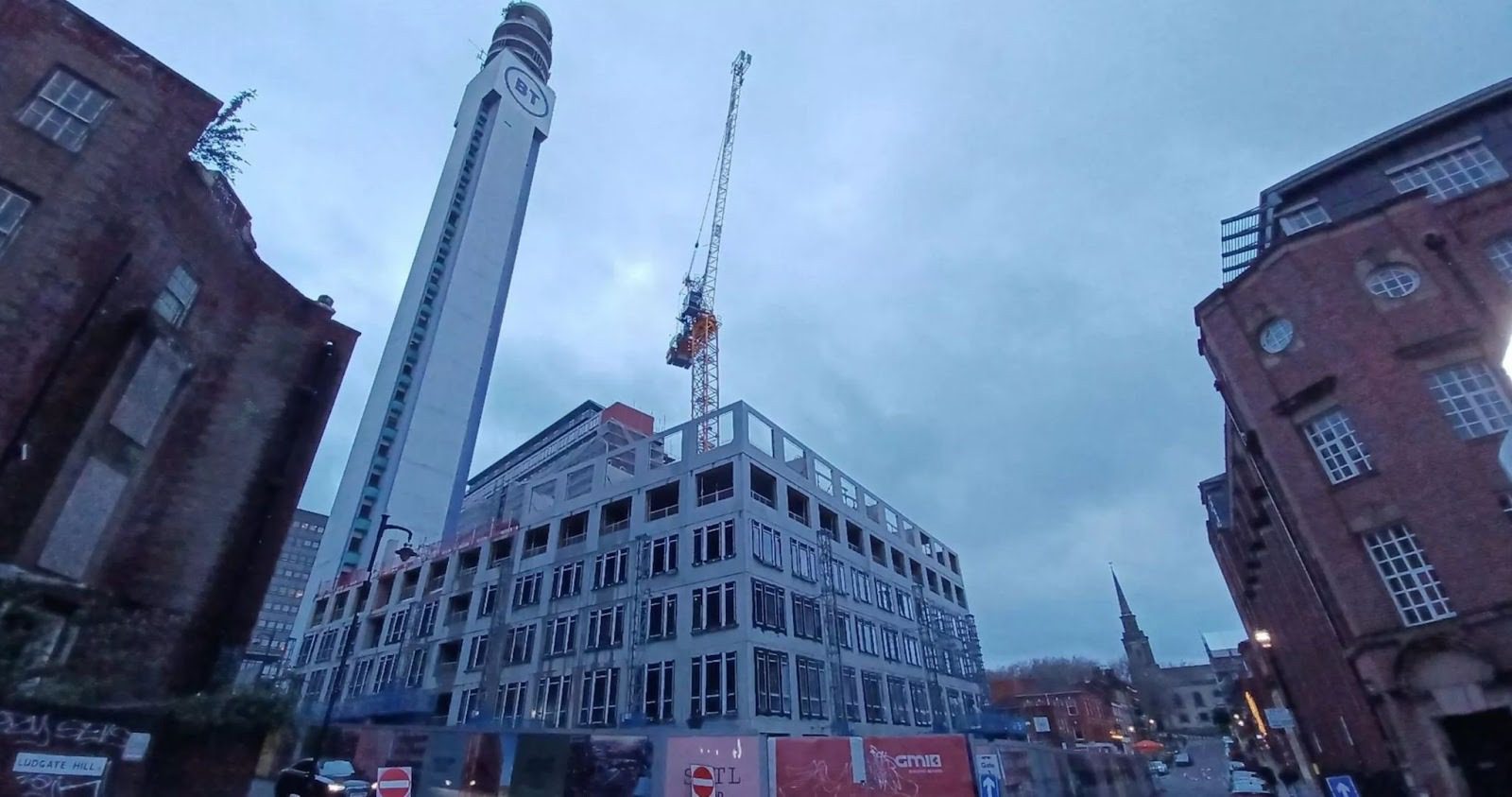
The BT Tower is located in the heart of the West Midlands. This monumental structure has towered over the skyline for more than half a century. Anyone, even those who have no connection to architecture, will confirm that the tower has neither the Gothic elegance of ancient cathedrals nor the glamour of 21st-century skyscrapers. On the contrary, it is a stern and majestic monolith of reinforced concrete, which seems to have been called upon to guard Birmingham like a silent sentinel.
The BT Tower was formerly known as the Post Office Tower. This structure, which embodied the technological ambitions of 1960s England, remains an integral symbol of the city’s identity despite its age.
To understand the reasons behind the tower’s construction, one must immerse oneself in the atmosphere of post-war Britain. In the early 1960s, the country was in the process of recovery and modernisation.
Prime Minister Harold Wilson spoke of the so-called white heat of technology that was to shape the nation’s future. It was in this context that the General Post Office, the predecessor of British Telecom, launched an ambitious programme to modernise the national communications network.
By that time, traditional underground cables no longer met the needs of the times. Demand for telephone services began to grow rapidly, and television was becoming the dominant medium of mass communication. Furthermore, it should not be forgotten that this was a time when the threat of the Cold War loomed over Europe.
In view of all this, the British government needed a reliable network capable of withstanding a nuclear strike that could destroy the terrestrial cable infrastructure. The solution to this pressing problem was found in radio waves. This involved a backbone network of radar stations connecting London with Scotland, with Birmingham as the central hub.
This is how the decision to build a tower in Birmingham was made. From the outset, it was conceived not as an aesthetic monument, but as a functional machine, a kind of vertical “communications factory”.
Concrete wonder
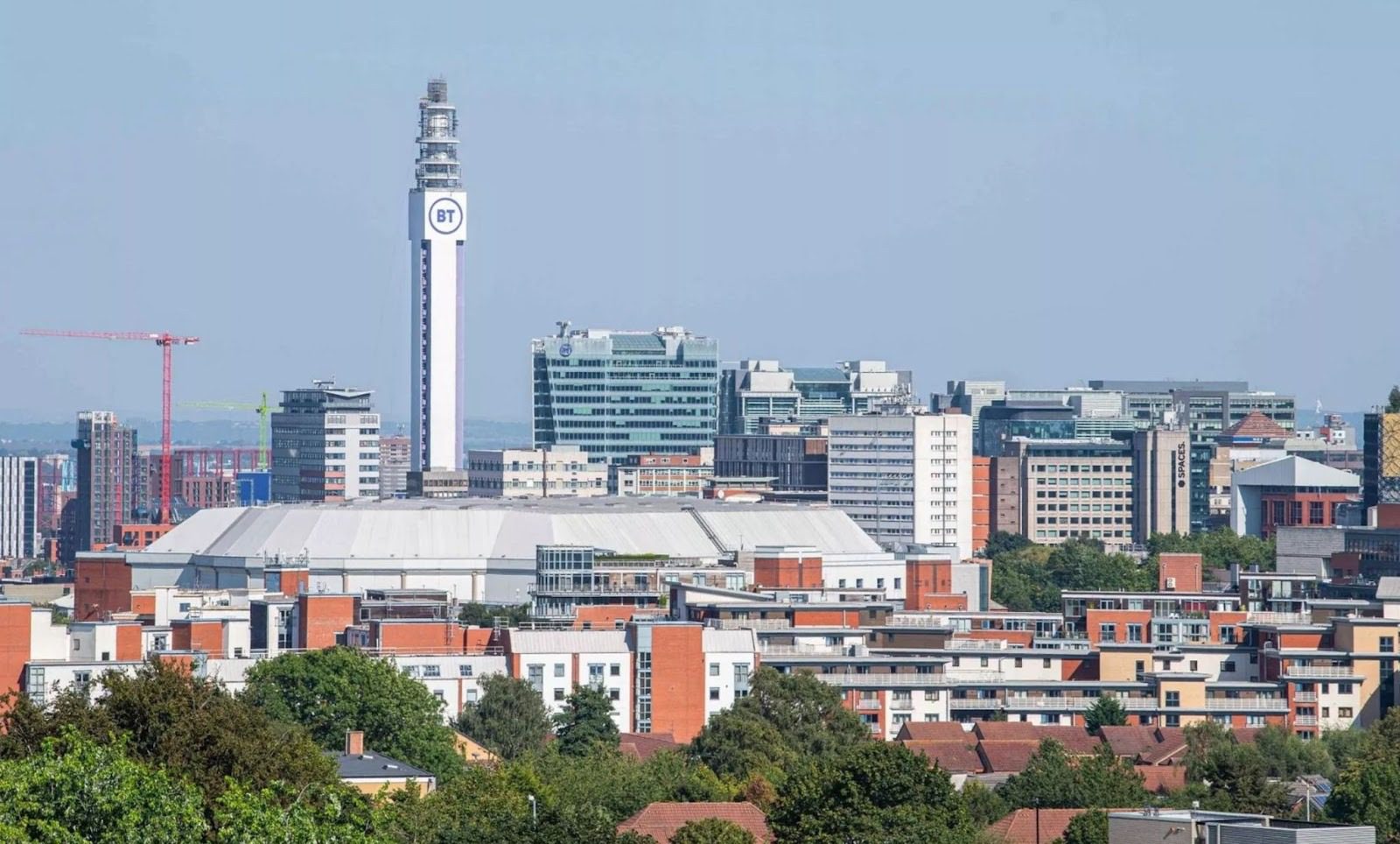
Thus, the grand construction began in July 1963 on Lionel Street, near the Birmingham and Faisley Canal. The design was entrusted to architects from the Ministry of Public Works and Buildings, who chose the dominant architectural style of the time — brutalism.
The choice of reinforced concrete was not accidental. It provided the necessary stability for the tower to keep the satellite antennas perfectly still, even during strong winds sweeping across the Midlands. Unlike office skyscrapers, which require windows and light, the only inhabitants of this tower were equipment and technical specialists.
For two years, Birmingham residents watched with interest as the structure grew centimetre by centimetre, reaching a final height of 152 metres. After construction was completed in 1965, it logically became the tallest structure in the city. It should be noted that this title was jealously guarded by the tower for decades. That is, until the residential towers at 10 Holloway Circus were built in Birmingham in 2005.
However, the official opening of the BT Tower did not take place until 1967. It marked Birmingham’s entry into the modern era of telecommunications. The tower was not only tall, but also very powerful. It helped to simultaneously process 150,000 telephone calls and retransmit 40 television channels, which was an exceptional capacity at the time.
During the 1970s and 1980s, the tower, which was then known as the “Post Office Tower,” was the nerve centre of the British communications network. It generated an invisible but constant flow of information that passed through the air. These were urgent business calls between London and Manchester, the first BBC colour television broadcasts, and encrypted military data. Everything passed through the top of this concrete cylinder in the middle of Birmingham.
The upper part of the tower had a slightly widened section, which gave it its characteristic shape. This part was covered with parabolic antennas and horns. These giant “ears” listened and transmitted signals to other relay towers, such as the tower in Sutton Coldfield or the famous BT Tower in London. In other words, the tower in Birmingham was a strong and reliable link in an invisible chain that maintained communication in the country.
Symbol of Brutalism
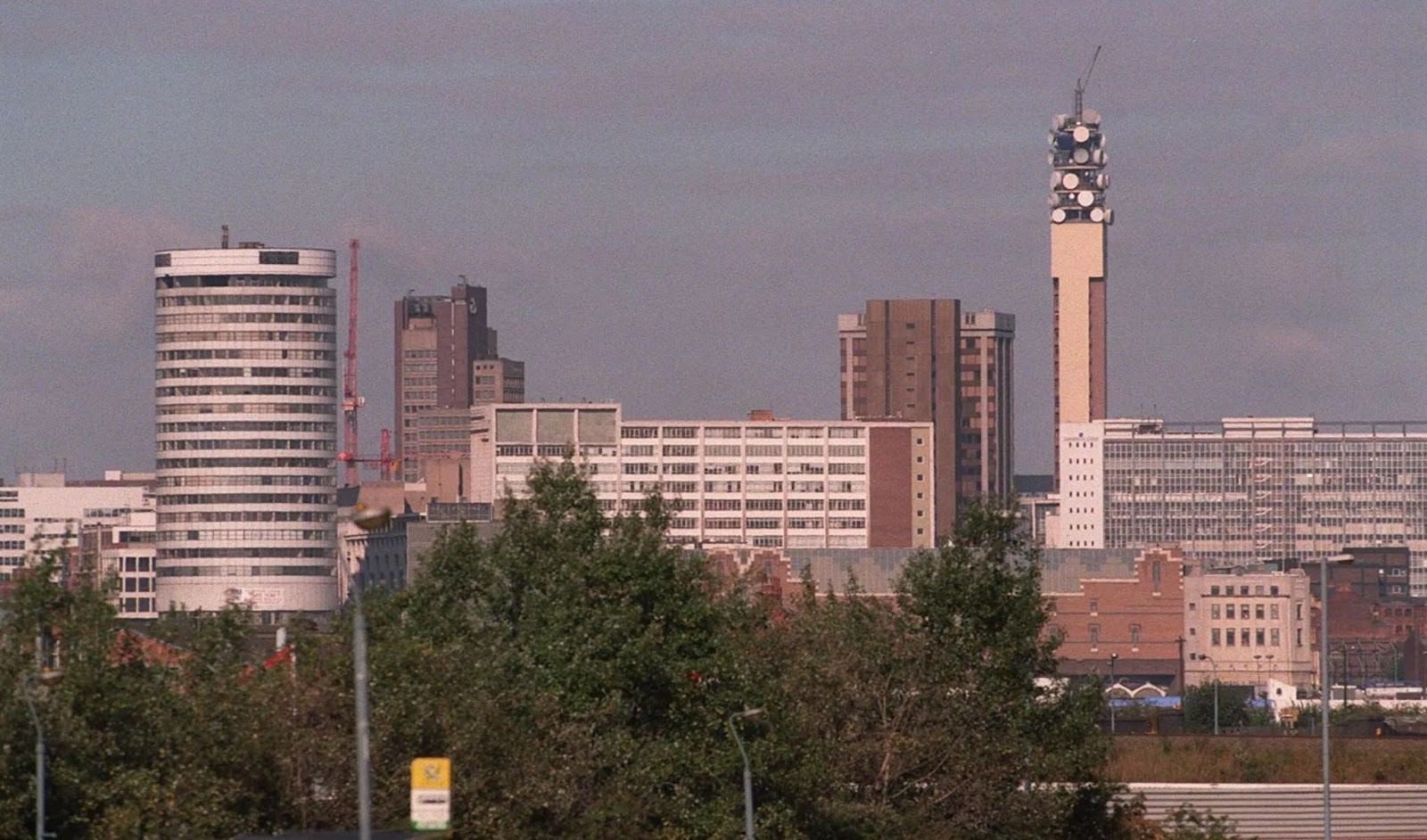
Despite all this, the aesthetic assessment of Birmingham’s BT Tower has always been highly controversial. For some, the tower was nothing more than a concrete eyesore, a grey scar on the face of the city. It is known that the tower is sometimes referred to as nothing less than “The Stump”. This is all because of its awkward shape. It is especially noticeable when compared to its elegant London counterpart.
Unlike the tower in the capital, which had a revolving restaurant open to visitors, the tower in Birmingham has always remained a closed fortress, accessible only to authorised personnel. All this reinforced its aura of a mysterious and cold structure. However, despite everything, for architecture lovers and historians, it is a masterpiece of functionalism.
Its shape strictly corresponds to its functions. The cylindrical shaft minimises wind resistance, and the upper galleries are designed for easy access to equipment. In 2004, as part of efforts to soften its image, the tower underwent a major facade renovation. The exposed concrete was painted dark brown, and the balconies were highlighted in blue, matching the colours of British Telecom.
Whatever anyone may say about this so-called renovation, it did clean up the tower’s structure, which had been blackened by decades of urban pollution.
The decline of microwaves and the new millennium
The beginning of the new millennium brought a technological revolution in the form of fibre optics, which threatened the main purpose of the tower. After all, the new technology was capable of transmitting much larger amounts of data than radio waves. In addition, it was highly insensitive to weather conditions. As a result, underground fibre optics gradually replaced the network of microwave towers.
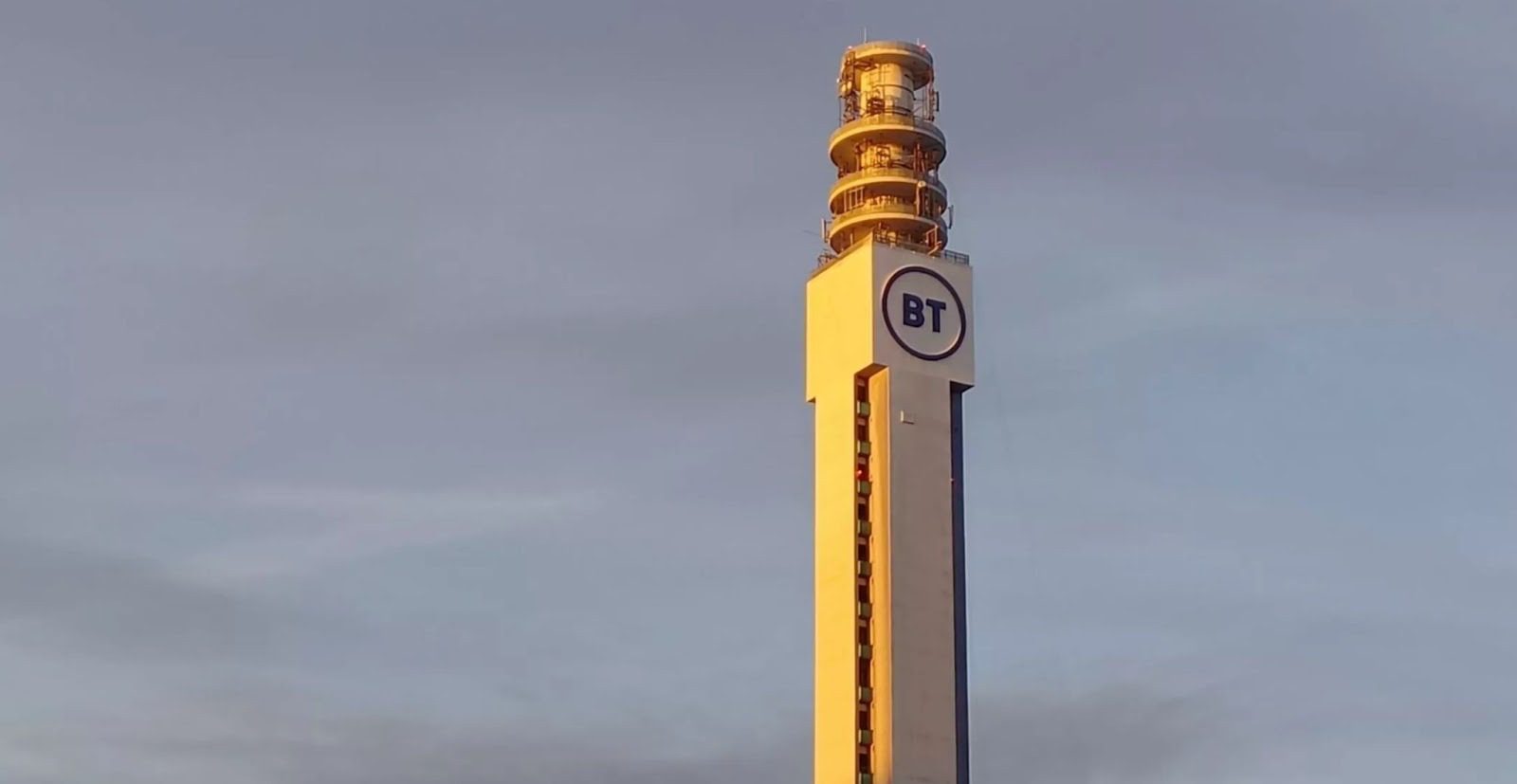
During the 2010s, significant visual changes took place at the top of the tower. The large parabolic antennas that formed the building’s so-called technological “crown” were dismantled one by one. The tower lost its clumsy appearance and took on a smoother, almost bare form. To the uninformed observer, it might have seemed to be falling asleep.
However, all these changes did not mean that the BT Tower had become obsolete. Although its role as a major relay station has significantly diminished, the tower has remained and continues to be an important hub for local infrastructure, mobile communications and emergency networks. It is owned by the BT Group, which controls the data flows that power England’s second-largest city. And in 2020, when the tower celebrated its 55th anniversary, it was granted Grade II listed status by Historic England.
Sources:
- https://www.ice.org.uk/what-is-civil-engineering/infrastructure-projects/bt-tower-birmingham
- https://www.bbc.com/news/av/uk-england-birmingham-41505368
- https://www.birminghammail.co.uk/news/midlands-news/gallery/birminghams-beloved-bt-tower-through-28691131
- https://www.skyscrapercenter.com/building/bt-tower/9574