

Imagine a city where chaos reigns at the crossroads: horses, carriages, bicycles and the first cars jostle for space on the streets, whilst a policeman on the corner waves his arms to direct the traffic. Today, we don’t even notice how easy it is to cross the road: traffic lights, which tell us when to go and when to wait, have become a familiar feature of the city.
But Birmingham once stood on the cusp of a major innovation—it was here that some of the UK’s first automatic traffic lights were installed, which local newspapers of the time referred to as ‘robot policemen’. This article explores the history of traffic lights in Birmingham and shows how the city has kept pace with technological progress. Read more about this at: birmingham-future.com.
Background: Transport in Birmingham
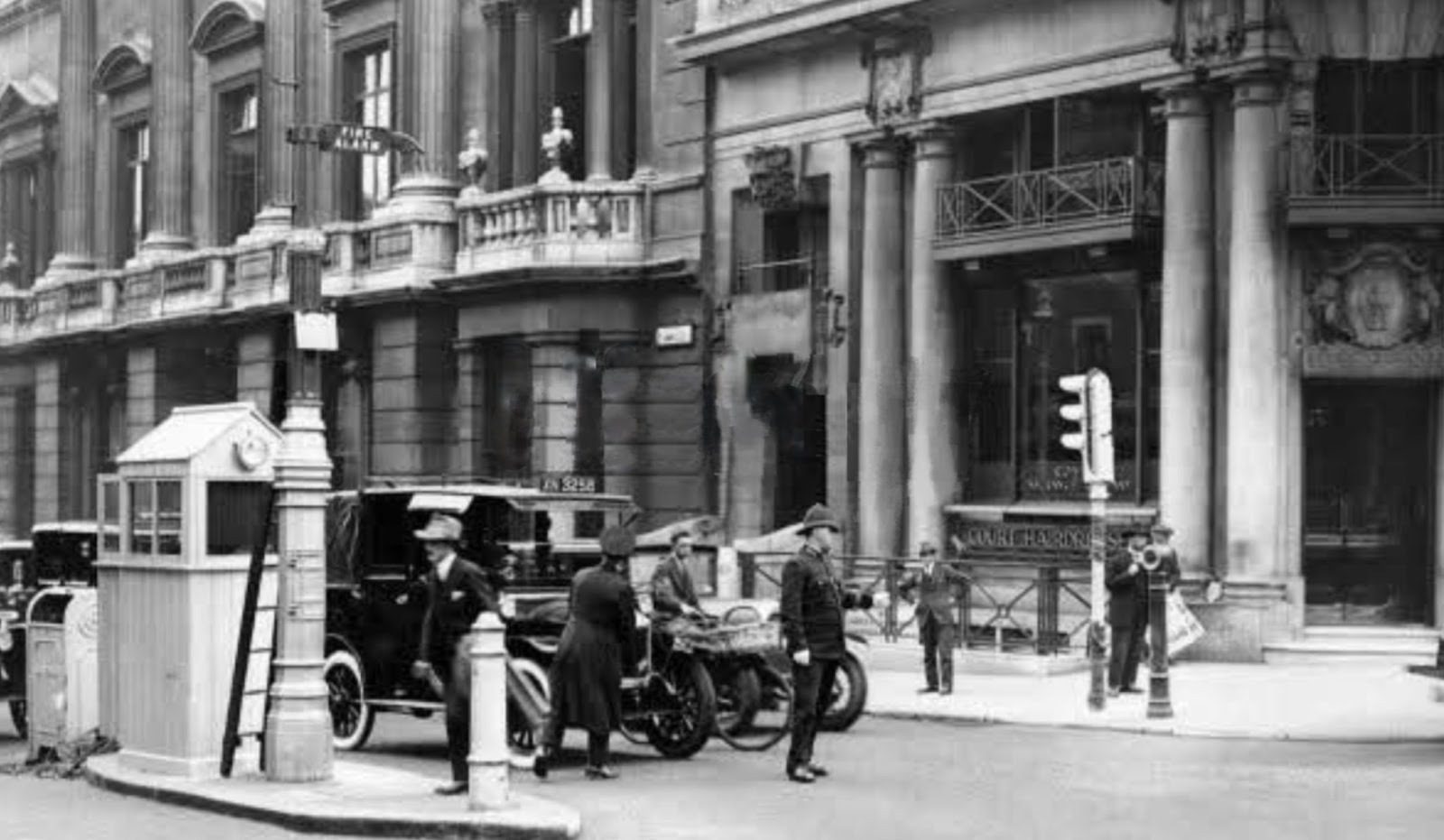
By the end of the 19th century, Birmingham had become one of the busiest industrial centres in Great Britain. There were many factories and workshops in operation, and transport routes were developed accordingly; all of this intertwined, connecting the city’s various districts. Moreover, Birmingham’s population was growing rapidly. Workers, office staff and traders all made active use of the streets, creating a veritable transport chaos.
Those were the days when horses, carriages, bicycles, trams and the first cars might all be found at crossroads. Traffic was unpredictable and dangerous, and accidents were common. Pedestrians watched the paths of carriages and vehicles carefully, whilst drivers tried to navigate around obstacles.
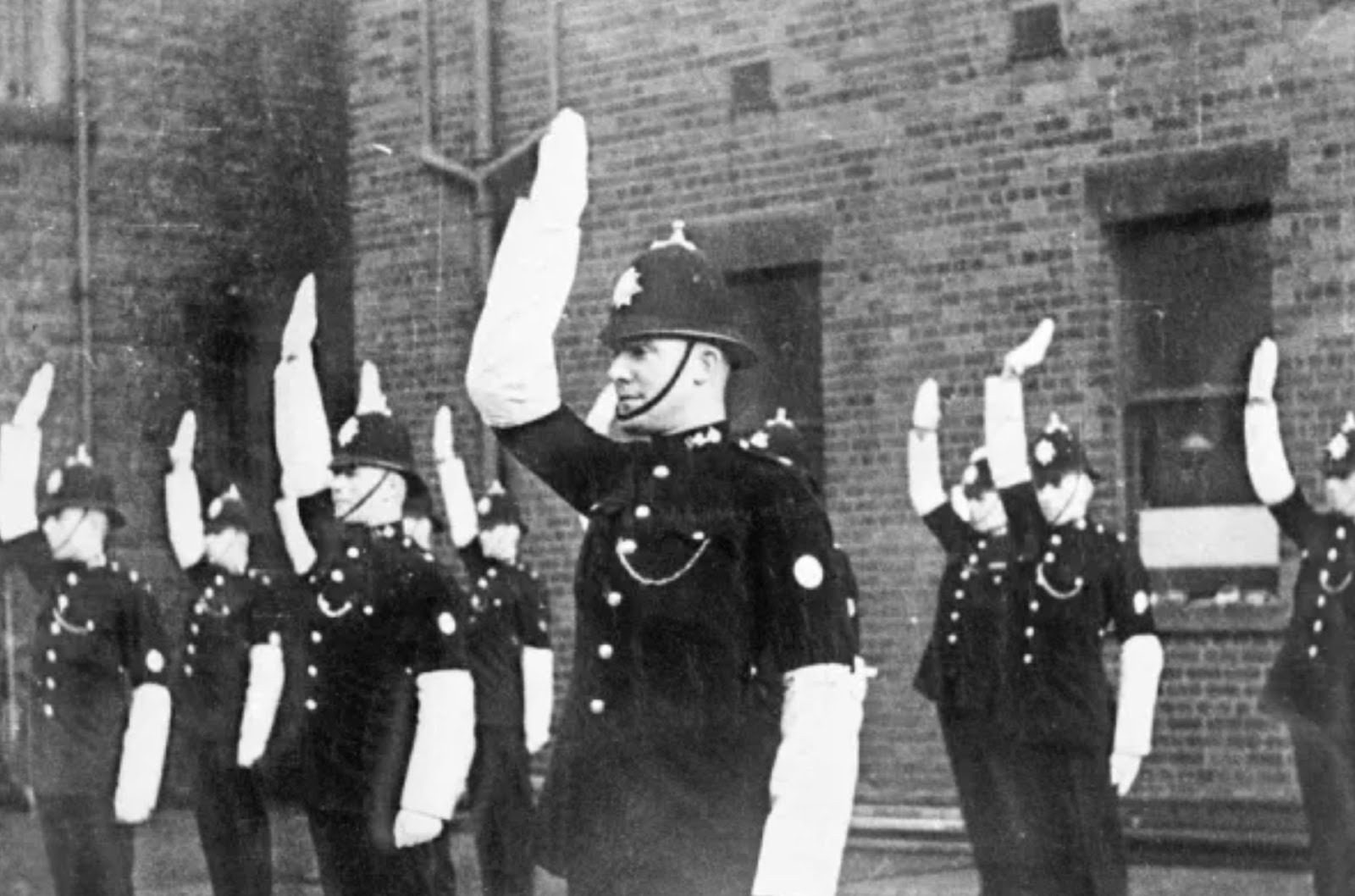
The task of directing this chaotic traffic fell to traffic police officers, who stood right in the centre of the junction or on raised platforms to ensure maximum visibility. In addition, they wore white gloves, armbands and special raincoats with bright features to attract attention.
Using hand signals, batons, whistles or flags, traffic wardens signalled ‘stop’ or ‘go’ in an attempt to manage the chaotic flow of traffic. One such critical point was the centre of Birmingham, where the main streets intersected and where the traffic of carriages and cars was particularly heavy.
Yet even with the police present, accidents and dangerous situations became a daily occurrence. Consequently, collisions between horse-drawn carriages, cyclists and cars forced the city to seek mechanised means of traffic control. It was precisely these circumstances that prompted Birmingham to introduce the first automatic traffic lights, which were dubbed ‘robot policemen’ by the local press.
These devices were designed to relieve human traffic wardens of the need to stand constantly at crossroads and to reduce the risk of accidents in places where a police presence could not ensure safety. This period in history served as a logical and fascinating prelude to the era when the first traffic lights appeared in Great Britain.
The first traffic lights in the UK
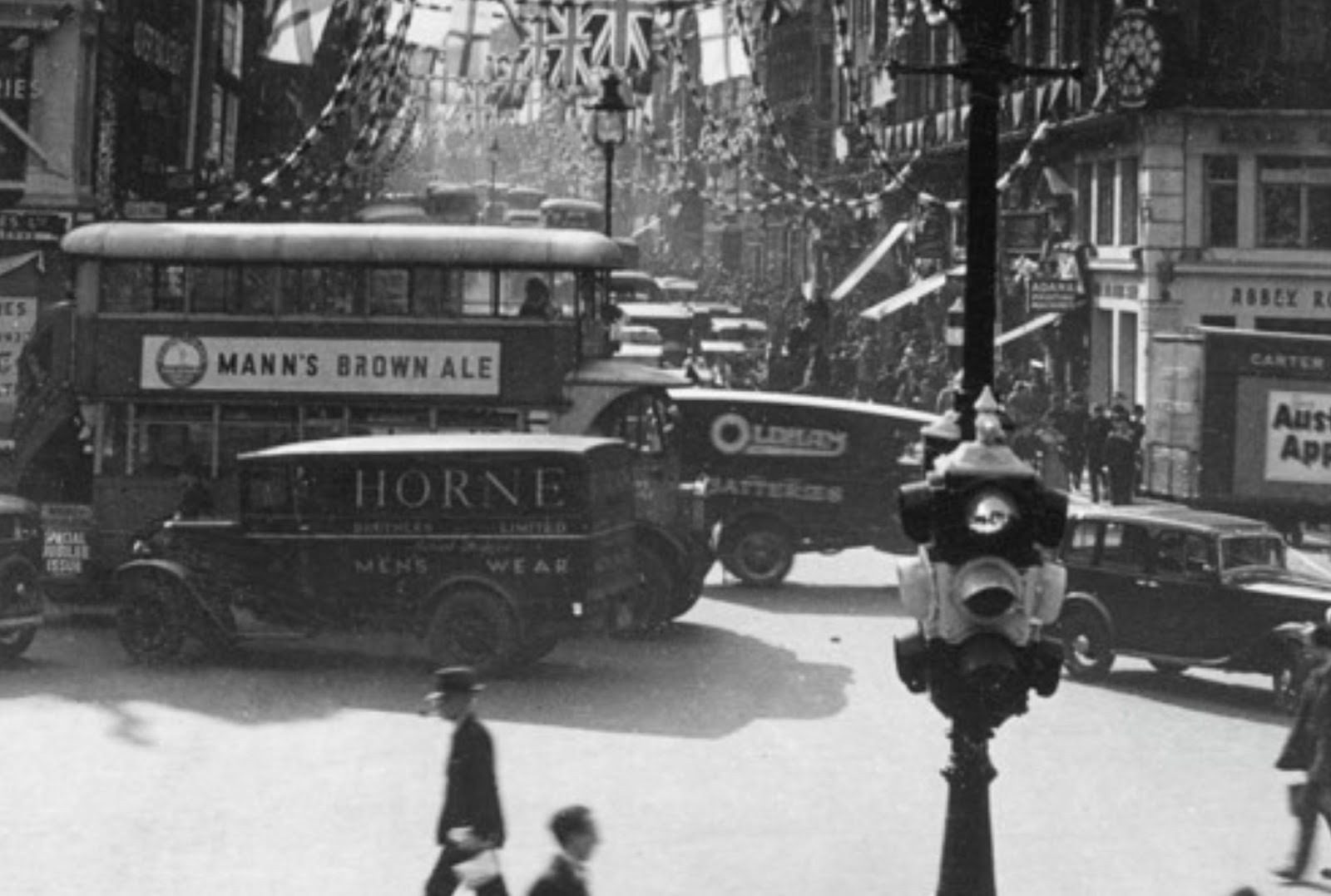
It should be noted right away that things did not happen as quickly as one might have hoped. The first attempts to regulate transport in British cities date back to the mid-19th century. In 1868, the first mechanical traffic lights powered by gas lamps were installed in London to control traffic at the junction near Parliament.
These devices proved to be cumbersome, dangerous and completely impractical. The signal had to be changed manually, and within a year the system had broken down following an explosion in a gas tank. Nevertheless, they laid the foundations for further innovations in the field of traffic control.
A real breakthrough came with the introduction of automatic electric traffic lights in the late 1920s. The first such devices in Britain were installed in Wolverhampton at the junction of Lichfield Street and Princess Square in November 1927. These traffic lights already operated automatically, without the need for a constant police presence. They immediately attracted the attention of local residents and the press. Newspapers wrote about the new ‘robotic traffic controllers’ that were replacing human beings and reducing chaos on the streets.
For its part, Birmingham, located just a few kilometres from Wolverhampton, was quick to launch its own trials. The local authorities quickly recognised the potential of automatic traffic lights, as they were intended not only to relieve police officers of the need to stand constantly at critical junctions, but also to reduce accidents and make traffic flow more predictable.
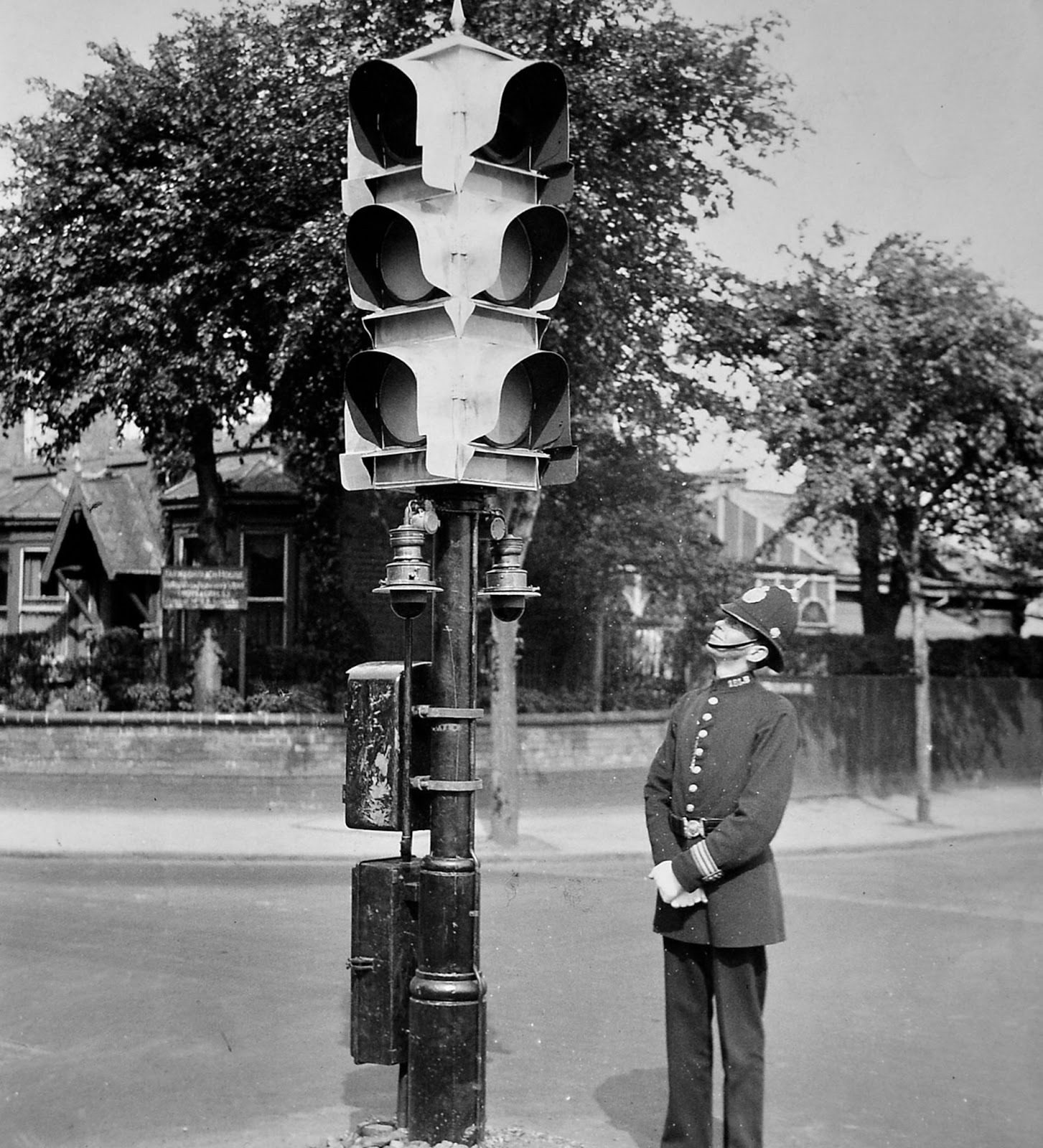
Automatic traffic lights operated on a simple yet effective principle. Their signals changed according to a set cycle, with red and green lights alternating to regulate traffic flow. This enabled the first mechanised traffic control system to be introduced in Great Britain, which eventually became the standard for all major cities in the country. In 1928, permanent automatic traffic lights began to be installed in Leeds and Edinburgh, and over the next decade, this technology gradually spread throughout the country.
Birmingham and the ‘robot police officer’
Thus, in the late 1920s, Birmingham became one of the first British cities to introduce automatic traffic lights, which the press dubbed ‘robot policemen’. They were installed at critical junctions where police officers had previously stood. These were High Street and Bull Street, and New Street and Corporation Street.
It was here that the city’s main trade and transport routes converged, and the flow of horse-drawn carriages, bicycles and the first motor cars was at its heaviest.
The police officers, who had previously stood at the centre of the junction, could now observe from the sidelines, intervening only in the event of accidents or unforeseen situations. The device was mechanically quite simple, but effective. It had a metal casing, coloured signals and an internal mechanism for automatically changing the colour.
Local newspapers and residents initially greeted the new development with surprise and curiosity. Pedestrians marvelled at the ‘robot that independently manages traffic’. Drivers, on the other hand, quickly appreciated the benefits, as traffic flows became more predictable, accidents decreased, and queues at junctions became more orderly. Newspaper reports from that time reflect the enthusiasm of the townspeople: ‘The town has taken a step into the future’, ‘The robot policeman — the new guardian of the streets’.
Throughout the 1930s, the network of traffic lights in Birmingham expanded rapidly. New automatic signals were installed at other major junctions where traffic wardens had previously stood, and fewer and fewer sections of road remained under the control of human traffic wardens.
Thus, Birmingham not only introduced the first ‘robot traffic lights’, but also gradually established a comprehensive traffic light network that served as a model for other cities in the UK. The city demonstrated a synthesis of technical progress and the practical needs of its residents, and the new traffic light network became a symbol of modernisation and road safety.
The significance of the introduction of traffic lights for Birmingham
At the beginning of the 20th century, the rapid rise in the number of cars led to a sharp increase in road accidents in Great Britain. According to official figures, the number of road accidents rose from 138,000 in 1926 to nearly 238,000 in 1934. Government experts believed that the introduction of modern road infrastructure—lighting, signaling, and automatic traffic lights—could reduce road deaths and injuries by around a tenth.
That is precisely why English cities, in particular Birmingham, began actively deploying ‘robot police officers’. And they have not let us down, because not only did they regulate traffic, but they also gradually relieved the police of the gruelling task of manually directing traffic at junctions every day.
Sources:
- https://www.julianwhite.uk/wolverhampton-first-traffic-lights/
- https://nationalmotormuseum.org.uk/help-centre/motoring-firsts/when-were-cats-eyes-reflective-road-studs-first-invented/
- https://www.shropshirestar.com/news/features/2023/05/23/midlands-pioneering-robots-which-gave-traffic-green-light/
- https://www.guinnessworldrecords.com/world-records/first-traffic-lights